General articles are free for 24 hours after publish.
IMF Slashes Philippine 2026 Growth Target to 3.4%, Inflation Pressures Persist
The International Monetary Fund (IMF) has lowered its economic growth forecast for the Philippines in 2026 to 3.4 percent, citing persistent high oil and food prices, sluggish investment, and delays in public infrastructure spending as key factors. Inflationary pressures are also expected to last longer than anticipated, drawing attention to monetary policy trends.
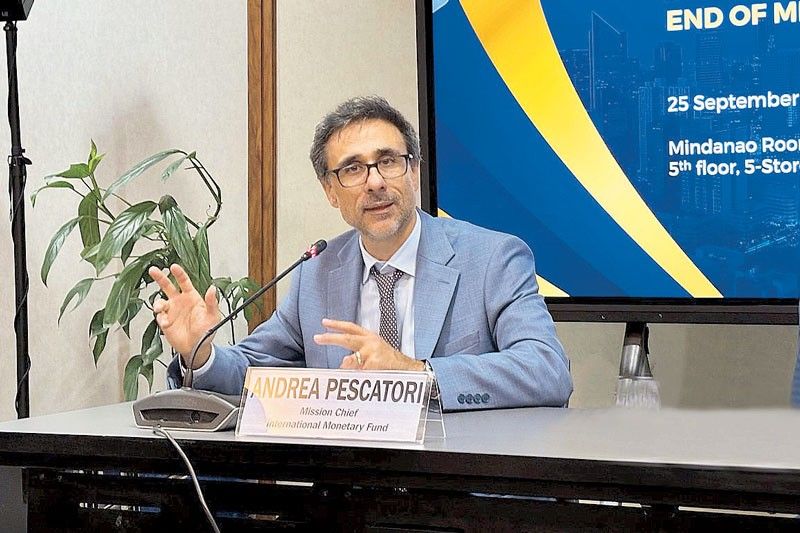
The International Monetary Fund (IMF) has lowered its gross domestic product (GDP) growth forecast for the Philippines to 3.4 percent this year, down from a previous estimate of 3.9 percent, and revised the 2027 projection to 5.1 percent from 5.5 percent. The multilateral lender anticipates a weaker economic recovery and more persistent inflation through 2027, citing high oil and food prices, sluggish investment, and delays in public infrastructure spending as key headwinds. While the IMF slightly trimmed its 2026 inflation forecast to 5.6 percent from 5.7 percent, it sharply raised its projection for next year to 4.1 percent from 3.3 percent, signaling that price pressures could take longer to normalize. Andrea Pescatori, IMF mission chief, attributed much of the downgrade for this year to weaker-than-expected second-quarter growth, which slowed to 2.3 percent. This slowdown was driven by a sharp fall in public construction investment following stricter reviews of infrastructure projects, weaker business confidence, natural disasters, and a lingering property sector slowdown. Pescatori noted that the IMF had previously expected a stronger recovery in public investment during the second half of 2026, but this has not materialized as quickly as anticipated. The outlook for next year has been further impacted by renewed tensions in the Middle East, higher oil and food prices, and a slower rebound in public investment. Inflation is expected to remain elevated as higher global oil prices combine with risks to food supply from El Niño. The IMF projects international rice prices to increase by around 20 to 25 percent under its baseline scenario, a significant factor given that rice accounts for about 12 percent of the Philippine consumer basket. The impact of the Bangko Sentral ng Pilipinas (BSP)’s rate hikes will increasingly be felt next year, as monetary policy typically affects inflation with a lag of about 12 months. The IMF’s baseline assumes one additional 25-basis-point increase in the BSP policy rate, but Pescatori stressed that further tightening should remain dependent on incoming data. He stated that the BSP’s tightening has kept inflation expectations anchored and the current monetary policy stance is approximately neutral. The IMF suggests that further rate hikes should be considered if headline inflation remains elevated, second-round effects intensify, or underlying inflation pressures strengthen. The IMF also projected the current account deficit to widen to 4.8 percent of GDP this year due to the higher oil import bill and the impact of El Niño on global rice prices. The lender affirmed that systemic financial risks remain contained, with Philippine banks well capitalized, profitable, and liquid. However, it flagged weakening asset quality in construction, rising leverage among large corporations, and banks’ interconnectedness with conglomerates as areas warranting close monitoring. Regarding the property sector, Pescatori indicated it is not seen as a major threat to growth, but noted that excess supply continues to hinder its role as a meaningful growth engine, with higher interest rates potentially delaying a recovery in housing and property activity. To lift the economy’s longer-term growth potential, the IMF recommended faster implementation of structural and governance reforms, stronger private investment, and improvements in infrastructure and education.
Original source
Philstar Business