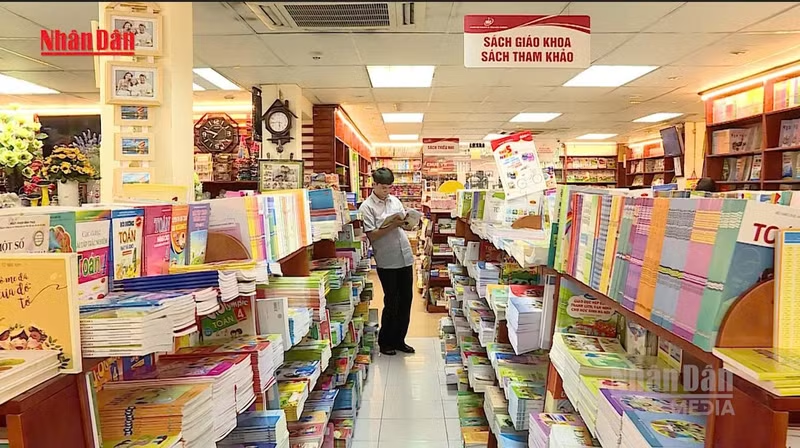
Ho Chi Minh City to Offer Free Textbook Loans from 2026-2027 Academic Year
Health
2026年7月5日
4
Nhan Dan

Ho Chi Minh City to Offer Free Textbook Loans from 2026-2027 Academic Year

AI サマリー

Ho Chi Minh City will provide free textbook loans to students in grades 1, 6, and 10 starting from the 2026-2027 academic year, three years ahead of the national roadmap. This initiative aims to promote educational equity and alleviate financial burdens.

Ho Chi Minh City has decided to implement a free textbook loan system for primary and secondary education starting from the 2026-2027 academic year. This marks a significant initiative, three years ahead of the national implementation plan. Initially, students in grades 1, 6, and 10 will be eligible. The decision aims to remove economic barriers to education and provide equitable learning opportunities for all students. Textbook costs can be a substantial burden for many Vietnamese households, making this measure likely to be welcomed by numerous families. Under Vietnam's one-party system, education is considered a crucial pillar of social development, with the government prioritizing improvements in quality and accessibility. The introduction of free textbook loans can be viewed as part of these national educational policies. While Vietnam's economy has experienced remarkable growth in recent years, income disparities persist. Differences in educational opportunities between urban and rural areas, or between affluent and low-income groups, remain a social challenge. Ho Chi Minh City's move towards free textbook loans can be seen as a concrete step towards addressing these disparities. Furthermore, Vietnam maintains strong economic ties with China while also emphasizing geopolitical balance. Investments in education are expected to contribute to the development of future human capital, thereby enhancing the nation's competitiveness. The potential expansion of this policy nationwide will be closely watched.

多角的分析

経済的影響

ホーチミン市による教科書無償貸与は、短期的な教育費負担軽減という直接的な効果に加え、長期的な人的資本への投資として経済成長を後押しする可能性があります。特に、経済成長の恩恵が行き渡りにくい低所得層の学習機会を均等化することで、将来的な労働力質の向上やイノベーションの創出に繋がることが期待されます。これは、ベトナムが目指す高付加価値経済への転換を支える基盤となります。

投資家心理

教科書無償化は、直接的な投資機会を生むものではありませんが、教育インフラへの間接的な投資と見なせます。教育機会の均等は、将来的な技術労働者や専門職の供給を安定させ、ベトナムの製造業やサービス業における競争力を高める可能性があります。これは、長期的な視点を持つ投資家にとって、ベトナムの持続的な経済成長と市場の安定性を示唆するポジティブなシグナルとなり得ます。

社会的影響

ホーチミン市では、教科書代が家計を圧迫する家庭にとって、この無償貸与は大きな救済となります。特に、経済的に困難な状況にある子供たちが、教材へのアクセスを理由に学習機会を失うことを防ぐ効果が期待されます。一方で、教科書の管理・回収体制の整備や、多様な学習ニーズに対応するための追加的な教材開発が、新たな課題として浮上する可能性も考えられます。

市民の声

ホーチミン市に住む多くの保護者、特に低所得層の家庭にとって、教科書代の負担が軽減されることは生活を大きく改善する可能性があります。子供たちが学校で必要な教材を問題なく利用できることは、学習意欲の向上にも繋がるでしょう。しかし、教科書の破損や紛失に対する懸念、そして無償化の対象とならない教材や学習用品への追加出費が、一部の家庭にとっては依然として課題となるかもしれません。

背景・歴史的文脈

ベトナムでは、1986年のドイモイ政策(刷新)以降、市場経済化と国際社会への開放が進められ、教育分野も改革の対象となってきました。特に2000年代以降、経済成長に伴い、教育への投資は増加傾向にありますが、同時に教育格差も顕在化しています。2019年には、教育省が2020年から2025年までの期間で、教科書を段階的に無償化する計画を発表していましたが、ホーチミン市はこれを前倒しする形となります。これは、地方自治体が独自の判断で教育政策を推進する余地があることを示唆しています。

原文ソース

Nhan Dan

原文を読む