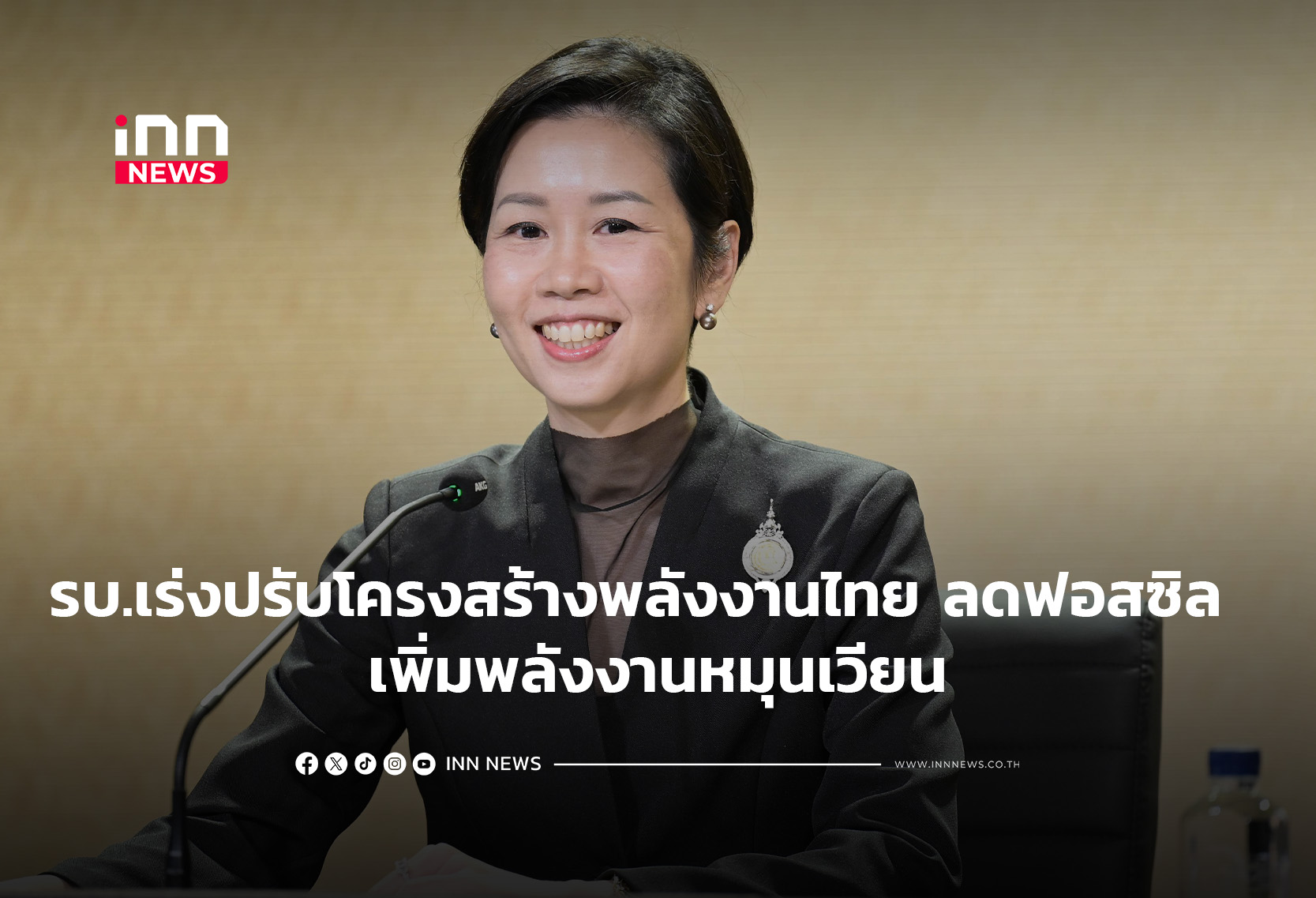
Thailand Accelerates Energy Sector Reform to Cut Fossil Fuels and Boost Renewables
The Thai government is accelerating energy sector reform to reduce reliance on fossil fuels and boost renewable energy. This move aims to compete in the global clean energy race and create new economic opportunities.
The Thai government is accelerating reforms in its energy sector to reduce reliance on fossil fuels and expand the use of renewable energy, recognizing the global shift towards a clean energy era. This initiative aims to strengthen energy security and create new economic opportunities. According to Ms. Rachada Thanadirek, Deputy Government Spokesperson, the world is entering a new era of competition where clean electricity production is a crucial factor for attracting investment, exports, and job creation, not just technological advancement. Therefore, Thailand is rapidly reforming its energy structure to maintain competitiveness in the rapidly changing global economy. The latest Statistical Review of World Energy from the Energy Institute indicates that by 2025, wind and solar power combined will become the largest sources of new energy entering the world's electricity systems for the first time. Global electricity demand continues to rise, with most new generation capacity coming from low-carbon sources. Wind and solar power alone grew by 18.3% in a single year, clearly signaling the world's transition to a clean electricity era. This energy transition is not merely an environmental issue but is critical to a nation's competitiveness. Modern industries such as data centers, electronics, electric vehicles, food processing, and exports all require stable, cost-effective electricity that complies with increasingly stringent global carbon emission reduction standards. Thailand risks losing opportunities to attract investment and expand export markets if it fails to prepare adequately. Consequently, the Prime Minister has prioritized the nation's energy transition, directing all relevant agencies to accelerate concrete measures. These include promoting renewable energy, advancing community solar projects, supporting electric vehicles (EVs), and developing smart grids, energy storage systems, and energy management systems. The government is also preparing to utilize funds from a royal decree for energy-related borrowing to support projects that reduce fossil fuel consumption and yield measurable results. Furthermore, the government is laying the groundwork for a new energy infrastructure. This encompasses not only building power plants but also developing smart transmission grids, energy storage facilities, EV charging infrastructure, and energy management technologies to ensure Thailand has a stable, efficient electricity system capable of supporting future industries. Ms. Rachada emphasized, "The government wants the energy transition to be a collaborative effort involving all sectors, not just the government or large corporations. Citizens can start by installing community solar panels to reduce electricity bills, communities can develop their own energy systems, and businesses can lower costs and improve production standards. The government will accelerate investment in necessary infrastructure to ensure Thailand has a stable, modern, and competitive energy system in the long run." "The world is not changing in ten years; it is changing right now. Countries that prepare their clean electricity systems first will attract more investment, create more jobs, and be more competitive. The government is therefore accelerating the reform of Thailand's energy structure starting today to enhance energy security, reduce dependence on fossil fuels, mitigate risks from global energy price volatility, and create sustainable economic opportunities for the Thai people in the long term," Ms. Rachada concluded. Source: INN News
多角的分析
タイ政府のエネルギー構造改革は、化石燃料依存からの脱却と再生可能エネルギーへの移行を加速させることで、エネルギーコストの安定化と長期的な経済競争力の向上を目指しています。特に、データセンターやEV産業など、クリーンエネルギーを重視する新興産業の誘致に不可欠な要素であり、国際的な投資基準への適合性を高める狙いがあります。再生可能エネルギーの導入拡大は、新たな雇用創起や関連産業の育成にも繋がり、持続可能な経済成長の基盤を築く可能性があります。
今回のエネルギー改革は、再生可能エネルギー分野への投資機会を拡大するものです。政府がスマートグリッドやエネルギー貯蔵システムといったインフラ整備に注力する姿勢は、関連技術を持つ国内外の企業にとって朗報と言えます。一方で、化石燃料関連産業への投資リスクは高まる可能性があり、投資家はクリーンエネルギーへのシフトという長期的なトレンドを見極める必要があります。また、国民参加型ソーラープロジェクトの推進は、個人投資家や地域コミュニティからの小規模投資を促進する可能性も秘めています。
エネルギー構造改革は、国民の電気料金負担軽減に直接的な影響を与えます。自家消費型ソーラーパネルの導入支援や、地域コミュニティでのエネルギーシステム開発は、エネルギーの自給自足と地域経済の活性化に貢献する可能性があります。しかし、再生可能エネルギーへの移行に伴う初期投資や技術的な課題、そして化石燃料関連産業からの雇用シフトといった社会的な側面での課題にも、政府は丁寧な対応が求められます。特に、地方部におけるエネルギーインフラの整備状況は、地域格差を是正する上でも重要となります。
国民にとって、このエネルギー改革は電気料金の安定化と、よりクリーンな環境への移行という恩恵をもたらす可能性があります。自家消費型ソーラーパネルの普及は、家庭の経済的負担を軽減するだけでなく、エネルギーへの意識を高めるきっかけとなるでしょう。しかし、再生可能エネルギーへの転換に伴うインフラ整備の遅れや、新たな技術への適応といった課題も存在します。特に、地方部や低所得者層が、この移行の恩恵を公平に受けられるかが問われています。
背景・歴史的文脈
タイは長年、エネルギー供給の大部分を輸入化石燃料に依存しており、国際的なエネルギー価格の変動リスクに晒されてきました。特に、石油や天然ガスへの依存度は高く、エネルギー安全保障の観点から課題とされてきました。近年、世界的に気候変動対策への意識が高まり、再生可能エネルギーへの投資が加速する中で、タイも国際社会の潮流に乗り遅れないよう、エネルギー転換の必要性を強く認識するようになりました。2015年のパリ協定採択以降、タイ政府は再生可能エネルギー導入目標を設定し、段階的に政策を推進してきましたが、今回の改革は、その取り組みをさらに加速させるものです。特に、ASEAN地域における経済成長とエネルギー需要の増加という背景も、この改革を後押ししています。
原文ソース
INN News