General articles are free for 24 hours after publish.
Nepal's New Government Faces Challenges One Year After Youth Uprising
One year after Nepal's youth-led uprising, the new government that dismantled the old political order is grappling with challenges in governance, economic reconstruction, and international relations, facing scrutiny over its capabilities.
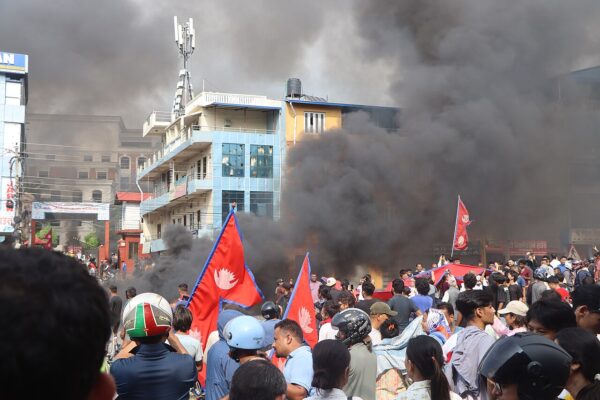
It has been a year since Nepal's 2025 Gen Z uprising. The movement, which was spontaneous and led to the downfall of the old political order, resulted in 76 deaths and a significant political vacuum. The new leaders, young and passionate but politically untested, are now grappling with the realities of governing. Following the overthrow of the Oli government, former Chief Justice Sushila Karki was appointed prime minister with the mandate to hold elections within six months. Her government successfully navigated formidable obstacles, including the reluctance of traditional political forces and the resurgence of monarchist sentiment, to hold largely free and fair elections in March 2026. In the subsequent phase, Balendra Shah became prime minister with a strong parliamentary majority. His five months in office have been turbulent. While Karki's role was transitional, expectations for Shah's government were significantly higher, and its delivery has been mixed. A key task was to bring to justice those responsible for the deaths during the uprising. However, the government's attempt to arrest former Prime Minister Oli and Home Minister Lekhak failed due to a lack of legal grounds, highlighting the inexperience of the new rulers and the immense pressure for immediate delivery. The economy, already in poor shape before the uprising, has further deteriorated. Distinguishing between peaceful protesters and vandals proved difficult, dampening business confidence and private investment. There is no sign of economic recovery or job creation, and the government is now burdened with the costs of rebuilding after devastating floods, estimated to be between $4 and $5 billion. On the external front, the Shah government has mishandled relationships with key international partners like India, China, and the United States through an insular approach. Domestically, it has alienated sections of the bureaucracy and its commitment to federalism and secularism remains questionable. The ruling Rastriya Swatantra Party is also internally divided, with factionalism between Balendra Shah and party Chairman Rabi Lamichhane. Parliamentarians are questioning the party's performance, its failure to maintain law and order, and attempts to silence critics. Despite these challenges, some improvements have been noted in service delivery, governance, and the digitization of the bureaucracy. Political interference in the civil service appears to have declined, and school and university examination results are being published on time. The new political class must now prove its ability to build durable institutions and govern through established processes, accommodating competing interests. Relying solely on the legitimacy of the revolt or Shah's personal popularity will not suffice. The upcoming reconstruction efforts following the floods will be a demanding test of their governing capabilities.
Original source
The Diplomat Indonesia