General articles are free for 24 hours after publish.
Cambodian Health Minister Emphasizes 'Collaboration' as Key to Strengthening ASEAN Health Systems
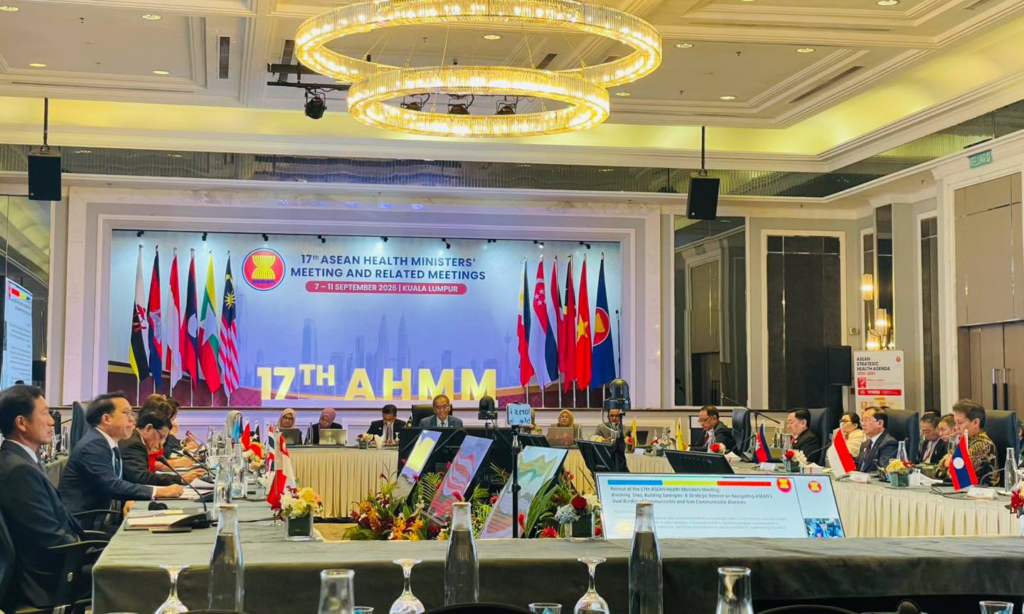
Cambodia's Minister of Health, speaking at the 17th ASEAN Health Ministers Meeting in Malaysia, stressed that strengthening ASEAN health systems hinges on collaboration and joint efforts, not just individual components. He highlighted the importance of addressing regional health challenges, fostering leadership and flexible strategies, and building sustainable cooperation mechanisms.
On the morning of September 10, 2026, Professor Chheang Ra, Minister of Health of Cambodia, attended the 17th ASEAN Health Ministers Meeting held in Kuala Lumpur, Malaysia. The meeting was attended by health ministers from all 11 ASEAN member states, the Deputy Secretary-General of ASEAN, and representatives from the World Health Organization's Regional Office for Southeast Asia (SEARO) and the Western Pacific Region (WPRO). The plenary session was chaired by Datuk Seri Dr. Haji Dzulkefly Ahmad, Minister of Health of Malaysia and Chair of ASEAN Health Sector. During the session, Professor Chheang Ra delivered an intervention on the theme "Synergising Health Systems for Resilience, Well-Being and Health Security." He highlighted from the experience of combating past pandemics that "the strength and resilience of health systems depend not only on their individual components but also on the level of collaboration and joint work." The Cambodian Minister of Health emphasized that to transition from isolated activities to integrated actions and move towards sustainable long-term resilience, he contributed three key priority directions. Firstly, health challenges are common regional issues, and strengthening health security, universal health coverage, and preparedness cannot be achieved by the health sector alone but requires close inter-sectoral, inter-institutional, and cross-border cooperation. Secondly, strengthening leadership and joint collaboration, providing clear strategic goals with flexibility and innovation, and enhancing the ability to estimate and prepare for future risks. Thirdly, building the sustainability of cooperation structures requires governance, stability, sustainable financing, interconnected technology, knowledge sharing, and especially the creation of mutual "trust." Concurrently, the plenary session adopted several key documents, including the report of the Preparatory Senior Officials Meeting for the ASEAN Health Ministers Meeting (PrepSOM), reports from preparatory meetings with partners (ASEAN Plus Three, ASEAN-China, ASEAN-Korea, ASEAN-America, and ASEAN-Japan), Rules of Procedure (ROP), the ASEAN Strategic Health Agenda 2026-2030 (ASHA), the Governance and Implementation Mechanism (GIM), and the Terms of Reference of ASEAN Health Clusters (TOR AHCs). A Joint Statement of the 17th ASEAN Health Ministers Meeting was also adopted.
Original source
Kampuchea Thmey Local