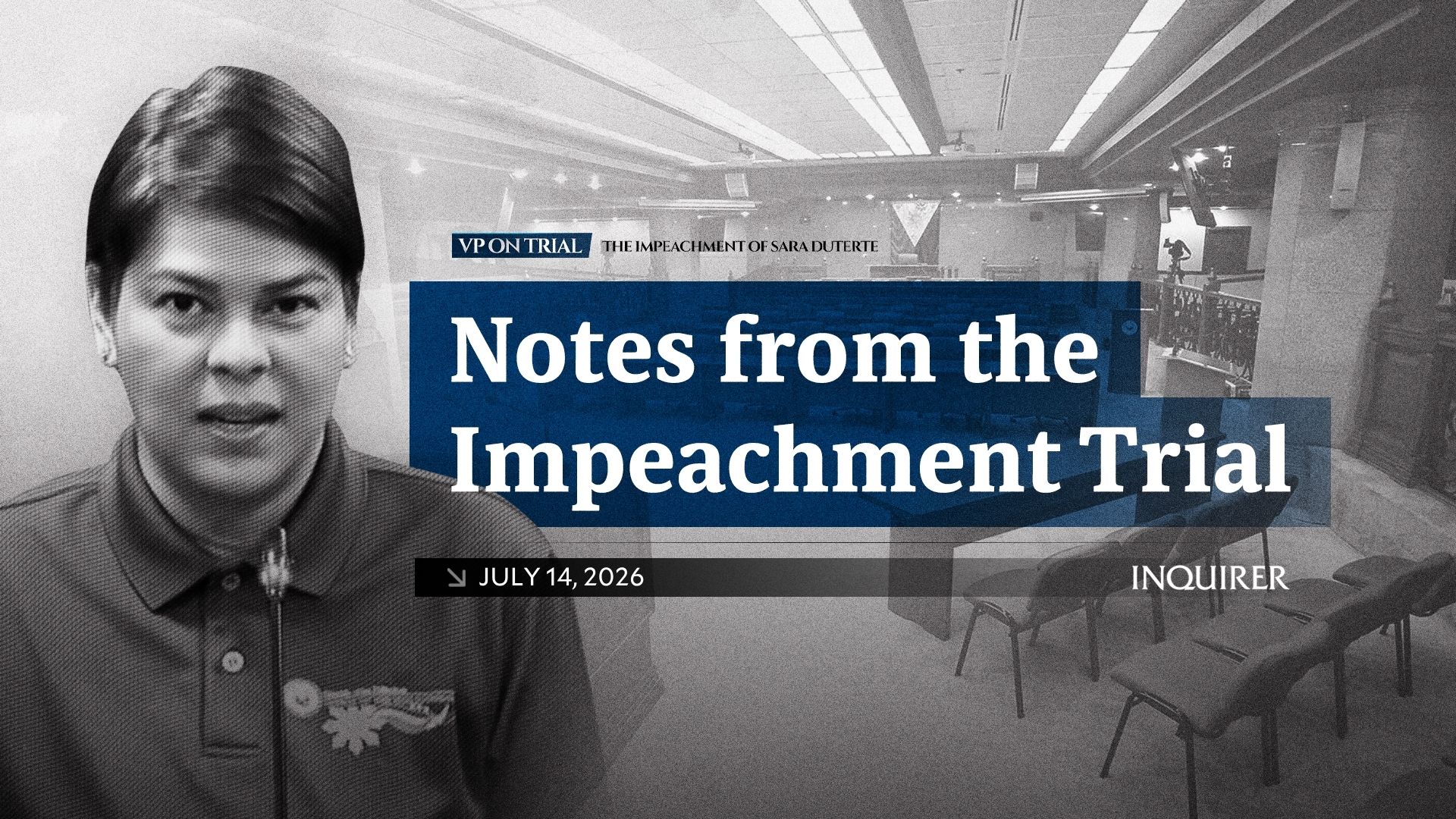
NBI: Ex-President's ICC case a factor in assessing VP Sara's threats
During the impeachment trial of Philippine Vice President Sara Duterte, a National Bureau of Investigation (NBI) official testified that former President Rodrigo Duterte's International Criminal Court (ICC) case was a factor in assessing the Vice President's capability to carry out threats against the President and others. The defense maintains insufficient evidence.
MANILA, Philippines – National Bureau of Investigation (NBI) official Jeremy Lotoc on Tuesday told the Senate impeachment court that former President Rodrigo Duterte’s case before the International Criminal Court (ICC) was among the factors considered in assessing Vice President Sara Duterte’s alleged capability to carry out threats against President Ferdinand Marcos Jr., First Lady Liza Araneta-Marcos, and former House Speaker Martin Romualdez. During the fifth day of Duterte’s impeachment trial, Lotoc said investigators factored in the vice president’s relationship to the former president and his pending ICC case over alleged extrajudicial killings when evaluating whether she had the capability to execute the threats she allegedly made during a November 2024 online press briefing. Under cross-examination by defense lawyer Mark Vinluan, Lotoc acknowledged he had no personal knowledge that Duterte had contracted someone to kill the president or the other targets, but maintained that the evidence the NBI gathered linked her to such a plot. The NBI official also asserted that typographical errors and document inconsistencies pointed out by the defense did not alter the NBI’s findings that Duterte committed grave threats and inciting to sedition. On the sedition charge, Lotoc said actual sedition need not occur for the offense of inciting to sedition to apply, explaining that the law penalizes those who attempt to overthrow the government or disturb public peace. Private prosecutor Lorna Kapunan said the House prosecution panel will no longer present Office of the Vice President chief-of-staff Undersecretary Zuleika Lopez and House Legislative Security Bureau official Capt. Belinda Bello, arguing that their testimonies on Duterte’s alleged grave threats would be “unnecessary,” “redundant,” and a “surplusage” after the testimonies of NBI Senior Agent John Mark Calilung and Lotoc. The day’s proceedings also touched on the term “Oplan Romanov,” with Lotoc and Senator-judge Erwin Tulfo saying it was first publicly used by Davao City Mayor Sebastian Duterte during a rally referring to alleged threats against the Marcos family. Outside the witness testimony, Presiding officer Francis Escudero announced that the impeachment court would rule on Wednesday on the prosecution’s request to subpoena Duterte’s bank and tax records after hearing oral arguments from both sides. Meanwhile, NBI Director Melvin Matibag defended his request to reschedule his testimony after Senator-judge Alan Peter Cayetano criticized the move, explaining that he needed to attend an FBI-hosted regional summit on transnational crime in Bangkok. His testimony has been reset for July 20. The vice president, speaking before proceedings began, maintained that the complaint against her is not supported by evidence, pointing to Day 4 as proof of what she has said all along. The prosecution panel pushed back sharply, with Bicol Saro Rep. Terry Ridon challenging defense lawyers to do better, arguing that pointing out document discrepancies did not diminish the underlying threats. Ridon also framed the dilemma for the defense: If Duterte did not contract a hitman, then her statements in a November 23, 2024 online press briefing were lies, and if the statements were true, she made real threats, leaving her either a lying or a threatening official. The prosecution further questioned Duterte’s fitness for the presidency on those grounds. Editor’s note: This update was generated with the aid of artificial intelligence based on Inquirer.net, Philippine Daily Inquirer and Cebu Daily News articles and reviewed by a human editor./ dp /atm
多角的分析
副大統領の弾劾裁判という政治的不安定さは、国内および海外からの投資家心理に悪影響を与える可能性がある。特に、汚職や権力乱用といった疑惑は、フィリピンのビジネス環境に対する信頼を損ない、外国直接投資(FDI)の流入を鈍化させるリスクがある。また、副大統領やその関係者の資産・税務記録の開示要求は、金融取引の透明性への懸念を高め、金融市場のボラティリティを増大させる要因となりうる。
投資家にとって、この弾劾裁判はフィリピンの政治的安定性に対する重大な懸念材料となる。元大統領のICC案件が副大統領の脅迫能力の評価に影響したという証言は、法の支配や政治的プロセスの独立性に対する疑問を投げかける。このような状況下では、新規投資の意思決定が遅延したり、既存投資のリスク評価が見直されたりする可能性がある。特に、政治的リスクを重視する投資家は、フィリピン市場へのエクスポージャーを縮小する動きを見せるかもしれない。
副大統領の弾劾裁判は、国民の政治への信頼に直接的な影響を与える。特に、元大統領のICC案件が絡むことで、司法の独立性や政治権力との関係性が問われることになる。市民の間では、政治家が法の裁きから逃れられないのか、あるいは政治的圧力によって捜査や裁判が歪められるのではないかという不安が生じうる。また、SNS上での情報拡散が速い現代において、このような政治的混乱は、市民の間に分断や不信感を増幅させる可能性がある。特に、地方都市の市民は、首都圏の政治動向を注視しつつも、日常生活への直接的な影響や、情報へのアクセス格差から、複雑な感情を抱くことが想定される。
今回の弾劾裁判でNBI証人が元大統領のICC案件を副大統領の脅迫能力評価の要因として挙げたことは、多くのフィリピン市民にとって、政治と司法の複雑な絡み合いを改めて認識させる出来事である。特に、ロドリゴ・ドゥテルテ前大統領の任期中の超法規的殺害疑惑は、国内外で大きな注目を集めており、その影響が現在の副大統領の訴追にまで及ぶことは、国民に権力構造の深さや、司法プロセスへの政治的影響の可能性を示唆している。市民は、この裁判が公正かつ透明に進められるのか、そして最終的にどのような結果になるのかを注視しており、その行方は国民の政治への信頼に大きく影響するだろう。特に、若年層はSNS等で情報を収集・共有する機会が多く、この裁判の進展や関係者の発言に対して、より敏感に反応し、自身の将来や国のあり方について議論を深める可能性がある。
背景・歴史的文脈
フィリピンでは、政治指導者に対する弾劾裁判が過去にも行われており、その手続きや影響は常に国民の関心事である。特に、ロドリゴ・ドゥテルテ元大統領の任期中に国際刑事裁判所(ICC)がフィリピン国内での超法規的殺害疑惑について捜査を開始したことは、国際社会におけるフィリピンの司法の独立性や人権状況への懸念を高めた。今回の弾劾裁判で、元大統領のICC案件が副大統領の alleged な脅迫の実行能力を評価する上で考慮されたという証言は、ドゥテルテ家とその政治的影響力が、現在の政権下でも依然として司法プロセスに影を落としている可能性を示唆している。これは、フィリピンの政治が、過去の権力闘争や国際的な司法圧力と複雑に絡み合っている構造を浮き彫りにしている。
原文ソース
Inquirer NewsInfo