APSARA Bars Inaccurate 'Ancient Khmer' Costumes from Angkor Park
Culture
2026年7月15日
3
Phnom Penh Post
Relations
🇰🇭Cambodia🇹🇭Thailand

APSARA Bars Inaccurate 'Ancient Khmer' Costumes from Angkor Park

AI サマリー

The APSARA National Authority has announced a ban on inaccurate 'ancient Khmer' costumes at Angkor Archaeological Park, effective July 13. Experts estimate up to 70% of rental outfits deviate from authentic Khmer styles, incorporating foreign fabrics and jewelry, prompting the move to preserve cultural integrity.

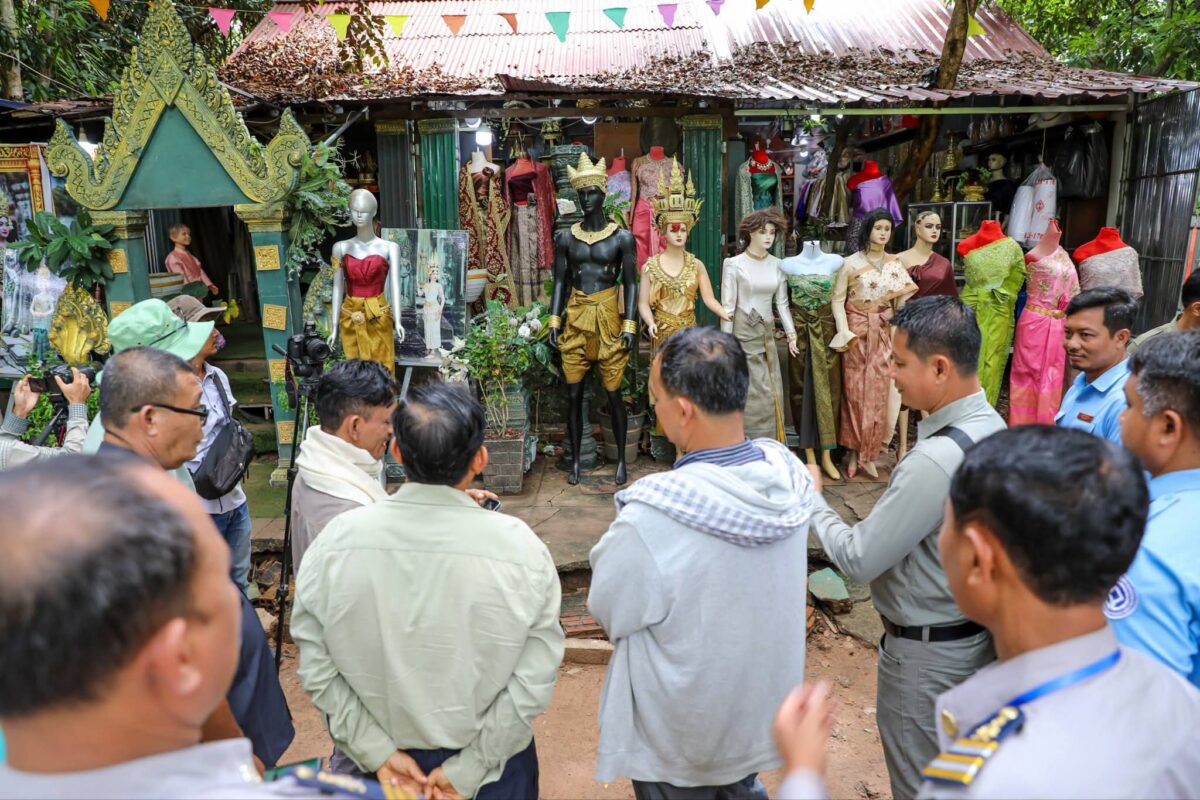
Visitors wearing inaccurately designed “ancient Khmer” costumes that fail to follow traditional cultural standards will no longer be permitted to enter Angkor, after experts determined that as many as 70 per cent of the rental outfits available in front of Angkor Wat stray from authentic Khmer styles. The measure, effective from July 13, marks a tightening of cultural standards at the Angkor Archaeological Park following repeated criticism of modified “traditional” costumes which experts say distort historical Khmer dress and increasingly incorporate fabrics and jewellery imported from Thailand. The APSARA National Authority(ANA) announced the restriction after its officials, together with the Siem Reap provincial Department of Culture and Fine Arts, local authorities and Heritage Protection Police, met costume rental vendors serving tourists at Angkor on July 13. Chan Sophorn, an official from the sculpture office of the provincial culture department and a specialist in ancient Khmer clothing, said about 70 per cent of the rental costumes available for tourists to pose for photographs in front of Angkor Wat differ from their original forms. He singled out the use of fabrics and jewellery imported from Thailand as a particular concern, describing the practice as a departure from Khmer national and cultural identity and one which effectively promotes foreign culture. “Ancient Khmer-style clothing must use Khmer fabrics and jewellery, and no costume should be modified in a way that departs from Khmer traditions and standards,” he said. Sophorn explained that clothing and personal adornment in ancient Khmer society followed clearly defined conventions according to social rank, from kings and queens to wealthy citizens and ordinary people. Silk hol garments, for example, were used for kings and queens, while particular woven fabrics were associated with wealthy or high-status citizens. Cotton textiles were generally worn by ordinary people. The inappropriate combination of fabrics, jewellery and decorative styles without regard to historical status and dress conventions has contributed to costumes marketed as “ancient Khmer” losing the accuracy of their original identity, according to Sophorn. He encouraged rental vendors to gradually shift towards the use of Khmer hol and silk fabrics, traditional woven textiles and locally crafted jewellery. Such a transition, he said, would not only help preserve traditional Khmer clothing but also increase the value of the work of Cambodian weavers and goldsmiths who continue to preserve traditional craftsmanship. Tes Sothy, deputy director of ANA’s Department of Tourism Development and Culture, noted that inaccurate rental costumes in the Angkor area had drawn repeated public criticism and caused significant harm to the value of Khmer culture. The ANA and the culture department have called on rental businesses to gradually reduce and eventually completely stop using foreign fabrics, particularly cheaper textiles imported from Thailand. Under the new measure, ancient-style costumes which have been modified away from original Khmer forms, do not follow proper traditional conventions or significantly depart from authentic styles will no longer be allowed inside Angkor from July 13. Rental vendors have been given a longer transition period, with their use required to end permanently by January 2027. The measure comes as traditional costume rental services for photography have become an increasingly visible part of the tourist experience at Angkor Wat. Images of visitors dressed in outfits promoted as “ancient Khmer costumes” are widely shared on social media and international travel platforms. For cultural officials, the move is not intended to discourage visitors from wearing Khmer clothing or taking photographs at Angkor. Instead, the restrictions are aimed at ensuring that costumes displayed at Cambodia’s most prominent heritage site accurately reflect Khmer cultural identity and historical traditions. With Angkor serving as one of Cambodia’s most recognisable symbols internationally, officials argue that the way Khmer history and culture are visually represented to millions of visitors – and subsequently through images circulated around the world – carries significance beyond a tourist photograph. The new rules place the responsibility not only on visitors, but also on rental vendors to ensure that what is presented as “ancient Khmer” at Angkor is, in fact, recognisably and authentically Khmer.

多角的分析

経済的影響

この規制は、アンコール遺跡公園周辺の衣装レンタル業者のビジネスモデルに直接的な影響を与えます。タイからの安価な素材や装飾品の輸入に依存していた業者は、クメール産の素材や職人技を活かした高価な衣装への切り替えを迫られるため、短期的なコスト増加や収益構造の変化に直面する可能性があります。しかし、長期的には、本物のクメール文化を反映した高級衣装は、新たな観光客層を惹きつけ、文化遺産としてのアンコールの価値を高めることで、地域経済全体の持続的な発展に寄与する可能性があります。これは、観光収入の質的な向上を目指すカンボジア政府の経済政策の一環とも解釈できます。

投資家心理

投資家にとって、このニュースはアンコール遺跡周辺の観光関連ビジネス、特に衣装レンタル業者への直接的な影響を示唆しています。タイからの安価な素材への依存度が高い企業は、新たな調達ルートの確保や、より高価なクメール産素材への移行に伴うコスト増に直面する可能性があります。一方で、本物のクメール文化を重視する高級衣装サービスや、関連する伝統工芸品(織物、装飾品)の製造・販売に投資する機会も生まれるかもしれません。投資判断においては、各業者のサプライチェーンの柔軟性や、文化保全への取り組みへの適応能力が重要な評価指標となるでしょう。

社会的影響

この規制は、観光客がアンコール遺跡で体験する文化的な側面において、より本物志向を求める動きを示しています。不正確な衣装は、クメールの歴史や文化を歪曲して伝えるリスクがあり、特にSNSなどを通じて拡散されることで、誤ったイメージを広める可能性があります。地域住民、特に伝統工芸に携わる人々にとっては、自国の文化遺産が正しく継承され、その価値が国際的に正しく認識される機会となります。一方で、安価で手軽に「それらしい」体験を求めていた一部の観光客や、それにサービスを提供する業者にとっては、一時的な不便やビジネスモデルの転換を迫られることになります。

市民の声

カンボジア市民、特に伝統文化や歴史に関心を持つ人々にとっては、自国の文化遺産が国際的に正しく評価されるための重要な一歩と捉えられるでしょう。アンコール遺跡はカンボジアの誇りであり、そのイメージが歪められることは、多くの市民にとって看過できない問題です。この規制により、クメールの伝統工芸品や織物産業が活性化し、国内の職人やデザイナーが正当な評価を受ける機会が増えることが期待されます。ただし、観光客の減少や、衣装レンタル業者の経営悪化といった短期的な影響も懸念されるため、政府による適切な支援策が求められるでしょう。

背景・歴史的文脈

カンボジアのアンコール遺跡群は、ユネスコ世界遺産に登録されており、同国の主要な観光資源である。近年の観光客増加に伴い、遺跡公園内での写真撮影用衣装レンタルが盛んになったが、その多くが伝統的なクメール様式から逸脱し、特にタイなど近隣諸国の文化要素を取り入れたものが流通していた。専門家や文化関係者からは、こうした「偽物」の衣装が、クメールの歴史的・文化的アイデンティティを歪曲し、国際的なイメージを損なうとの懸念が長年表明されていた。今回のANAによる規制強化は、こうした状況に対し、文化遺産の真正性を守り、カンボジア独自の文化価値を再認識させようとする動きである。

原文ソース

Phnom Penh Post

原文を読む