The Sagaing earthquake caused the Sagaing fault line to rupture up to 500 kilometers, and signs of fault movement at supersonic speeds were found, which is very rare. Large earthquakes of magnitude 7 and above can return in more than 100 years
Yangon July 9 A new research study shows that the magnitude 7.7 Sagaing earthquake that hit central Myanmar on March 28, 2025, did not only shake the Sagaing and Mandalay regions, but also caused damage to about 500 kilo
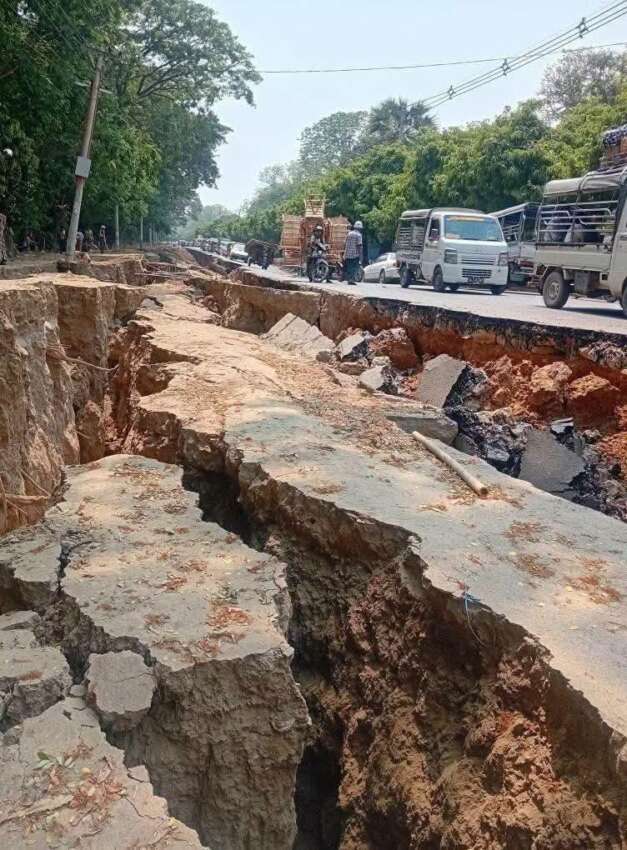
Yangon July 9 A new research study shows that the magnitude 7.7 Sagaing earthquake that hit central Myanmar on March 28, 2025, did not only shake the Sagaing and Mandalay regions, but also caused damage to about 500 kilometers along the Sagaing fault line. The earthquake killed thousands of people, injured more than 11,000, destroyed homes, Roads, bridges and infrastructure were heavily damaged. According to the researchers, the damage was caused by a very long fault along the Sagaing fault line that ruptured at high speed near the surface. The researchers used satellite images, They studied ground motion during earthquakes using InSAR and Pixel Offset Tracking techniques. The results showed that the fault rupture was about 500 km long, making it one of the longest strike-slip earthquakes recorded in the world. According to the study, the ground moved up to a maximum of 4.6 meters due to the earthquake, and in normal large earthquakes, the movement on the surface of the ground is less than the underground, but this did not happen in this earthquake, and the fault movement reached the surface in full. Therefore, towns and villages Transportation and infrastructure were directly affected, causing severe damage to people and property, researchers said. According to researchers, the Sagaing Fault is a mature fault that has existed for millions of years and has experienced at least 9 earthquakes of magnitude 7 or higher since 1900. It states that ruptures in faults can continue to propagate very quickly with few barriers. A particular finding of the study is that the southern part of the fault may have ruptured faster than the seismic waves (supershear). This is a rare phenomenon where the speed of the fault ruptures even faster than the speed of the seismic wave, and the researchers say that it can make earthquakes more intense, like a sonic boom caused by an aircraft traveling at the speed of sound.Explained. However, researchers have yet to confirm the phenomenon, and only consider the evidence to suggest that it may have occurred. Their analysis was the low number of aftershocks; It is based on fault shape correction and energy release pattern. According to the researchers, the fault started rupturing from the north and continued to propagate southward within 70 to 90 seconds, and during the first 100 kilometers, it probably shifted to a speed faster than the seismic wave in the south. In addition, it was found that this earthquake ruptured through the fault section between the site of the 2012 magnitude 6.8 earthquake and the site of the 1930 magnitude 7.5 earthquake, which had not experienced major earthquakes for many years. In this section, the researchers concluded that decades of accumulated pressure in the earth could have caused this very long fault rupture. Coulomb stress calculations show that changes in stress on one fault segment encourage further fault segments to rupture, allowing the seismic fault to propagate continuously for up to 500 km. That length is nearly twice as long as previous estimates for a magnitude 7.7 earthquake. The researchers estimated that earthquakes of magnitude 7 or higher in the now ruptured parts of the Sagaing Fault could occur again, on average, once every 104 to 131 years. According to the research team, the findings will make earthquake hazard predictions in Myanmar and Southeast Asia more accurate, as well as provide important scientific evidence for building infrastructure along the Sagaing fault line and improving earthquake resilience. Photo: On March 28, 2025, the main roads in Mandalay were destroyed by the Sagaing earthquake. (Myanmar's deadliest earthquake results in 500 km rupture and signs of a rare supershear break.) The post The Sagaing earthquake caused the Sagaing fault to rupture up to 500 km, and signs of extremely rare supersonic fault movement were found. Major earthquakes of magnitude 7 and above may return in more than 100 years appeared first on Khit Thit Media.
多角的分析
ヤンゴン 7月9日 新しい調査研究によると、2025年3月28日にミャンマー中部を襲ったマグニチュード7.7のザガイン地震は、ザガインとマンダレー地域を震撼させただけでなく、ザガイン断層線に沿って約500キロメートルに被害を与えた。 この地震により、数千人が死亡、11,000人以上が負傷し、家屋が破壊され、道路、橋、インフラが大きな被害を受けました。この動きは直接の経済指標ではなくても、行政運営、地域の信頼、公共サービスの質を通じて企業活動や生活コストに波及する可能性があります。
投資家にとっては、個別ニュースの背後にある制度の安定性、情報公開、地域社会の反応が判断材料になります。短期の見出しだけでなく、継続的な変化を見る必要があります。
このニュースの重みは、生活上のリスクを感じている人々が「次に何をすればよいか」を理解できるかにあります。ミャンマーの現場で説明、支援、監視の回路が生まれるかを追いたいところです。
市民にとっては、このニュースが安全、雇用、教育、行政サービスなど身近な領域にどうつながるかが焦点です。生活者目線で具体的な影響を追う価値があります。
背景・歴史的文脈
Khit Thit Mediaが伝えたこのニュースは、ミャンマーの行政運営や地域社会の変化を読むための小さなシグナルです。個別の発表や事件でも、制度、生活、対外関係のどこに影響するかを分けて見ることで、ニュースの意味が見えやすくなります。
原文ソース
Khit Thit Media