General articles are free for 24 hours after publish.
Vietnam Seeks USTDA Support for Strategic Infrastructure Projects
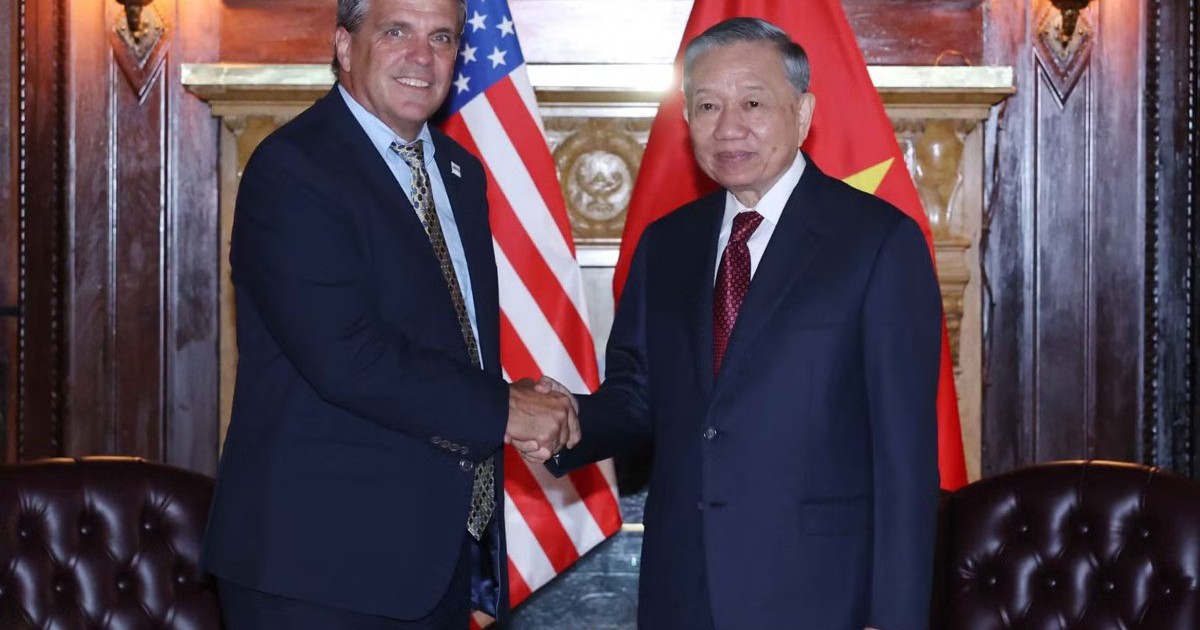
Vietnamese President To Lam met with USTDA Acting Director Thomas R. Hardy in New York, requesting support for strategic projects in energy, digital infrastructure, aviation, and ports. The aim is to deepen the Comprehensive Strategic Partnership by connecting US technology with Vietnam's development needs.
Vietnamese General Secretary and President To Lam met with USTDA Acting Director Thomas R. Hardy in New York, requesting enhanced USTDA support for Vietnam's strategic projects. During the meeting, To Lam highly valued USTDA's role in promoting economic, trade, and investment cooperation between Vietnam and the U.S., particularly through project preparation, feasibility studies, technical assistance, and connections between U.S. businesses and infrastructure projects in Vietnam. He affirmed that Vietnam attaches great importance to its Comprehensive Strategic Partnership with the U.S. and expressed hope that cooperation in economic, trade, investment, and science-technology will continue to be a significant driver for the substantive and sustainable development of bilateral ties. Vietnam is entering a new development phase with growing demand for strategic infrastructure, energy, transport, logistics, digital transformation, and high technology, To Lam noted. These are areas where the U.S. has considerable strengths and USTDA possesses relevant experience and support tools, he said. Regarding future cooperation, To Lam called on USTDA to strengthen coordination with Vietnamese ministries, sectors, and businesses to select strategic projects with high spillover effects for focused support. He suggested that priority be given to energy and power grids, digital infrastructure and data centers, aviation, seaports, logistics, and modern transport. He urged USTDA to further play its "pathfinder" role from the project-preparation stage, helping Vietnam gain early access to U.S. standards, technologies, management expertise, and resources. He also encouraged the agency to focus on emerging, technology-intensive, and high-value-added areas, including artificial intelligence (AI), secure digital infrastructure, smart grids, energy security, and solutions supporting the green transition. For his part, Hardy hailed Vietnam's socio-economic development achievements and the positive growth momentum of Vietnam-U.S. relations, affirming that USTDA regards Vietnam as an important partner in the Indo-Pacific region. He stated that USTDA wishes to continue working with Vietnam to prepare and develop high-quality projects that meet the country's development priorities while creating greater opportunities for U.S. technologies, equipment, services, and businesses to participate in the Vietnamese market. Hardy added that USTDA stands ready to deploy tools such as feasibility studies, technical assistance, pilot projects, and trade missions, supporting projects from the preparation stage through to their readiness to attract financing and move into implementation. Vietnam's substantial infrastructure development needs, coupled with U.S. strengths in technology, governance, and high-quality solutions, offer significant opportunities for new cooperation, Hardy pointed out. He affirmed that USTDA will strengthen coordination with Vietnamese agencies and businesses, focusing on concrete and feasible projects with strong spillover effects, and connecting Vietnam's development needs with U.S. technologies, resources, and businesses. These efforts will contribute to deepening economic, trade, and investment cooperation and adding further substantive content to the Vietnam-U.S. Comprehensive Strategic Partnership, he concluded.
Original source
Bao Chinh Phu