General articles are free for 24 hours after publish.
Vietnam Nears 50 Years in UN: Accelerating Contributions to Peace, Development, and Global Challenges
Since joining the UN in 1977, Vietnam has contributed to the international community in areas such as peacekeeping, human rights protection, and sustainable development. Ahead of its 50th anniversary of membership in 2027, the nation is deepening its cooperation with the UN and intensifying efforts on new global challenges like cybercrime and AI governance.
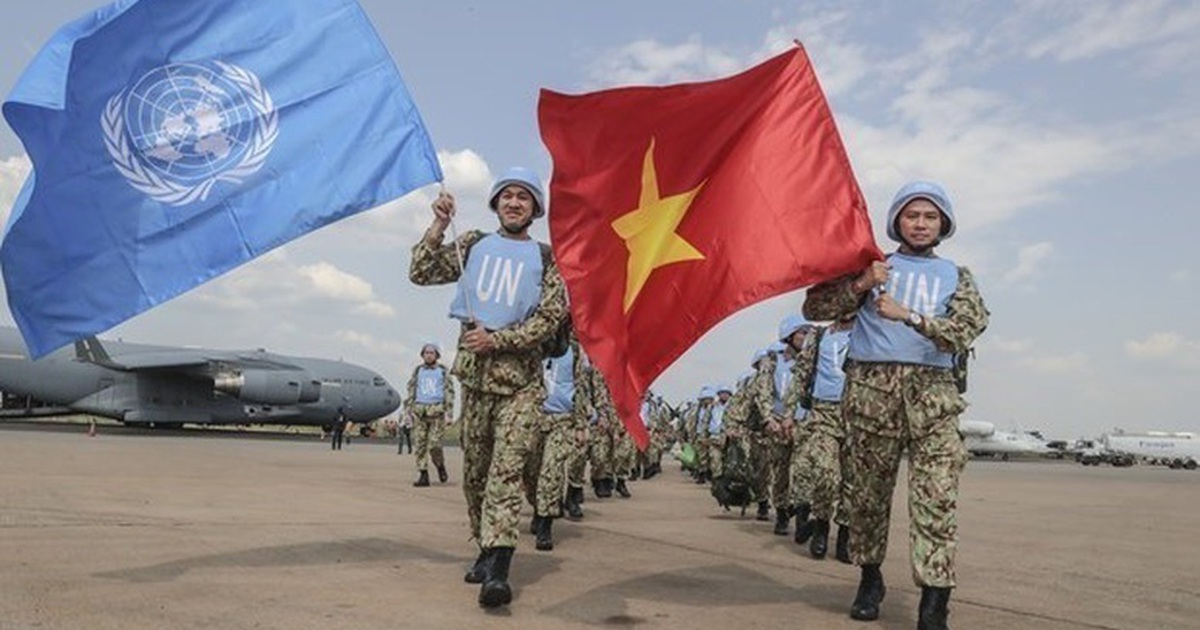
Socialist Republic of Vietnam - Government News Nearly 50 years after its admission to the United Nations on September 20, 1977, Vietnam has steadily enhanced its presence in the international arena, contributing to peace, security, sustainable development, and global challenges. Initially a recipient of support from UN agencies for post-war recovery and improving living conditions, Vietnam has transformed into a key international partner, making substantial contributions across diverse fields. Vietnam has served two terms as a non-permanent member of the UN Security Council (2008-2009 and 2020-2021) and has been active as a member of the UN Human Rights Council for three terms (2014-2016, 2023-2025, and 2026-2028) and on the UN Economic and Social Council (ECOSOC) for two terms (1998-2000 and 2014-2016). It also served as Vice President of the 77th session of the UN General Assembly. Notably, it has spearheaded the adoption of UN Security Council resolutions on the role of women in post-conflict situations (Resolution 1889, 2009) and the protection of essential civilian infrastructure in armed conflict (Resolution 2573, 2021). Furthermore, Vietnam has contributed to the establishment of new international days and observances, such as the International Day of Epidemic Preparedness on December 27 (Resolution A/RES/75/27, 2020), the International Day of Play on June 11 (Resolution A/RES/78/268, 2024), and the International Decade of Culture for Sustainable Development 2027-2036 (Resolution A/RES/80/308, 2026). Vietnam also initiated the Group of Friends of the 1982 UN Convention on the Law of the Sea (UNCLOS). In peacekeeping, Vietnam has deployed nearly 1,400 officers and personnel to UN missions in South Sudan, the Central African Republic, and the Abyei region, demonstrating its direct contribution to international peace and stability. Economically and developmentally, Vietnam has actively participated in implementing key UN development agendas, including the Millennium Development Goals (MDGs), the Sustainable Development Goals (SDGs), and the Paris Agreement on climate change. Vietnam was also one of eight pilot countries for the "Delivering as One – One UN" initiative, which aims to enhance the coherence and effectiveness of UN organizations' operations in Vietnam. In Hanoi, cooperation with the UN has been deepened through initiatives like the "Green One UN House," inaugurated in May 2015, which was the first environmentally friendly common UN house. Currently, 15 UN agencies have resident representation in Vietnam, actively supporting resource mobilization, policy advice, knowledge sharing, and capacity building in areas such as education, poverty reduction, green growth, labor, healthcare, social protection, and digital transformation. In 2025, Vietnam will preside over the 35th Meeting of States Parties to the UN Convention on the Law of the Sea (UNCLOS) for the first time, and in 2026, it will chair the 11th Review Conference of the Treaty on the Non-Proliferation of Nuclear Weapons (NPT). These roles signify Vietnam's increasing influence in shaping international norms and agendas. Pauline Tamesis, UN Resident Coordinator in Vietnam, commended Vietnam's transition from a "recipient" of international cooperation to an "active contributor to global solutions" through its participation in peacekeeping operations, the Human Rights Council, the Security Council, and other multilateral mechanisms, as well as its commitments to sustainable development, climate action, and artificial intelligence (AI) governance. The UN Sustainable Development Cooperation Framework for Vietnam for 2027-2031 aims to build a more strategic and mutually beneficial partnership. Future cooperation will focus on new areas such as responsible digital transformation, AI governance, just energy transition, climate action, and resilience-building, while dynamically combining economic development with social inclusion and environmental sustainability. Source: Bao Chinh Phu
Original source
Bao Chinh Phu