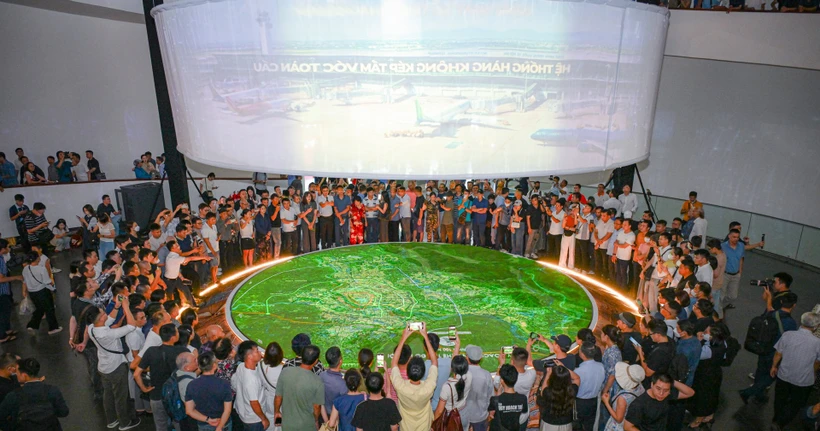
Hanoi Unveils 100-Year Master Plan, Showcasing Future Vision Through Exhibition
Business
2026年7月2日
6
Nhan Dan

Hanoi Unveils 100-Year Master Plan, Showcasing Future Vision Through Exhibition

AI サマリー

Hanoi has successfully held events to announce and exhibit its 100-year master plan for the capital. The initiative aims to transform urban governance through enhanced transparency and digital technology, attracting domestic and international investment.

Hanoi City successfully held two significant events on June 29, 2026: the announcement conference for its 100-year master plan and an exhibition showcasing its vision. These events highlight a clear shift in Hanoi's governance philosophy, emphasizing enhanced transparency and the integration of digital technology into urban management. The master plan, approved by the Hanoi City People's Committee on May 13, 2026, marks a crucial evolution from a static plan to a dynamic, long-term, and adaptable "open plan" with a centennial outlook. It covers the entire administrative area of the capital, approximately 3,359.84 square kilometers, and projects a population of 14-15 million by 2035, rising to 17-19 million by 2065. Guided by the philosophy of "Civilization - Culture - Modernity - Happiness" and centered on people, the plan establishes a "multi-layered, multi-polar, multi-centric" development model. The Red River will serve as the primary ecological and cultural landscape axis, with the formation of nine development poles, nine major centers, and nine driving axes. The plan also emphasizes the effective utilization of airspace, underground space, and digital space. Mr. Tran Thanh Man, Permanent Vice Chairman of the National Assembly, affirmed that the announcement of this master plan sends a message of Hanoi's determination to act in a new development phase. Mr. Vu Dai Thang, Chairman of the Hanoi City People's Committee, expressed optimism that the plan's implementation, coupled with the optimal use of new mechanisms and policies, will effectively mobilize all resources for the capital's development goals. He stressed that a plan's true significance lies in its realization through concrete projects and development outcomes, noting that investors are interested not only in the vision but also in Hanoi's readiness to bring it to fruition. During the conference, investment decisions, investment registration certificates, and memorandums of understanding were exchanged with domestic and international corporate groups. The 100-year plan aims to create a clear and transparent "investment map," enabling investors to easily identify opportunities. New growth poles in innovation, finance, logistics, and high-tech industries are expected to be key drivers for enhancing the capital's competitiveness. Hanoi recognizes that building trust with the business community requires not only a visionary plan but also the government's execution capability, a transparent and stable investment environment, predictable policies, and prompt resolution of corporate challenges. The exhibition at the Hanoi Museum, utilizing advanced technology, offers an immersive experience of the capital's future. Running from June 29 to August 29, 2026, it allows citizens to access planning information and understand changes affecting their lives and the city's development. The exhibition features models with 3D mapping technology and digital maps, vividly illustrating the future cityscape, and attracted thousands of visitors on its opening day. Source: Nhan Dan

多角的分析

経済的影響

ハノイの100年後都市計画は、長期的なインフラ投資と都市開発を促進し、経済成長の新たなエンジンとなる可能性を秘めている。特に、9つの開発極、9つの中心、9つの動力軸の形成は、地域経済の活性化と産業集積を促し、ハイテク産業や物流などの新成長分野への投資を誘致する狙いがある。2035年までに人口が1500万人に達するという予測は、国内消費の拡大と労働力供給の増加を示唆しており、経済全体の底上げに繋がる。また、計画への投資呼び込みは、ベトナム経済の開放性と国際市場への統合をさらに進める契機となるだろう。

投資家心理

このマスタープランは、投資家にとって明確な「投資地図」を提供する。9つの開発極や中心は、将来的なインフラ整備や都市機能の集積が期待される地域を示しており、不動産開発、商業施設、産業団地など、多様な分野での投資機会を生み出す。特に、イノベーション、金融、物流、ハイテク産業といった成長分野への重点投資は、高いリターンを期待する投資家にとって魅力的である。計画の透明性向上とデジタル技術の活用は、投資プロセスの効率化とリスク低減に繋がり、国内外からの資本流入を促進すると考えられる。

社会的影響

ハノイの100年後都市計画は、市民生活に大きな影響を与える。人口増加に伴う住宅需要の増加や、交通インフラの整備(特に5つのメトロ路線)、公園や緑地の拡充は、生活の質の向上に寄与する可能性がある。しかし、都市開発が急速に進む中で、既存のコミュニティの移転や、新たな開発地域における住宅価格の高騰、インフラ整備の遅れなどが課題となる可能性もある。展示会を通じて市民が計画にアクセスできる機会は、理解と協力を得る上で重要だが、開発の恩恵が公平に分配されるかどうかが、社会的な安定に影響を与えるだろう。

市民の声

ハノイ市民、特に不動産コンサルタントの証言は、計画が市民の生活に具体的なイメージを与えていることを示している。彼らは、メトロ路線や川沿いの都市開発、公園といった具体的な要素に感銘を受けており、未来の生活空間を想像している。しかし、計画の実現には土地利用の変更やインフラ整備が伴うため、一部の市民は住居の移転や生活環境の変化に直面する可能性がある。また、開発による不動産価格の上昇が、手頃な価格の住宅へのアクセスを困難にする懸念も指摘されている。

背景・歴史的文脈

ベトナムは、1986年のドイモイ政策以降、計画経済から市場経済への移行を進め、急速な経済成長を遂げてきた。特に首都ハノイは、政治・経済の中心地として、人口増加と都市化が急速に進展。過去の計画は、しばしば急激な都市化に対応しきれず、交通渋滞やインフラ不足といった問題を引き起こしてきた。今回の100年後都市計画は、こうした過去の教訓を踏まえ、長期的な視点に立ち、持続可能で人間中心の都市開発を目指すもの。ベトナムの一党体制下での中央集権的な意思決定と、地方(ハノイ市)の実行能力、そして国際社会との連携をどのようにバランスさせるかが、計画実現の鍵となる。

原文ソース

Nhan Dan

原文を読む