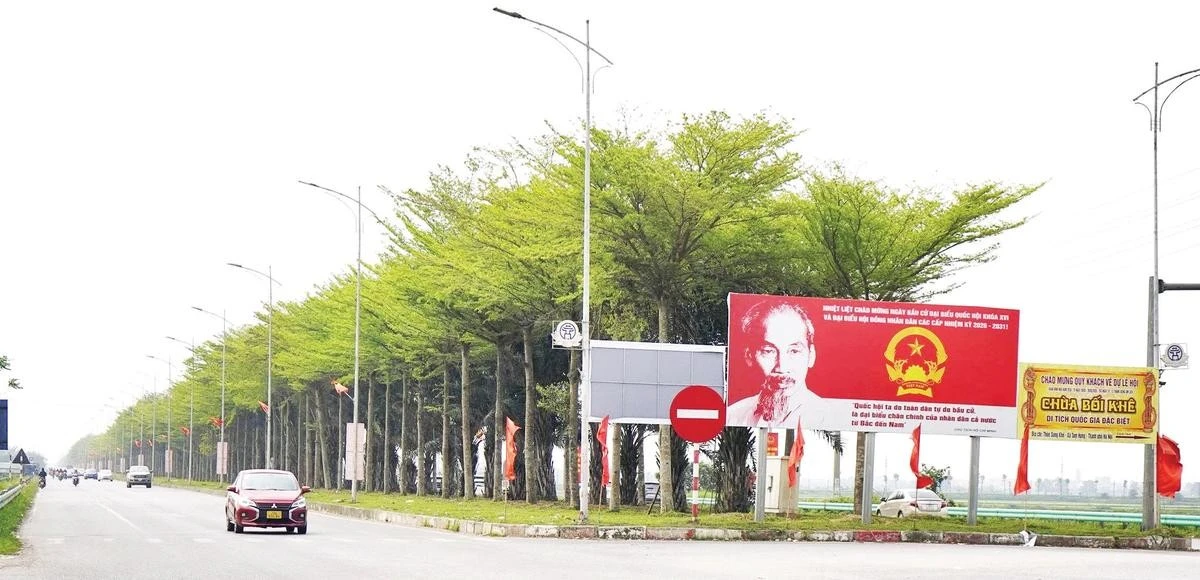
Tam Hung Commune in Hanoi Achieves Results with Two-Tier Local Government Model
One year after implementing a two-tier local government model, Tam Hung Commune in Hanoi has achieved significant results in land management, infrastructure development, and social security. Notably, it has efficiently managed land acquisition for large development projects and public investment execution, fostering resident consensus.
One year after implementing a two-tier local government model, Tam Hung Commune in Hanoi has achieved significant results in land acquisition, infrastructure development, and social security. The commune has efficiently managed its affairs by shifting from administrative management to development governance, focusing on clear objectives and measurable outcomes. Following the implementation of the two-tier model, Tam Hung Commune prioritized land management and construction order, convening meetings with all party branch secretaries and village chiefs to accurately grasp the situation. Specific responsibilities were assigned to officials, leading to prompt action against violations, including unauthorized construction on agricultural land and illegal changes in land use. This decisive approach has stabilized the local situation from the outset. Currently, the commune is spearheading 272 projects in infrastructure, culture, education, environment, and urban embellishment under the principle of "proactive management, efficient investment, and serving the people." Completed projects include the Tam Hung A Kindergarten, Song Khe Village Cultural House, and the road connecting Provincial Road 427 to the southern development axis, contributing to improved regional transportation and socio-economic development. Furthermore, several key projects are being synchronously implemented in Tam Hung Commune, such as the Ring Road 4 – Hanoi Capital Region, My Hung – Cienco 5 New Urban Area, the People's Security Academy (second campus), and the Hanoi International Sports City. These initiatives involve early community engagement, explaining policies, and mobilizing consensus, ensuring a balance between development needs and residents' legitimate rights. The Hanoi International Sports City project, spanning over 1,300 hectares, has largely completed land acquisition due to high resident support. Beyond land acquisition, the commune is actively inviting vocational schools and businesses to provide job training and facilitate sustainable employment transitions for residents amidst urban development. The first vocational training course is scheduled to launch in July, aiming to create long-term livelihoods. The commune's leadership and operational methods have transitioned from administrative management to development governance, with tasks assigned based on the "six clear principles and one consistent flow" approach. Progress is monitored monthly and weekly, with heads of departments held accountable for results. The leadership has particularly focused on tackling complex issues in land management, land acquisition, complaint resolution, construction order, public investment, and administrative reform. While acknowledging achievements, the commune also candidly assesses that the new model is still in its first year. Challenges remain, including a heavy workload, insufficient staffing, inadequate facilities, and a need for deeper specialized expertise in certain areas. Some officials are still adapting to new responsibilities. "In the next phase, Tam Hung Commune's approach to governance and serving the people will continue to innovate. We will shift from administrative thinking to development governance, from experience-based operation to data-driven operation, and from management by administrative boundaries to management by development space," affirmed Bui Van Sang, Secretary of the Tam Hung Commune Party Committee. Source: Nhan Dan
多角的分析
タムフン xã の事例は、ベトナムにおける地方行政の効率化と開発促進が経済成長にどのように貢献するかを示す好例である。2段階地方政府モデルは、意思決定プロセスを迅速化し、公共投資の実行を加速させることで、インフラ整備や都市開発プロジェクトの推進に不可欠な役割を果たしている。特に、用地収用における住民との合意形成の成功は、大規模開発プロジェクトの遅延リスクを低減させ、投資環境の安定化に寄与すると考えられる。これは、ベトナム経済の持続的な成長を支える地方レベルでの行政能力強化の重要性を示唆している。
タムフン xã の成功事例は、ベトナムの地方行政における透明性と効率性の向上が、投資家にとって魅力的な要素となり得ることを示唆している。特に、大規模開発プロジェクトにおける迅速な用地収用と住民の合意形成は、プロジェクトの遅延リスクを低減させ、投資回収期間の予測可能性を高める。これは、ベトナム国内の投資環境全体に対する信頼感を醸成し、特にインフラ開発や不動産分野へのさらなる外国直接投資(FDI)を呼び込む可能性を秘めている。
タムフン xã の2段階地方政府モデルは、住民参加と行政の連携強化を通じて、地域社会の課題解決に貢献している。職業訓練や雇用創興支援は、都市開発に伴う住民の生活再建を支援する重要な取り組みである。しかし、行政能力や専門知識の不足、職員の適応といった課題も指摘されており、住民の期待に応え続けるためには、継続的な人材育成と組織能力の強化が不可欠である。住民の権利と開発ニーズの調和は、ベトナムの急速な都市化が進む中で、公共の課題として常に問われ続けるだろう。
タムフン xã の住民は、新たな地方政府モデルによって、インフラ整備の恩恵を直接受けている。幼稚園や文化施設の建設、交通網の整備は、生活の質の向上に繋がる。また、大規模開発プロジェクトへの参加や、職業訓練を通じた新たな生計手段の獲得機会は、住民の生活再建に寄与する。しかし、開発の恩恵が一部に偏る可能性や、開発に伴う環境への影響、騒音などの生活上の摩擦も懸念される。住民は、行政の透明性と公平な対応を期待している。
背景・歴史的文脈
ベトナムの一党体制下では、中央政府が国家の統治と開発戦略を主導している。地方政府は、中央の政策を実行する役割を担うが、近年、地方の行政能力強化と意思決定の迅速化が、急速な経済成長と都市化に対応するために喫緊の課題となっている。タムフン xã が導入した2段階地方政府モデルは、こうした背景の下、地方レベルでの行政効率を高め、住民のニーズに迅速に対応することを目指した改革の一環である。特に、大規模開発プロジェクトにおける用地収用は、ベトナムの社会経済発展において常に重要な課題であり、住民との合意形成が円滑に進むかどうかが、プロジェクトの成否を左右する鍵となる。
原文ソース
Nhan Dan