Philippines Races to Save Mangroves Amid Climate Threats
The Philippines is facing severe mangrove degradation due to climate change-induced typhoons, rising sea levels, and development. WWF-Philippines, in collaboration with local communities, is implementing urgent measures like bamboo barriers. However, sustained protection requires government policies and international support.
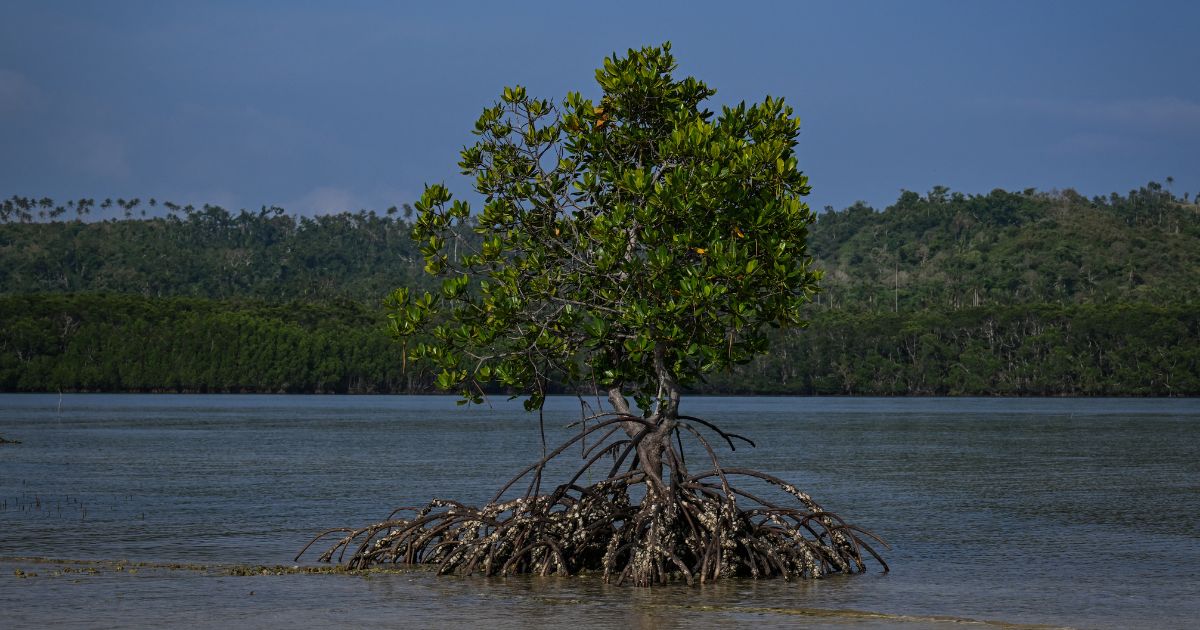
In the Philippines, a critical natural defense against storm surges and coastal erosion is under threat: its mangrove forests. The archipelago, battered by around 20 typhoons annually, relies heavily on these ecosystems, yet has lost over 60% of its mangrove cover since 1918, according to government data. Increasingly powerful storms are exacerbating the situation by stirring up sediment that chokes mangroves at their roots. "Our typhoons are becoming frequent and getting stronger," said Andrea Pimentel, project manager for environmental organization WWF-Philippines. "Even (if) mangroves are resilient, they can also be affected, and eventually they could die." Pimentel works with local communities to rehabilitate mangroves across 245 hectares, including a two-hectare stretch in Batuan town, Masbate province, where repeated typhoons have left bare patches in a once-dense forest. Park ranger Bernard Almogera, who fished at the site with his father decades ago, has witnessed the mangroves deteriorate. "Some of them were snapped off, others like this one were uprooted," the 58-year-old told AFP, pointing to a storm-damaged tree. Workers are now building bamboo fences to slow incoming waves, allowing suspended sediment to settle before it clogs the tidal channel that sustains the mangrove forest. If the channel becomes clogged, water stagnates, depriving the mangrove roots of oxygen and leading to their death. Scientists caution that while bamboo fences are a cheap method, they can rot within three years. Nevertheless, they offer a quick and affordable solution in one of the world's most climate-vulnerable countries. Warming oceans, fueled by climate change, are producing stronger tropical storms. The world's oceans experienced their hottest June on record, with a strong El Nino pattern expected to bring further heat. Pimentel stresses the urgency of mangrove protection and rehabilitation. "If we don't act now, our mangroves will be vulnerable to climate change." The urgency is global; a 2024 IUCN study found half of the world's mangrove ecosystems are at risk of collapse due to climate change, rising sea levels, and human activity. A 2023 survey led by Filipino scientist Severino Salmo identified the Philippines as having the second-highest mangrove losses in Southeast Asia, largely due to climate impacts and conversion to aquaculture ponds. "It will be more difficult (for the mangroves) to adjust now because of the massive losses in the past," Salmo warned. He believes without proper restoration and better government policies, mangroves will continue to decline. "It's disappointing that we keep losing mangroves given how important they are. For now, (the best response) should be to conserve whatever is left." As workers continued assembling the bamboo fence, Pimentel observed the blackened roots of suffocated trees, stating, "Mangroves have always protected us from typhoons. It's time we protect them too." Source: GMA News Philippines
多角的分析
マングローブ林の減少は、沿岸部の漁業資源や観光産業に直接的な打撃を与えます。マングローブは魚介類の繁殖場として機能し、その衰退は漁獲量の減少につながります。また、生態系ツーリズムの魅力も低下させ、地域経済の停滞を招く可能性があります。さらに、マングローブが担う自然災害からの防御機能の低下は、インフラへの被害リスクを高め、復旧・復興コストの増大につながるため、長期的な経済的損失は計り知れません。
気候変動による自然災害リスクの増大は、フィリピンにおけるインフラ投資や不動産開発のリスクを高めます。特に沿岸部への投資は、マングローブの減少による自然防御機能の低下で、より脆弱になる可能性があります。一方で、再生可能エネルギーや環境保全関連技術への投資機会は増加すると考えられます。投資家は、気候変動への適応策を講じている企業やプロジェクトを優先的に評価するでしょう。
マングローブ林の消失は、沿岸コミュニティの生活基盤を直撃します。特に、漁業に依存する人々や、沿岸部に居住する低所得者層は、台風による家屋の損壊や生計手段の喪失に直面しやすくなります。マングローブは、彼らにとって食料、収入源、そして何よりも安全な住まいを守る盾であり、その喪失は生活の不安定化、さらには移住を余儀なくされる事態につながる可能性があります。これは、地域社会の分断や貧困の悪化を招く恐れがあります。
沿岸部に住む市民にとって、マングローブは台風や高潮から家や家族を守る「生きた壁」です。そのマングローブが失われることは、より直接的な危険にさらされることを意味します。過去の台風で甚大な被害を受けた地域では、マングローブの再生が生活の安心を取り戻すための希望であり、その活動への参加は、地域住民の連帯感を強める機会にもなります。しかし、再生が遅々として進まない場合、将来への不安は増大し、政府への不満が高まる可能性もあります。
背景・歴史的文脈
フィリピンは、太平洋の「火の輪」に位置し、台風の通り道に当たるため、古くから気候変動の影響を受けやすい国でした。特に1970年代以降、開発の進展とともに、沿岸部のマングローブ林は、養殖池や宅地開発のために大規模に伐採されてきました。これにより、自然の防波堤としての機能が著しく低下し、近年頻発・激甚化する台風や高潮による被害が増大しています。2024年のIUCNの研究や、2023年のサルモ氏による調査は、この問題の深刻さを国際的に裏付けており、気候変動と人間活動の複合的な影響が、フィリピンのマングローブ生態系を危機に瀕させている構造を示しています。
原文ソース
GMA News Philippines