General articles are free for 24 hours after publish.
Indonesia, United States Kick Off Annual Multinational Military Exercises
Indonesia and the United States have launched the annual multinational military exercise "Super Garuda Shield," aimed at improving interoperability and bolstering deterrence in the region. This year's iteration involves 13 participating nations and a record number of observer countries.
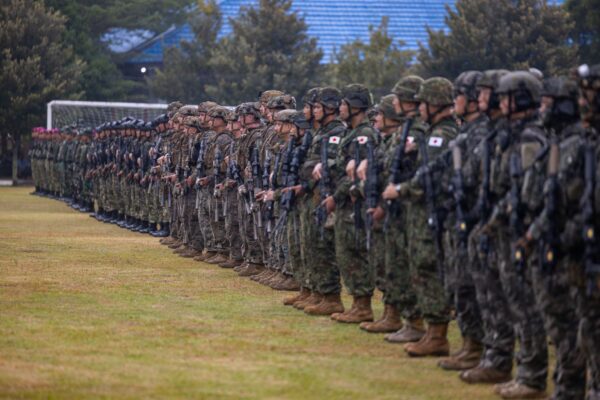
Read The Diplomat, Know The Asia-Pacific Super Garuda Shield 2026 will involve more than 4,700 troops from 13 nations, and observers from a further eight others. U.S., Indonesian, and South Korean marines, as well as personnel from the Japan Ground Self-Defense Force, stand at attention during an opening ceremony for Exercise Super Garuda Shield 26 at the Indonesian Marine Corps 7th Infantry Battalion base near Lampung, Indonesia, Aug. 31, 2026. The United States and Indonesia launched annual multilateral military exercises yesterday, which the two sides said aimed to improve interoperability and bolster deterrence in the region. Super Garuda Shield, which has been held annually since 2007, will take place in various locations including Bandung, Lampung, Kalimantan, and the Indonesian Army’s Baturaja Combat Training Center in South Sumatra before concluding in Jakarta on September 11. This year’s iteration will involve more than 4,743 personnel from 13 other countries including Japan, South Korea, the United Kingdom, Australia, and Canada. A further eight nations will join as observers. While the total number of troops is slightly down on last year’s iteration, which featured a record 5,400 participants, it includes more participating nations than ever, with India taking part as an observer for the first time. Major General Patrick Ellis, the commanding general of the U.S. Army’s 4th Infantry Division, said that the exercise was critical for “building the human architecture that keeps the Indo-Pacific safe.” “The security landscape of the Indo-Pacific is complex and readiness cannot be surged when a crisis begins,” he said at an opening ceremony at the Indonesian Armed Forces’ School of Command in Bandung. He added, “We are not just meeting for another annual training cycle. We are writing a historic new chapter in our bilateral relationship.” TNI Commander General Agus Subiyanto, the commander of the Indonesian National Armed Forces, said that “the purpose of the exercise is, first, diplomacy, and then cooperation through the exchange of capabilities.” The Garuda Shield exercise was established between the U.S. and Indonesian militaries in 2007 and forms a primary pillar of the two nations’ defense relationship. “Super” was added to its title in 2022, when the exercise was expanded into a multilateral format. This year, the exercises “will include a joint staff exercise, cyber exercise, airborne operations, jungle training, and amphibious exercise,” the U.S. Army said in a statement. U.S. Navy and U.S. Coast Guard personnel will also conduct coordinated maritime training serials with the Indonesian Navy in adjacent waters in order “to strengthen joint interoperability at sea.” Participating forces will also take part in special forces infiltration drills, cyber defense exercises, the firing of Stinger missiles, and humanitarian assistance and disaster relief operations. The expanded exercise is the first to take place since Indonesia and the U.S. established a new defense cooperation pact in April. The Major Defense Cooperation Partnership (MDCP) will bolster cooperation in Indonesian military modernization and increase training, joint exercises, and professional military education, with the aim of “maintaining peace and stability” in Asia. Indonesian Defense Minister Sjafrie Sjamsoeddin and U.S. Secretary of War Pete Hegseth said at the time that they “have also committed to enhance joint special forces training,” and to expand existing multilateral exercises, including Super Garuda Shield. The continued expansion of the annual exercise speaks to the continued good health of the U.S.-Indonesia defense partnership, which has remained stable despite the erratic nature of foreign policymaking under the second Trump administration. However, while Indonesia has welcomed closer U.S. security cooperation, it continues to hew to a policy of foreign policy non-alignment, and to maintain a balanced spread of defense engagements – including with key U.S. adversaries. For example, on the same day that Sjafrie and Hegseth signed the MDCP agreement in Jakarta, President Prabowo Subianto was being hosted at the Kremlin by Russian President Vladimir Putin. And last month, Indonesia agreed to boost its military ties with China during a visit to Jakarta by the country’s foreign and defense ministers. The two sides agreed to increase joint exercises and officer exchanges. They also discussed the establishment of a joint munitions factory in Indonesia that would include a possible transfer of technology from China. Also in August, Jakarta courted controversy when an Indonesian frigate conducted a joint navigation exercise with China’s People’s Liberation Army Navy in the waters east of Taiwan – the first time that China had exercised with a foreign military in the area. Later this year, China and Indonesia are scheduled to hold their Heping Garuda joint military exercises, which took place for the first time in December 2024. These much narrower drills will focus mostly on humanitarian aid and disaster relief operations. Subscribe today and join thousands of diplomats, analysts, policy professionals and business readers who rely on The Diplomat for expert Asia-Pacific coverage. Get unlimited access to in-depth analysis you won't find anywhere else, from South China Sea tensions to ASEAN diplomacy to India-Pakistan relations. More than 5,000 articles a year. Already have an account? Log in. Sebastian Strangio is Southeast Asia editor at The Diplomat. Get briefed on the story of the week, and developing stories to watch across the Asia-Pacific.
Original source
The Diplomat Indonesia