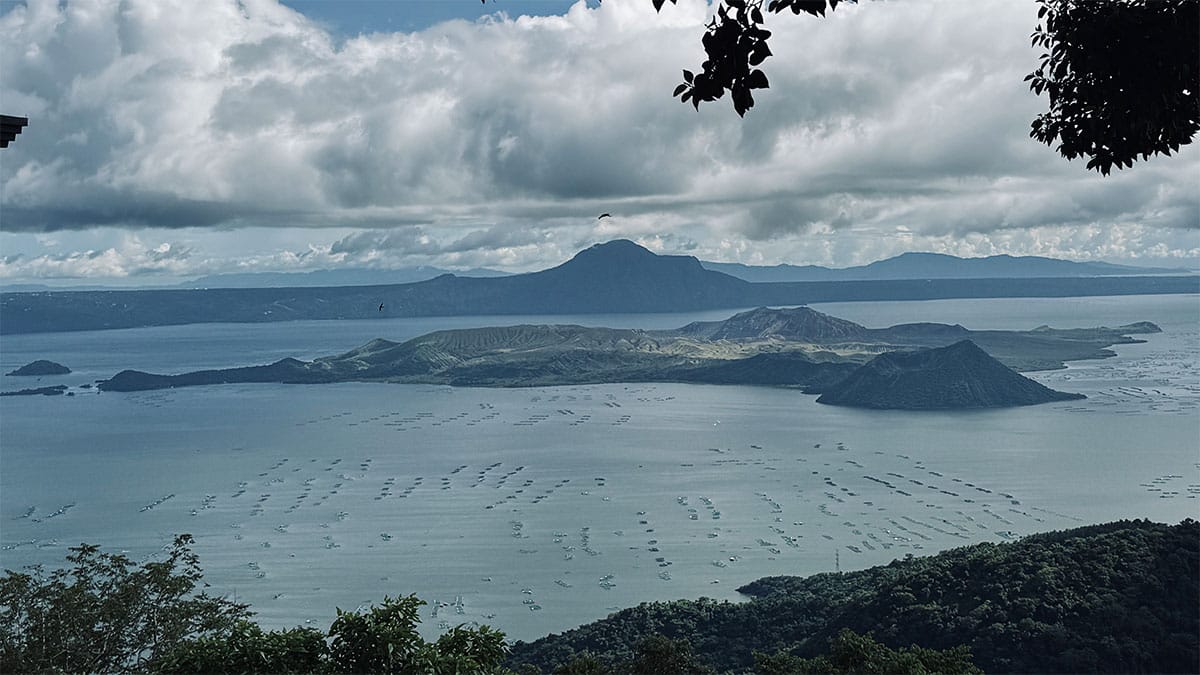
Taal Volcano Activity Eases, Remains Under Alert Level 1
Taal Volcano in the Philippines shows signs of easing activity, with significant drops in sulfur dioxide (SO₂) emissions and seismic activity over the past 24 hours. However, the Philippine Institute of Volcanology and Seismology (Phivolcs) maintains Alert Level 1 due to the volcano's abnormal condition.
LUCENA CITY, Quezon – Taal Volcano in Batangas continued to show signs of reduced volcanic activity after both sulfur dioxide (SO₂) emissions and seismic activity declined significantly over the past 24 hours, the Philippine Institute of Volcanology and Seismology (Phivolcs) reported Thursday. In its morning bulletin, Phivolcs measured 250 metric tons of sulfur dioxide emissions from the volcano’s main crater, with the volcanic plume rising about 500 meters before drifting southwest. The latest SO₂ emission was significantly lower than the 829 metric tons recorded daily from July 2 to 7. Seismic activity also remained subdued, with Phivolcs recording only one volcanic earthquake during the monitoring period. The latest figure marked a sharp decline from the heightened volcanic unrest observed earlier this week. Seismic activity peaked on July 6, when the agency recorded 120 volcanic earthquakes and 113 volcanic tremors. The numbers fell to 27 earthquakes and 22 tremors on July 7, then declined to 8 volcanic earthquakes on July 8 before dropping to just 1 the next day. According to Phivolcs, volcanic earthquakes are generated by processes occurring beneath or within an active volcano and are identified through their seismic wave characteristics. Volcanic tremors, meanwhile, are continuous low-frequency seismic signals that may indicate the movement of volcanic fluids. Taal Volcano is located on Volcano Island, locally known as “Pulo,” in the middle of Taal Lake. During the latest monitoring period, Phivolcs observed no upwelling of hot volcanic fluids in the main crater and detected no volcanic smog, or “vog,” in the area. Despite the decline in volcanic activity, Taal Volcano remains under Alert Level 1, indicating low-level volcanic unrest. Phivolcs reminded the public that Alert Level 1 does not mean the volcano has returned to its normal state or that the possibility of an eruption has been eliminated, stressing that Taal remains in an abnormal condition.
多角的分析
タール火山の活動低下は、地域経済への直接的な影響を一時的に緩和する可能性がある。観光業は火山の噴火リスクに敏感であり、活動の沈静化は観光客の回復を後押しする要因となり得る。しかし、警戒レベル1は依然として不確実性を示唆しており、長期的な投資や事業計画には慎重な姿勢が求められる。
投資家にとって、タール火山の活動低下は、バタンガス地域への投資リスクを低減させる材料となる。特に観光関連産業や不動産への投資は、噴火の脅威が後退すれば魅力が増す。ただし、Phivolcsが警戒レベル1を維持していることから、状況の急変に備えたリスク管理は引き続き重要である。
タール火山の活動低下は、バタンガス州や周辺地域の住民にとって一時的な安心材料となる。しかし、警戒レベル1の維持は、住民の生活や生計が依然として火山活動の影響を受ける可能性を示唆している。特に、火山灰や有毒ガス(ボッグ)による健康被害や農作物への影響、そして避難生活の可能性は、住民の不安要素として残る。過去の噴火では、多くの住民が長期にわたる避難を余儀なくされた事例があり、その記憶は住民の心理に影響を与え続けている。
タール火山の活動が落ち着いたことは、地元住民、特にタール湖周辺のコミュニティにとって朗報です。しかし、警戒レベル1が維持されているため、依然として注意が必要です。過去の噴火で経験した避難生活や農作物への被害を考えると、いつまた状況が悪化するのかという不安は拭えません。政府からの正確な情報提供と、緊急時の対応計画が引き続き重要です。
背景・歴史的文脈
タール火山は、フィリピンで最も活発な火山の1つであり、その噴火活動は歴史的にフィリピン社会に大きな影響を与えてきた。特に1911年と1965年の大規模噴火は甚大な被害をもたらし、多くの人命が失われた。2020年1月の噴火では、広範囲に火山灰が降り積もり、数万人が避難生活を余儀なくされた。Phivolcsは、タール火山の活動を常時監視し、警戒レベルシステムを通じて国民に情報を提供している。警戒レベル1は「低レベルの火山活動」を示し、噴火の可能性は排除されないものの、異常な状態が続いていることを意味する。このシステムは、過去の噴火経験に基づき、早期警戒と避難計画の策定に役立てられている。
原文ソース
Inquirer NewsInfo