General articles are free for 24 hours after publish.
Youth in Vietnam's Border Regions: Challenges and Aspirations for Local Revitalization and Cultural Preservation
Young people in Vietnam's northern border regions, particularly in Tuyen Quang province, are contributing to their hometowns' development through entrepreneurship and cultural promotion, utilizing local resources. Their endeavors offer hope for Vietnam's future, encompassing both economic revitalization and the preservation of traditional culture.
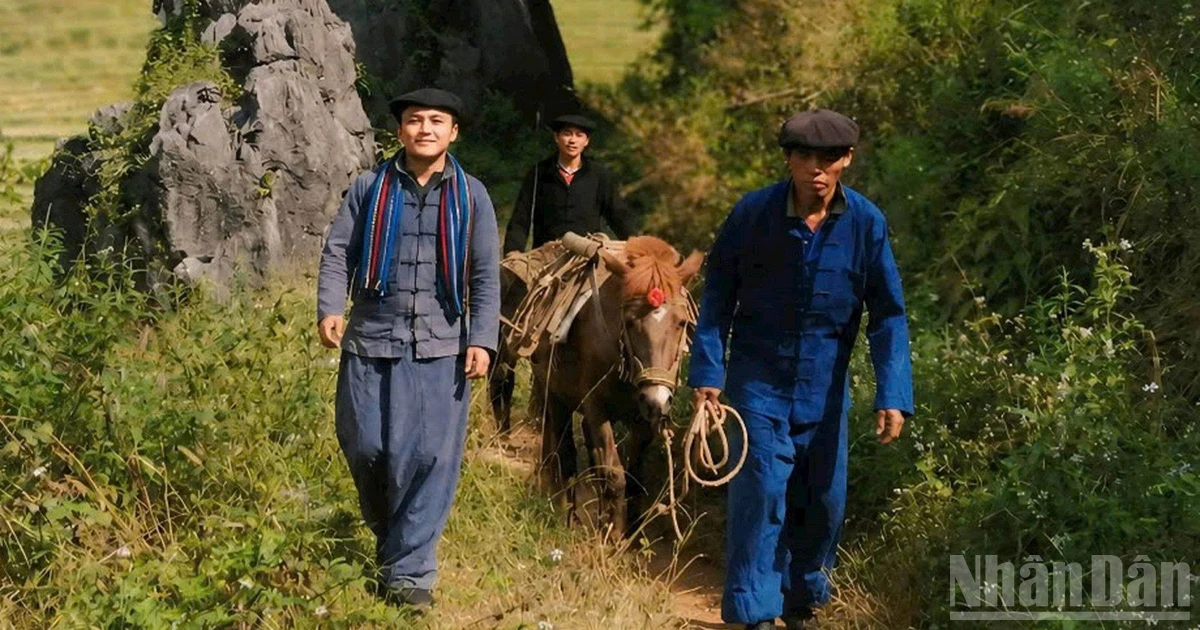
Young people in Vietnam's northern border regions, particularly in Tuyen Quang province, are actively engaged in revitalizing their hometowns and preserving cultural heritage. Leveraging local resources and demonstrating entrepreneurial spirit, they are achieving success through innovative ideas. In Quản Bạ commune, efforts are underway to develop agriculture, animal husbandry, services, and tourism by capitalizing on the region's favorable climate, soil, landscape, and culture. The local Youth Union provides guidance and facilitates access to preferential loans, supporting young individuals in developing economic models suited to their specific areas. Lữ Văn Dầu, a local entrepreneur, expanded from a small eatery serving tourists to investing over 4.5 billion VND in constructing the 20-room "Yến Ngọc" homestay. He aims to create more employment opportunities through business expansion. Meanwhile, in Thanh Thủy commune, Lý Đức Dân has focused on cultivating and processing ancient Shan Tuyết tea. In 2017, he co-founded the Thanh Thủy Shan Tuyết Tea Production and Processing Cooperative with 13 households, establishing a chain from cultivation to consumption and reviving the renowned "Chốt Tea" brand. With support from the National Industrial Promotion Program, the cooperative has standardized production, invested in machinery, packaging, and branding. The Shan Tuyết tea cultivation area now exceeds 170 hectares, and "Chốt Tea 468" has secured a market position. The cooperative purchases approximately 10 tons of fresh tea buds annually, creating jobs for six full-time and about twenty seasonal workers, with many members earning hundreds of millions of VND per year. Beyond economic activities, young people in border areas are dedicated to protecting and promoting local cultural heritage. Sùng Mạnh Hùng, from the Đồng Văn plateau, returned to work at the Đồng Văn Commune Public Service Center after studying culture. Since 2021, he and a group of friends have organized community cultural exchange events, including campfires, in the Đồng Văn Old Town on weekend evenings. These events feature traditional performances and interactions with tourists. Hùng has developed simple dances inspired by agricultural labor, encouraging tourist participation and fostering a sense of unity and openness. Through social media, he shares cultural experiences, making the Đồng Văn Old Town cultural immersion a popular attraction. His group organizes around 200 cultural exchange events annually, facilitating various charitable activities to support local communities. The Tuyên Quang Provincial Youth Union implements numerous programs to support young people, especially in border areas, focusing on entrepreneurship and career development. They have conducted 225 consultation sessions on startups, technology transfer, and job placement, engaging over 29,000 youths. 1,820 economic development models, cooperatives, and youth economic clubs have been established or maintained. Furthermore, through loan programs for the poor and policy beneficiaries, they have disbursed 2.794 trillion VND to 40,861 households. In collaboration with the Vietnam Bank for Agriculture and Rural Development, they maintain a loan fund of 9.5 billion VND for 115 projects. These young individuals' initiatives exemplify local development and youth empowerment within Vietnam's one-party system. While the nation pursues economic growth, these grassroots efforts highlight the challenges and opportunities in revitalizing rural areas and preserving cultural identity. Their passion and drive are crucial for Vietnam's sustainable future.
Original source
Nhan Dan