General articles are free for 24 hours after publish.
Vietnam's Electronics Industry Gains Global Attention in 2026
Vietnam's electronics industry is evolving beyond labor-intensive assembly into components, PCB assembly, and smart devices, solidifying its role as a key manufacturing hub in Asia. Exports show remarkable growth, with industrial clusters concentrating particularly in the northern provinces.
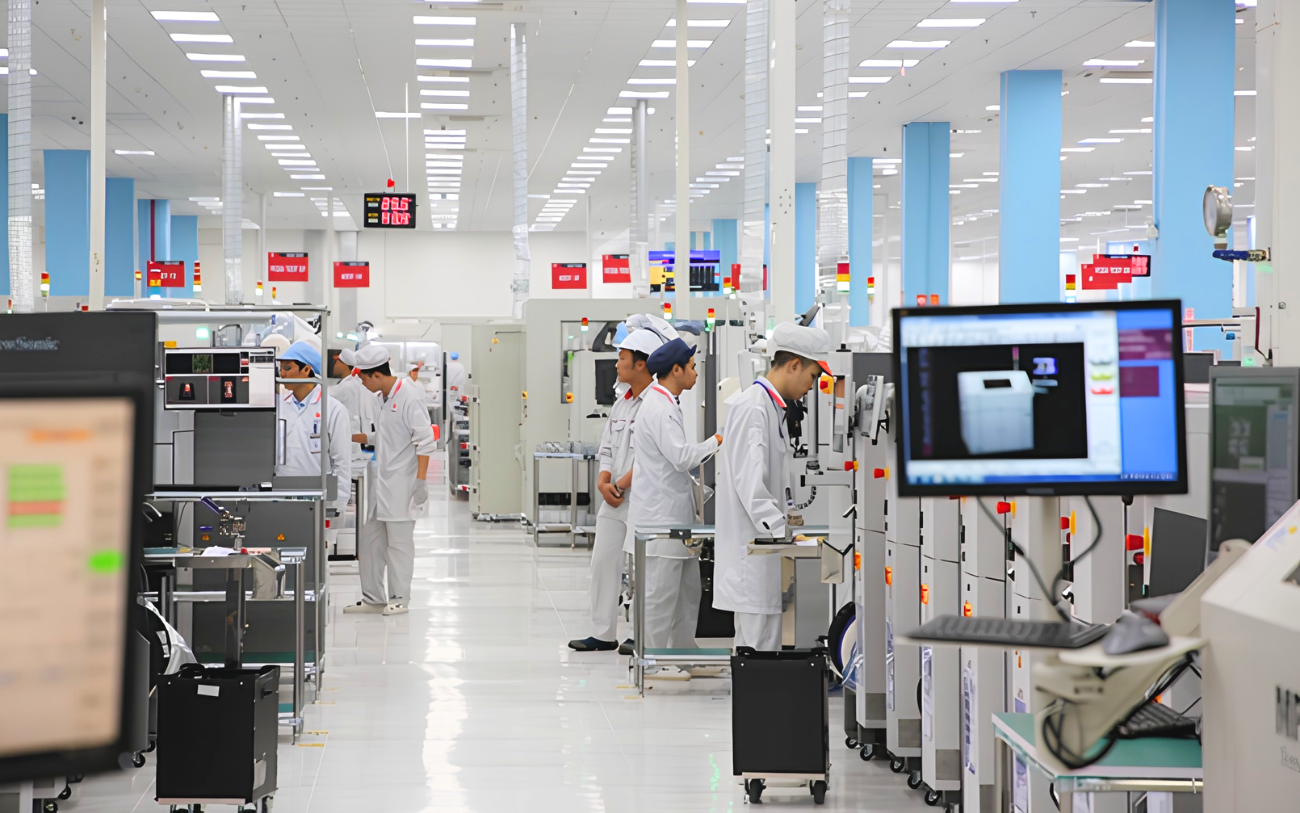
Vietnam is becoming an increasingly important electronics manufacturing destination in Asia. The country is no longer known only for labour-intensive assembly but is gradually expanding into electronic components, printed circuit board assembly, smart devices and industrial electronics. For international buyers, this creates new opportunities to diversify manufacturing in Asia. However, the development of the overall market does not mean that every manufacturer has the same capability. Understanding the sector’s growth, industrial clusters and remaining limitations is essential before selecting a production partner. Export performance provides clear evidence of the sector’s development. In the first quarter of 2026, exports of computers, electronic products and components reached more than US$30.7 billion, increasing 45.5% compared with the same period in 2025. By the end of May 2026, this category had generated approximately US$56.2 billion in export turnover and accounted for around 26% of Vietnam’s total exports. Electronics had therefore become one of the country’s largest and fastest-growing export categories. Foreign-invested companies continue to generate much of this activity, but selected Vietnamese manufacturers are also upgrading their operations. Some businesses previously focused on electrical products, lighting or conventional components are investing in automation, engineering teams, testing equipment and international certifications. This development is helping Vietnam expand from basic assembly into areas such as PCBA, smart technology, electronic control systems and OEM or ODM manufacturing. As highlighted in this FVSource article on electronics manufacturing in Vietnam, local factories are increasingly equipped with fully automated, tightly controlled APC-enabled SMT lines that help prevent defects and enable real-time inspection throughout electronic assembly and testing. Vietnam’s electronics industry is expanding partly because international companies are restructuring their Asian supply chains. Under the China+1 strategy, many businesses are adding manufacturing capacity outside China to reduce concentration risk while remaining close to the region’s established component network. Vietnam has become a practical option due to its geographic proximity, export-oriented industrial base and improving logistics infrastructure. Foreign direct investment has accelerated this development. Global electronics groups have invested in manufacturing facilities, equipment and technical processes, while many of their supporting companies have followed them into Vietnam. This has helped create more concentrated industrial ecosystems, particularly in northern provinces where manufacturers can access component providers, logistics services and specialised subcontractors. Vietnam’s network of trade agreements also strengthens its position as an export base. Agreements such as the EVFTA, CPTPP, RCEP and UKVFTA provide access to major international markets, although tariff benefits still depend on product-specific rules of origin. Combined with expanding industrial parks, ports, airports and cross-border transport connections, these agreements make the country more attractive to export-focused manufacturers. The availability of an experienced manufacturing workforce provides another foundation for growth. Vietnam has developed a large pool of workers familiar with electronics assembly, process control and international production requirements. However, advanced engineering and automation expertise remain less widely available, meaning that highly technical projects still require careful evaluation of each manufacturer’s team and experience. Together, supply chain diversification, foreign investment, trade access, infrastructure and workforce development are strengthening Vietnam’s role in regional electronics manufacturing. However, the country is generally being used as a complementary production base rather than a complete replacement for more established manufacturing ecosystems. Vietnam’s electronics sector covers a growing range of products and processes. Electronic components include cables, connectors, sensors, acoustic parts, enclosures, power-related products and components used in computers, appliances, mobile devices and industrial equipment. Printed circuit board assembly is another important area. Depending on the manufacturer, available services may include surface-mount technology, through-hole assembly, automated optical inspection, functional testing, programming and box-build assembly. Vietnam also supports the manufacturing or assembly of smart lighting, home-automation products, audio equipment, control panels, IoT devices and other connected products. Some businesses have expanded from conventional electrical goods into more advanced solutions involving sensors, software coordination and digital control. Selected manufacturers are also moving beyond build-to-print assembly. They may provide design-for-manufacturing feedback, prototyping, component sourcing, testing development or product customisation. Nevertheless, capability varies considerably. A company with modern SMT equipment may still lack strong engineering support, traceability or testing systems. Buyers therefore need to evaluate each operation according to the specific requirements of their product. A factory investing in PCB and PCBA development technologies — Source: MoveToAsia. Northern Vietnam has developed the country’s most concentrated electronics ecosystem. Bac Ninh, Bac Giang, Hai Phong, Thai Nguyen and Hai Duong benefit from proximity to China, logistics connections and a growing network of component manufacturers. Several global groups demonstrate the importance of this region. Samsung Electronics operates major facilities in Bac Ninh and Thai Nguyen, while LG Electronics has developed a large manufacturing complex in Hai Phong. Foxconn has invested in northern Vietnam across electronics assembly and component-related activities. Luxshare Precision has established operations in the Bac Giang industrial area, while Goertek has developed facilities in Bac Ninh for acoustic components, smart devices and other electronic products. The presence of these companies has attracted supporting businesses involved in plastic parts, metal components, tooling, packaging, automation and logistics. This creates a more concentrated industrial environment for electronics manufacturing. Southern Vietnam, particularly Ho Chi Minh City, Dong Nai and Binh Duong, offers another manufacturing base. The region provides access to ports, airports, engineering services and a large commercial network. It may be particularly relevant for smart devices, lighting, consumer electronics and customised products. Despite its strong growth, Vietnam’s electronics industry still faces several limitations. Many electronic components and materials remain imported from China, South Korea, T
Original source
Vietnam Insider