General articles are free for 24 hours after publish.
Agriculture Minister Denies Claims of Unfair Land Prices in Papua
Indonesia's Agriculture Minister has vehemently denied reports claiming that land in Papua is being unfairly acquired for less than Rp 100,000 per hectare, calling such information "malicious slander." He stated that the government develops agricultural land, which remains the property of local residents, providing infrastructure and machinery. Some residents have reportedly requested program expansion.
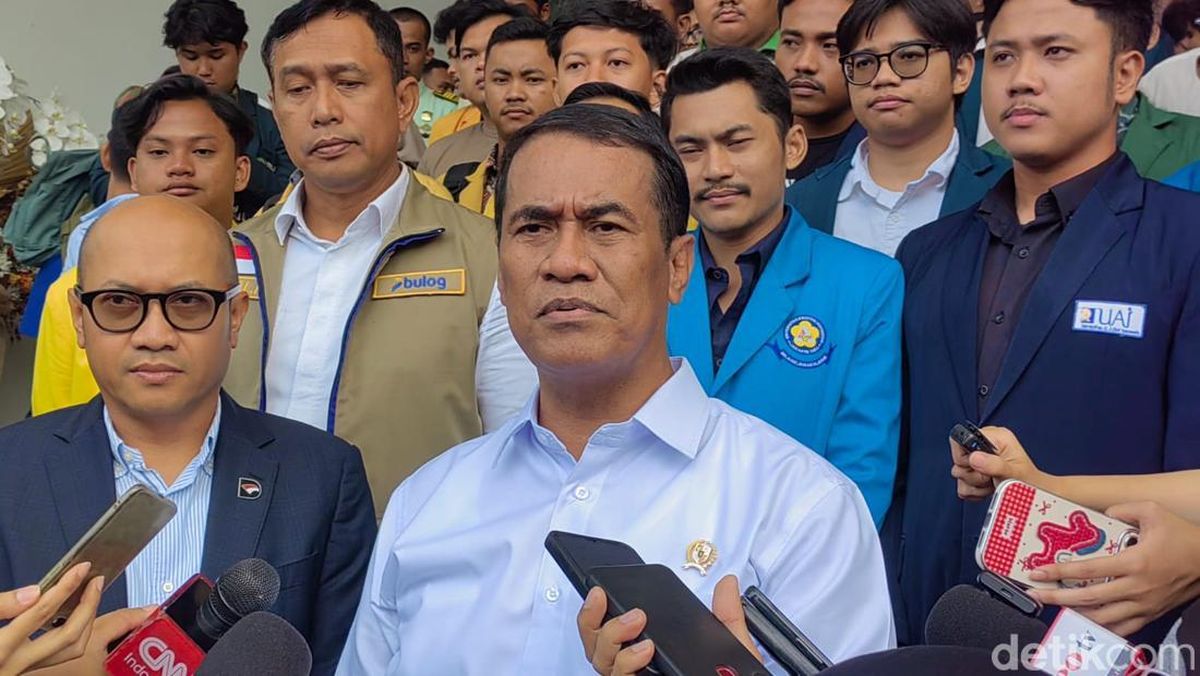
Agriculture Minister Andi Amran Sulaiman has strongly refuted claims that land in Papua is being unfairly acquired for less than Rp 100,000 per hectare, labeling such information as "malicious slander" that does not reflect the reality on the ground. Sulaiman made these remarks during a student event themed 'Resonansi Algoritma Pelajar Berdampak' (Impactful Student Algorithm Resonance) at Muhammadiyah University in Jakarta, which was attended by around 2,000 IPM cadres from across Indonesia. His statement came in response to a question posed by Muhammad Tamim Setiaji, an IPM delegate from South Tangerang, Banten, during the reception for the 65th anniversary and National Working Meeting of Ikatan Pelajar Muhammadiyah (IPM). During the dialogue session, Tamim raised the issue of circulating information suggesting that land in Papua was being unfairly acquired for less than Rp 100,000 per hectare. He sought clarification to enable the younger generation to view issues rationally amidst the abundance of circulating information. "Slander is spreading. One of them is the land price of Rp 100,000 per hectare. That is very cruel slander against the government, including us who are implementing programs. In fact, the reality is completely different," Amran stated in his press release on Sunday (19/7/2026). Sulaiman explained that the agricultural land development program in Papua is not carried out by taking over community land ownership. Instead, the government builds paddy fields that fully remain the property of the community, complete with support for infrastructure and agricultural machinery. According to Amran, the government has developed around 137,000 hectares of agricultural land in Papua to date. All of this land remains the property of the local community, while the government provides various facilities free of charge to increase the productivity and welfare of farmers. "The paddy fields belong to the people. None of it belongs to the state. We provide agricultural machinery for free. We build irrigation. Even the assistance provided amounts to trillions of rupiah. All of this is for the community," he explained. Amran added that the government also sends hundreds of agricultural machinery units, forms a Food Brigade, builds irrigation networks, and supports the development of commodities according to local wisdom such as sago and coconut. Various negative narratives circulating are in direct contrast to the reality on the ground. Many Papuan residents have directly experienced the benefits of the program through increased income and opportunities to manage land independently. He cited testimonials from farmers who obtained 3 to 4 hectares of land to cultivate and were able to achieve a net income of up to tens of millions of rupiah per month. "Farmers there personally convey that they received land to manage and their income has increased to around Rp 15 million to Rp 20 million per month. Tractors also become theirs. This is the fact on the ground," he elaborated. Furthermore, Amran mentioned that during his working visit to Papua, he actually received aspirations from the community requesting that the paddy field creation program be expanded to their areas. "When I was at the airport about to leave, the community stopped me not to reject, but to request additional paddy field creation land of thousands of hectares. They want to feel the benefits of this program. That is the fact I experienced directly," he stated. According to Amran, the success of agricultural development in Papua not only receives support from the local community but also forms part of the government's efforts to achieve equitable national development, as per the directive of President Prabowo Subianto. Therefore, Amran invited the younger generation not to be easily influenced by unverified information, especially narratives that have the potential to divide the nation. "I invite all my younger siblings to look at the facts. Do not immediately believe in narratives or films that are not necessarily in accordance with reality. Let us check directly, listen to the community that receives the benefits," he added. Source: Detik
Original source
Detik