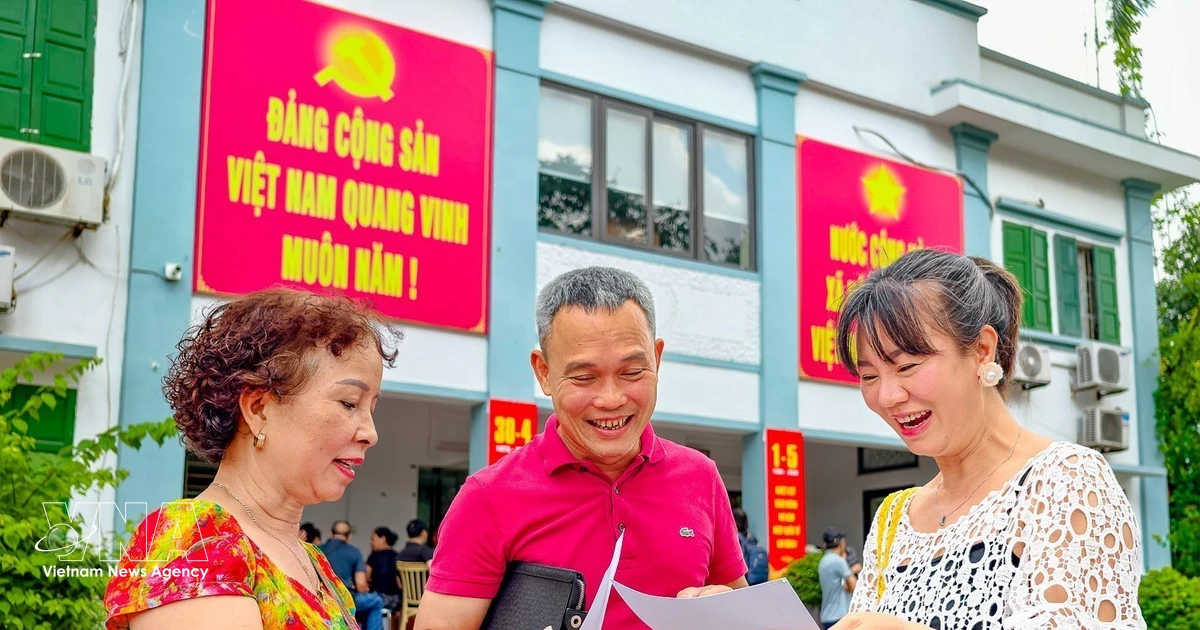
Hanoi to pilot new grassroots governance model in two communes
Hanoi is set to pilot a new grassroots governance model in two communes, aiming to enhance community participation in local decision-making. This initiative is part of the city's long-term plan for sustainable development and improved quality of life for its residents.
This article requires PRO
This article is outside the free access window or is a special report. PRO unlocks it and the full archive.
Related articles
- Vietnamese PM to Visit Laos, Cambodia to Strengthen Bilateral Ties
Vietnamese Prime Minister Le Minh Hung will embark on official visits to Laos and Cambodia from October 8-10. The trips aim to further deepen traditional friendships and comprehensive cooperation, focusing on enhancing practical collaboration in economy, infrastructure, and digital transformation.
- Vietnam–Laos–Cambodia Strategic Cohesion Deepens with High-Level Visits
Vietnamese Prime Minister Le Minh Hung will visit Laos and Cambodia from October 8-10 to strengthen strategic cohesion with both nations. The focus will be on promoting substantive and practical cooperation, particularly in trade, investment, and infrastructure development.
- Vietnam Welcomes Panama President, Boosting Bilateral Ties
Vietnam's top leader, General Secretary and President To Lam, hosted an official welcome ceremony for Panamanian President José Raúl Mulino. The leaders held talks and witnessed the exchange of cooperation documents, aiming to deepen economic and trade ties.
- Vietnam's Party Central Committee Concludes Plenum, Emphasizing Party Building and International Ties
Vietnam's Communist Party concluded the 14th Central Committee's fourth plenum, reaffirming its commitment to strengthening the Party and political system while deepening international cooperation with Panama, Laos, and Cambodia. Emphasis was placed on enhancing economic and infrastructure connectivity.