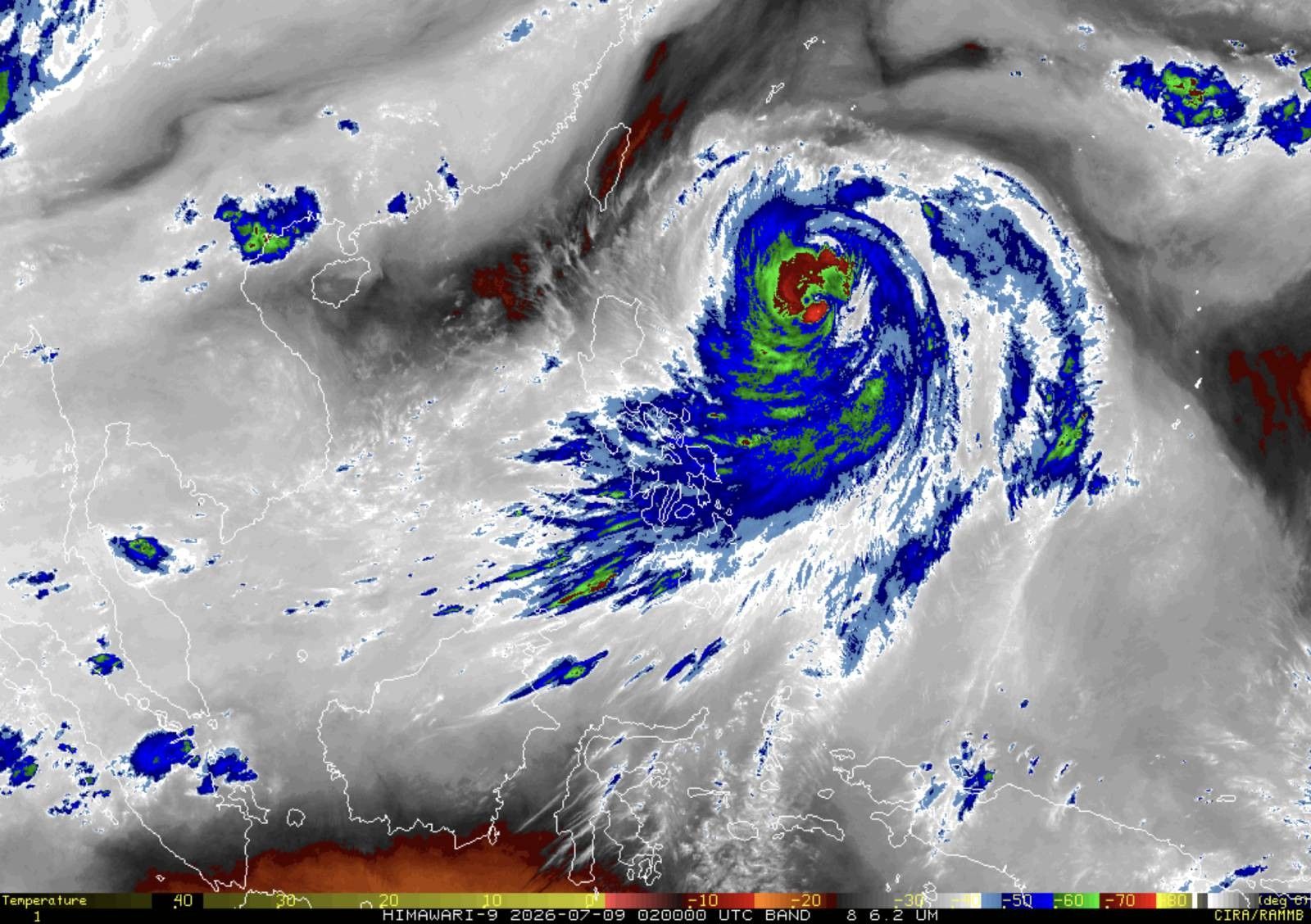
Typhoon Inday weakens slightly; Signal No. 2 up over Batanes
Typhoon Inday has slightly weakened but continues to affect Northern Luzon, with Signal No. 2 raised over Batanes. Strong winds and heavy rainfall are expected, with advisories issued for coastal areas due to high waves.
Typhoon Inday (international name: Bavi) slightly weakened on Thursday but continues to threaten Northern Luzon, with Signal No. 2 hoisted over Batanes and Signal No. 1 remaining in effect over several areas. In its 11 a.m. bulletin on Thursday, PAGASA said Inday was located 865 kilometers east of Northern Luzon, with maximum sustained winds of 165 kilometers per hour near the center and gustiness of up to 205 kph. It is heading northwestward at 15 kph. Under Signal No. 2, gale-force winds ranging from 62 to 88 kph may be experienced within 24 hours, posing a minor to moderate threat to life and property. Meanwhile, the following areas in Luzon remain under Signal No. 1: Under Signal No. 1, strong winds ranging from 39 to 61 kph may be experienced within 36 hours, posing minimal to minor threats to life and property. Strong winds. PAGASA said the enhanced southwest monsoon and the typhoon's circulation will bring strong to gale-force gusts over most of the country until Saturday, especially in coastal and upland areas exposed to winds. Heavy rainfall. The state weather bureau said Typhoon Inday and the enhanced southwest monsoon will continue to bring heavy rainfall over parts of the country. Batanes may receive 50 to 100 millimeters of rainfall on Friday. Meanwhile, the southwest monsoon is forecast to bring: Thursday, July 9 Friday, July 10 Saturday, July 11 PAGASA warned that rainfall may be higher in mountainous and elevated areas and that flooding and rain-induced landslides may be worsened by significant antecedent rainfall. Sea conditions. A gale warning remains in effect over the northern and eastern seaboards of Luzon and the eastern seaboard of the Visayas. Very rough seas with waves reaching up to 6 meters are expected over the seaboards of Batanes, the northern and eastern seaboards of the Babuyan Islands, and the northeastern seaboard of mainland Cagayan, where all types of vessels are advised to remain in port or seek safe harbor. Rough to very rough seas are also expected over the seaboards of Isabela, Aurora, Camarines Norte, Camarines Sur, Catanduanes, Northern Samar and Eastern Samar. PAGASA advised operators of small seacraft, including motorbancas, not to venture out to sea in affected waters. Track, intensity. PAGASA said Inday is forecast to continue moving northwestward over the Philippine Sea and may pass closest to Extreme Northern Luzon between Friday evening, July 10, and Saturday morning, July 11. The typhoon is then expected to move toward the southern islands of Japan before making landfall or passing close to northern Taiwan. It is forecast to exit the Philippine Area of Responsibility (PAR) on Saturday, July 11 and make landfall over the eastern coast of mainland China by Saturday evening or Sunday early morning. PAGASA said Inday is forecast to remain a typhoon while inside PAR before weakening into a severe tropical storm after moving inland over mainland China.
多角的分析
台風インディによる強風と大雨は、農業、特に北ルソン地方の主要な作物に直接的な損害を与える可能性がある。収穫量の減少は、食料価格の上昇につながり、家計に影響を与える。また、インフラへの被害は、物流コストを増加させ、経済活動を一時的に停滞させる可能性がある。過去の台風被害では、復旧に数ヶ月を要するケースもあり、経済への長期的な影響も懸念される。
投資家にとって、台風インディは短期的なリスク要因となる。特に、農業関連企業や、インフラに依存する事業は、直接的な影響を受ける可能性がある。しかし、フィリピンは台風常襲国であり、投資家はこれらのリスクを織り込んでいる場合が多い。むしろ、復旧・復興需要による建設業や関連サービスへの投資機会を見出す可能性もある。ただし、被害の規模や復旧のスピードが、投資判断に影響を与えるだろう。
バタンガス州や北ルソン地方の沿岸部・山岳部に居住する住民は、直接的な危険にさらされる。家屋の損壊、浸水、土砂災害のリスクが高まる。避難生活を余儀なくされる人々は、食料、水、医療へのアクセスが課題となる。また、漁業や農業に依存するコミュニティでは、生計手段の喪失が深刻な問題となる。過去の台風被害では、避難所での衛生問題や、被災後の生活再建における経済的困窮が、社会的な課題として浮上している。
台風インディは、バタンガス州や北ルソン地方の住民の日常生活に直接的な影響を与える。停電、断水、交通網の寸断により、移動や通信が困難になる。特に、食料品や生活必需品の価格高騰が懸念される。また、子供たちの学校が休校になるなど、教育活動にも影響が出る。被災地域では、迅速な支援と復旧が求められるが、過去の事例では、支援物資の配給や住居の再建に時間がかかり、住民の不安が募るケースも少なくない。
背景・歴史的文脈
フィリピンは「太平洋の火の環」に位置し、台風銀座と呼ばれる地域にあるため、年間平均20個以上の台風が接近・上陸する。特に、北ルソン地方は台風の通り道にあたり、過去にも甚大な被害をもたらす台風が頻繁に発生している。1990年代以降、気候変動の影響により、台風の強大化や極端な気象現象が増加傾向にあり、被害の深刻化が懸念されている。政府は防災・減災対策を強化しているが、国土の特性上、台風による被害は依然としてフィリピン経済と社会に大きな影響を与え続けている。
原文ソース
Philstar Nation