Cambodian High School Students Explore Ancient Temple Mysteries Through Art Style Comparison
Culture
2026年7月7日
5
Kampuchea Thmey Local

Cambodian High School Students Explore Ancient Temple Mysteries Through Art Style Comparison

AI サマリー

Cambodian high school students learned how to decipher the construction periods and historical contexts of ancient temples by studying and comparing their artistic styles. This method is crucial for unlocking the mysteries of sites lacking written records and highlights the importance of passing down cultural heritage to the next generation.

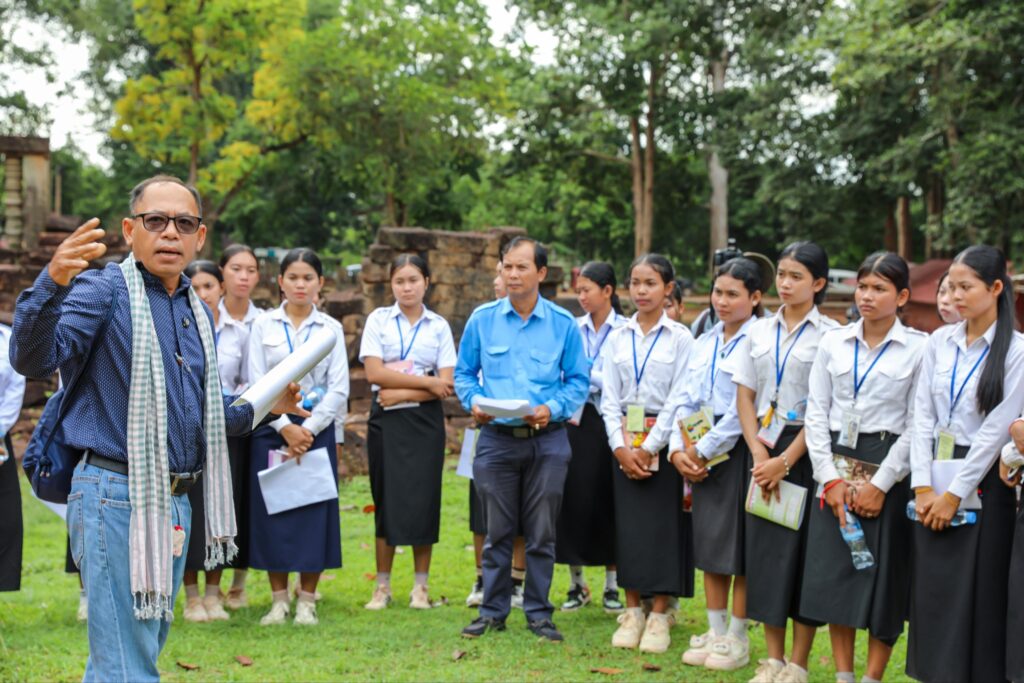
Students from Hun Sen Prasat Bakong High School in Siem Reap Province, Cambodia, participated in a learning program aimed at unraveling the mysteries of ancient temple sites. During the program, archaeologist Mr. On Sopheap from the National Apsara Authority explained that beyond mere sightseeing, comparing and analyzing the artistic styles of temples is a key to deciphering their construction periods and historical backgrounds. According to Mr. Sopheap, in addition to dating data from archaeological excavations, comparing the "artistic styles" of each temple is a crucial method for researchers to accurately determine the construction history of these sites. The evolution of Khmer art styles, from the pre-Angkorian to the Angkorian periods, was presented during the heritage education training for students of Hun Sen Prasat Bakong High School. Mr. Sopheap pointed out that based on past studies, experts have divided ancient art styles into two major periods, comprising 14 different styles: - Pre-Angkorian (4 styles): Phnom Da, Sambor Prei Kuk, Prei Khnum, and Kompong Preah. - Angkorian (10 styles): Kbal Spean, Preah Ko, Bakheng, Koh Ker, Preah Rup, Banteay Srei, Khleang, Baphuon, Angkor Wat, and Bayon. Why classify art styles? This is because a large number of ancient temples do not leave behind inscriptions to tell us general information. For example, Angkor Wat, a towering masterpiece of architecture, has no inscriptions directly stating its construction date. Therefore, archaeologists must use the "comparative study" method, based on two main components: 1. Architectural aspects: examining the shape of the plan, lintels, pediments, diamond pillars, and engaged pillars. 2. Iconography or sculptural aspects: studying the form, appearance, characteristics of the statues, and the stories carved on the temple walls. Studying and understanding Khmer art history is a valuable endeavor, as it represents a rich cultural heritage that is deeply rooted and continues to survive to this day. Mr. On Sopheap emphasized that as the next generation, especially the young people living directly in the vicinity of ancient temple resorts, have an indispensable and crucial role in studying, understanding, participating in the care, and preserving these magnificent national heritages for enduring posterity in the future. Article: Neang Samnang | Photos: Sin Praneith The post Students of Hun Sen Prasat Bakong High School Explore the Mysteries of Ancient Temples appeared first on Kampuchea Thmey Daily.

多角的分析

経済的影響

本ニュースは直接的な経済活動に言及していませんが、文化遺産教育への投資は長期的な観光収入や地域経済の活性化に繋がる可能性があります。特にシェムリアップ州はアンコール遺跡群を抱えるカンボジア最大の観光地であり、次世代の文化財保護への意識向上は、将来的な観光資源の維持・発展に不可欠です。UNESCO世界遺産であるアンコール遺跡群の保全は、カンボジア経済にとって極めて重要であり、教育プログラムはその一環として位置づけられます。

投資家心理

直接的な投資機会を示すニュースではありませんが、カンボジアの文化遺産保護への関心と教育への投資は、長期的な視点で見れば、観光関連産業や文化財保護技術への投資を検討する投資家にとってポジティブな兆候と捉えられます。遺跡の価値を次世代が理解し、保護していく姿勢は、持続可能な観光立国を目指すカンボジアのブランディングに寄与し、間接的に投資環境への信頼を高める可能性があります。

社会的影響

本ニュースは、カンボジアの若者たちが自国の豊かな文化遺産に対する理解を深め、それを次世代に継承していくことの重要性を強調しています。特に、文字記録が少ない古代遺跡の年代や歴史を、芸術様式の比較という専門的な手法で学ぶことは、生徒たちの知的好奇心を刺激し、歴史への関心を高める機会となります。また、遺跡周辺住民である生徒たちが、自らのルーツである文化遺産を保護する担い手となる意識を育むことは、地域社会のアイデンティティ形成にも貢献します。

市民の声

カンボジア市民、特に若者にとって、このニュースは自国の歴史と文化遺産への誇りを育む機会となります。アンコール・ワットのような有名な遺跡でさえ、その建設時期が碑文で明確にされていないという事実は、歴史の奥深さを示唆し、さらなる探求心を掻き立てます。また、自分たちが住む地域の遺跡を、芸術様式という専門的な視点から学ぶことは、遺跡への親近感を高め、文化遺産保護への主体的な参加を促すでしょう。これは、将来の観光客を惹きつける魅力の源泉ともなり得ます。

背景・歴史的文脈

カンボジアのアンコール遺跡群は、12世紀から15世紀にかけてクメール帝国によって建設された壮大な建築群であり、ユネスコ世界遺産に登録されている。これらの遺跡の多くは、建設時期や目的を示す明確な碑文が残されていないため、考古学者や歴史家は、建築様式、彫刻、レリーフなどの芸術様式を比較分析することで、その年代や歴史的文脈を推定してきた。特に、アンコール・ワットのような巨大建造物でさえ、建設年が確定していないことは、芸術様式研究の重要性を示唆している。フン・セン・プラサット・バコン高校は、遺跡群に近い地域に位置しており、生徒たちが自国の歴史的遺産に触れ、その価値を理解し、保護する意識を育むことは、カンボジア政府が進める文化遺産教育の一環である。

原文ソース

Kampuchea Thmey Local

原文を読む