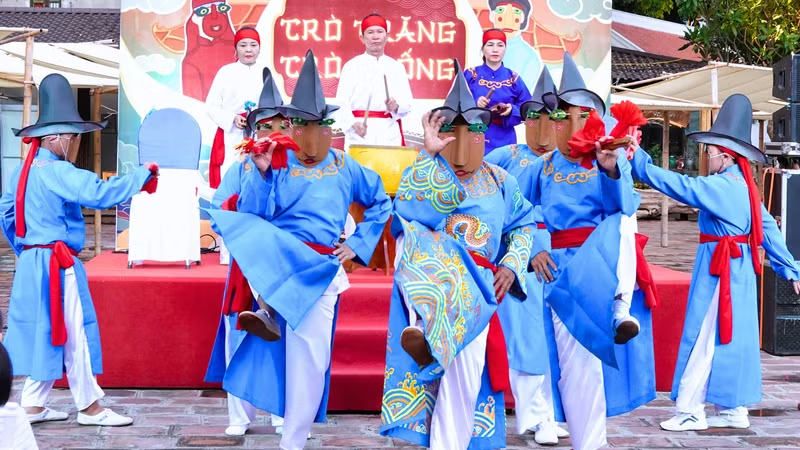
Ho Guom Becomes Folk Art Experience Hub
The Ho Van (Lake of Literature) area within the Temple of Literature complex in Hanoi hosted a folk art performance and cultural experience program featuring 'Tro Xuan Pha,' aiming to preserve and promote Vietnam's rich folk arts.
This article requires PRO
This article is outside the free access window or is a special report. PRO unlocks it and the full archive.
Related articles
- Vietnam Ranks Second Globally in Tourist Arrivals
Vietnam welcomed a record 12 million tourists in August, becoming the world's second most visited country. This marks an exceptional growth amid declining tourist arrivals in many nations due to the Middle East crisis.
- Vietnam's International Arrivals Recovering, Boosting Tourism Targets
Vietnam welcomed 17.7 million international visitors from January to September, achieving 71% of its 2026 target of 25 million. Growth is particularly strong from European markets, indicating a diversification of the tourism landscape.
- Muong Lo Culture and Tourism Festival to Showcase Thai 'Xoe' Dance
The Muong Lo Culture and Tourism Festival, themed 'Essence of Thai Xoe Dance - Colors of the Northwest,' will be held in Vietnam's northwestern Lao Cai province from October 16-21, 2026. The event commemorates the 5th anniversary of Thai Xoe dance's inscription on the UNESCO Intangible Cultural Heritage list, aiming to preserve tradition and boost regional tourism.
- Vietnam, Panama Forge Closer Ties with Focus on Culture, Tourism, Security Cooperation
Vietnam and Panama are strengthening their bilateral relationship with the signing of cooperation agreements in culture, tourism, and security. The Panamanian President's visit aims to make the traditional friendship between the two nations more substantive.