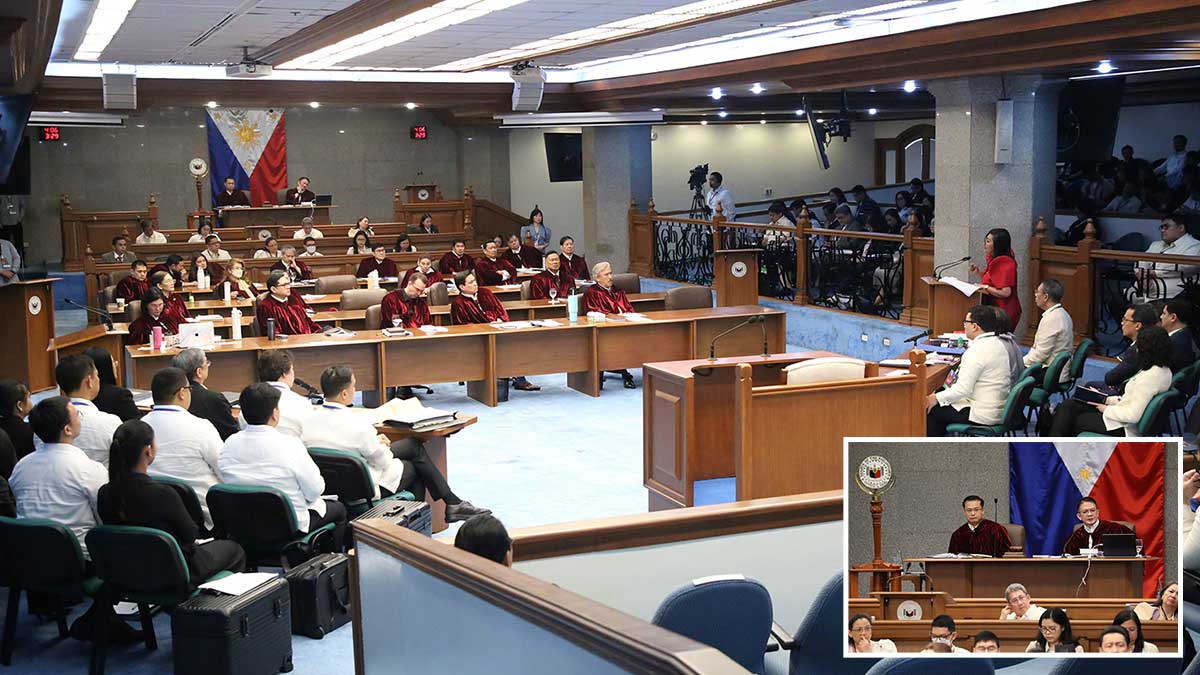
VP impeachment trial kicks off with Escudero as presiding officer, rules set
The impeachment trial of the Philippine Vice President commenced with Senator Francis Escudero elected as presiding officer. Key procedural rules were established, including a 16-vote threshold for conviction and guidelines for evidence presentation.
This article requires PRO
This article is outside the free access window or is a special report. PRO unlocks it and the full archive.
Related articles
- Impeachment trial of VP Sara Duterte enters evidentiary phase over alleged plot to kill Marcos
The impeachment trial of Philippine Vice President Sara Duterte has entered its evidentiary phase, with prosecutors presenting a witness to support allegations of "grave threats," including an alleged plot to assassinate President Marcos. Prosecutors also plan to summon Duterte herself as a "hostile witness."
- Sara Duterte Impeachment Trial: Key Witnesses Summoned
The House prosecution panel in the Philippines has asked the Senate impeachment court to summon the chief of staff of the Vice President's Office and the director of the National Bureau of Investigation (NBI) as witnesses in the impeachment trial of Vice President Sara Duterte. Their testimonies are crucial for substantiating allegations of an assassination plot against the President.
- Sara Duterte hitman claim implies intent to kill president, prosecution says
During the impeachment trial of Philippine Vice President Sara Duterte, the prosecution argued that her statements implying a plot to assassinate the president constitute evidence of a "plan" to kill him, citing rules of evidence that statements can establish intent or plans even without direct proof of action.
- VP impeachment trial a test of conscience, duty – senator
Senator Loren Legarda described the impeachment trial of Vice President Sara Duterte not just as a legal exercise, but as a "test of judgment, conscience, and institutional duty." Drawing from her experience in three prior impeachment trials, she emphasized the need to rise above political factions and personal attacks, focusing solely on evidence and the Constitution.