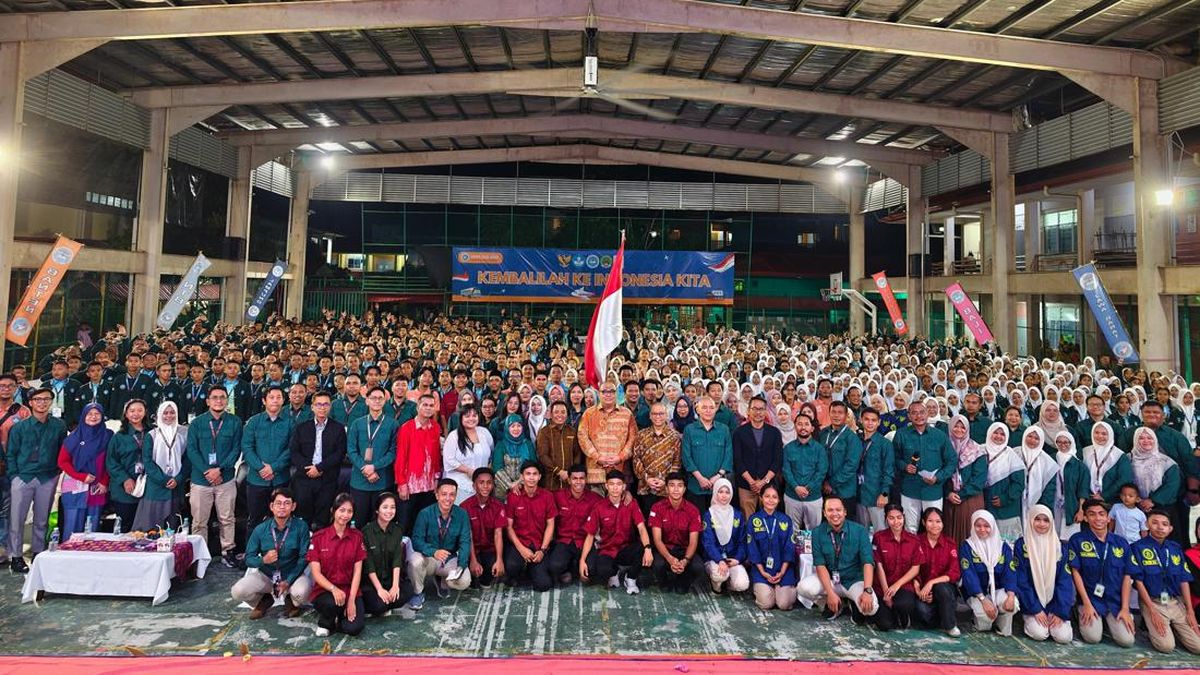
735 Indonesian Migrant Workers' Children in Malaysia Continue High School in Indonesia
735 children of Indonesian migrant workers, who grew up in Malaysia, will continue their high school education in Indonesia through a scholarship program. This initiative provides them with a pathway to higher education, as they often lack official residency status in Malaysia.
In the foothills of Mount Kinabalu, Maria Agreda (14) grew up as the child of an Indonesian migrant worker (PMI). For over a decade, her parents have cultivated rented vegetable fields in a highland village called Kundasang to make a living. Living in a foreign land, Maria's family has not yet obtained official residency permits from the Malaysian government. Despite this, her passion for learning has never waned. From elementary school until graduating junior high in 2026, she received her education at the Community Learning Center (CLC) Kundasang. CLCs are formal education services for elementary and junior high school children of Indonesian migrant workers, a result of an agreement between the Indonesian and Malaysian governments since 2011. Initially, these services were specifically for the children of PMIs whose parents worked in oil palm plantations. Later, CLCs were also established outside plantation areas to facilitate children of PMIs working in other sectors. Maria is one of 22,000 CLC students spread across the states of Sabah and Sarawak, under the coordination of the Indonesian School in Kota Kinabalu (SIKK). Each year, over 1,700 students graduate from CLC junior high programs. However, the absence of immigration documents closes the opportunity for these PMI children to continue their education to formal high schools in Malaysia. Besides establishing CLCs, the Indonesian Ministry of Education and Culture also has the ADEM (Afirmasi Pendidikan Menengah) scholarship program and scholarships from several educational foundations in Indonesia through the Gema Cita program. Through programs funded by the Center for Educational Funding Services under the Ministry of Education and Culture, selected PMI children undergo a selection process and are brought back to Indonesia to continue their high school education in their homeland. This year, 735 students from 1,700 CLC junior high graduates in Sabah and Sarawak received ADEM scholarships. Maria, who dreams of becoming a scientist, is one of these recipients. "I will continue my high school in Yogyakarta. I am happy and sad at the same time because I have to leave my parents here," said Maria, hoping that opportunities to pursue her dreams would be more open in Indonesia. "Since she was born here (Sabah), we have never been apart. Although it is difficult to let our child go, it is for her future and aspirations. This scholarship also helps us, poor migrant parents, to give our children back the opportunity to study in Indonesia," said Maria's mother, who hails from Larantuka, Flores, East Nusa Tenggara. The recipients of the ADEM repatriation scholarship, along with scholarships from several Indonesian educational foundations in 2026, will be distributed to 134 high schools in 12 provinces. Noorman Effendi, Indonesian Consul General in Kota Kinabalu, said on July 1st that the students are returning to Indonesia using travel documents that serve as a one-way ticket. "It's like a one-way ticket, so they are provided with a letter for their return journey to their homeland because they came here without documents, without even a national ID card, and many of them did not have birth certificates before this. So, we provide them with SBPK (Surat Bukti Pencatatan Kelahiran), a temporary birth certificate that will at least give them a unique identification number that will be useful for them later when they enroll in school," said Noorman. Meanwhile, Ahmad Romadhoni Surya Putra, Educational Attaché at the Indonesian Embassy in Kuala Lumpur, stated that the presence of CLCs in Sabah and Sarawak is proof of the state's presence in providing educational access for the children of migrant workers. 124 junior high graduates from Sabah, Sarawak, and several other areas in Malaysia landed at Juanda Airport, Surabaya, on July 2nd. East Java Governor Khofifah Indar Parawansa welcomed the children warmly. The arrival of Indonesian migrant workers' children from Malaysia is not new to Governor Khofifah. East Java has been a destination for this repatriation scholarship program since its inception in 2013. She mentioned that 50 children have been admitted to universities through merit-based admissions or entrance exams. "In the university admission process that just concluded, these ADEM students have achieved very good results. This means they have the same opportunity to get the same educational opportunities," said Khofifah. She also expressed hope that the newly arrived students can continue this positive trend and pursue higher education at the university level. East Java Province provides 29 schools spread across 13 regencies/cities, consisting of 18 high schools and 11 vocational schools, which have been selected according to the results of the students' selection and competencies in the ADEM program. Source: CNN Indonesia
多角的分析
このニュースの経済的側面は、インドネシア政府が海外で教育を受ける機会を失いがちな自国民の子弟に対し、国内での教育機会を提供することで、人的資本への投資を行っている点にある。これは、長期的に見て国内産業の発展や経済成長に寄与する可能性を秘めている。また、マレーシアでの低賃金労働に依存する家族にとって、子供の教育機会の確保は、将来的な経済的自立への希望となり、家族全体の経済状況改善に繋がる可能性がある。
投資家にとって、このニュースは直接的な市場への影響は小さいものの、インドネシア政府が国民の教育機会の均等化に注力している姿勢を示すものと捉えられる。これは、将来的な労働力の質の向上や、国内消費の拡大に繋がる可能性があり、長期的な視点ではインドネシア経済の安定性と成長性に対するポジティブなシグナルとなり得る。特に、教育関連産業や、将来的にこれらの学生が活躍するであろう産業への間接的な投資機会を示唆している。
マレーシアで育ち、インドネシア語や文化に触れる機会が限られていた可能性のある子供たちが、故国で教育を受けることで、自身のアイデンティティを再確認し、インドネシア社会の一員としての帰属意識を深める機会を得る。一方で、両親と離れて暮らすことによる精神的な影響や、新しい環境への適応といった課題も生じる。また、このプログラムは、マレーシアで働くインドネシア人労働者の子供たちが直面する教育格差という社会問題に対する、政府による具体的な対応策の一つである。
マレーシアで育ったインドネシア人子弟の多くは、両親が低賃金労働に従事しており、経済的な困難を抱えている。彼らにとって、この奨学金は、マレーシアでは閉ざされていた教育の扉を開く唯一の機会となる。故国で高校に通うことで、より良い将来を築く希望が生まれる一方で、慣れ親しんだマレーシアを離れること、そして両親と離れて暮らすことへの不安も大きい。彼らの多くは、将来的にインドネシアで働き、家族を支えることを目指しているだろう。
背景・歴史的文脈
インドネシアは世界有数の労働力輸出国であり、特にマレーシアには多くのインドネシア人労働者(PMI)が移住している。これらの労働者の子供たちは、マレーシアで生まれ育つことが多いが、親の法的地位が不安定なため、正規の教育システムへのアクセスが困難な場合が多い。これに対し、インドネシア政府は、2011年以降、両国政府間の合意に基づき、CLCを設置し、初等・中等教育の機会を提供してきた。しかし、中学校卒業後の進路が課題となっていたため、2013年頃からADEM奨学金プログラムが導入され、選抜された生徒をインドネシア国内の高校へ受け入れる体制が整備された。この背景には、海外で働く自国民の子供たちの教育権を保障し、将来的な人材育成に繋げたいというインドネシア政府の意向がある。
原文ソース
CNN Indonesia