General articles are free for 24 hours after publish.
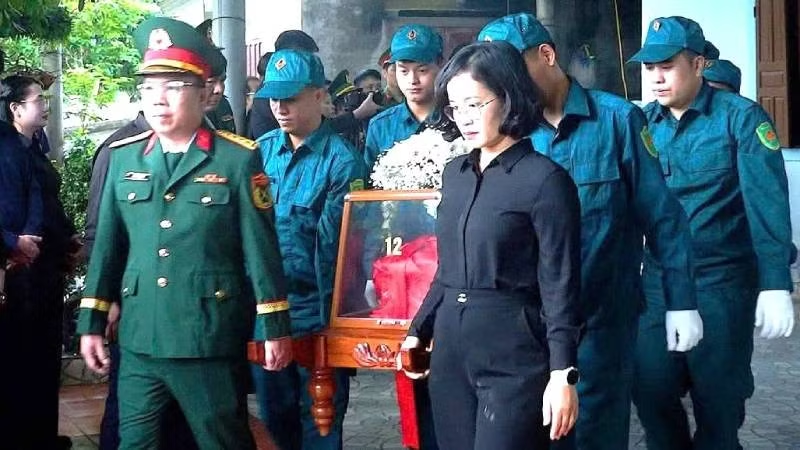
Quang Tri Province: Fallen Soldier's Remains Returned Home After 54 Years Through DNA Identification
In Vietnam's Quang Tri Province, the remains of fallen soldier Nguyen Quoc Hoi, believed to have died 54 years ago, have been identified through DNA analysis and laid to rest in his hometown. This marks the first successful identification of remains via DNA in the province, highlighting advancements in identifying fallen soldiers.
On September 1st, the Party organization, government, and people of Bac Gianh ward, Quang Tri Province, solemnly organized a memorial service, eulogy, and burial for fallen soldier Nguyen Quoc Hoi, who hailed from the Quang Phuc residential area. This is the first case in Quang Tri where the identity has been successfully determined through DNA identification technology. Related news: Quang Tri: Eulogy and burial for 13 fallen soldiers' remains at Cau Nhi Quang Tri: Eulogy and burial for 2 fallen soldiers' remains Quang Tri: Eulogy and burial for fallen soldiers' remains in Cua Viet commune Da Nang organizes a memorial service and burial for 5 fallen soldiers' remains searched and gathered in the Hang Da Sap area Gia Lai: Solemn memorial service and burial for the remains of two fallen soldiers at An Nghia Martyrs' Cemetery This advancement holds the potential to bring peace to families by identifying long-unidentified remains of fallen soldiers. In Vietnam, numerous soldiers lost their lives during conflicts, including the Vietnam War (1955-1975), and many of their remains remain unidentified. The government has been continuously promoting efforts to collect and identify the remains of fallen soldiers, and the adoption of DNA analysis technology is expected to significantly enhance the accuracy of these endeavors. Quang Tri Province was one of the fiercest battlegrounds during the Vietnam War, and a large number of fallen soldiers' remains are interred there. This identification has deeply resonated with the local community and has raised hopes for the identification of other unidentified remains.
Original source
Nhan Dan