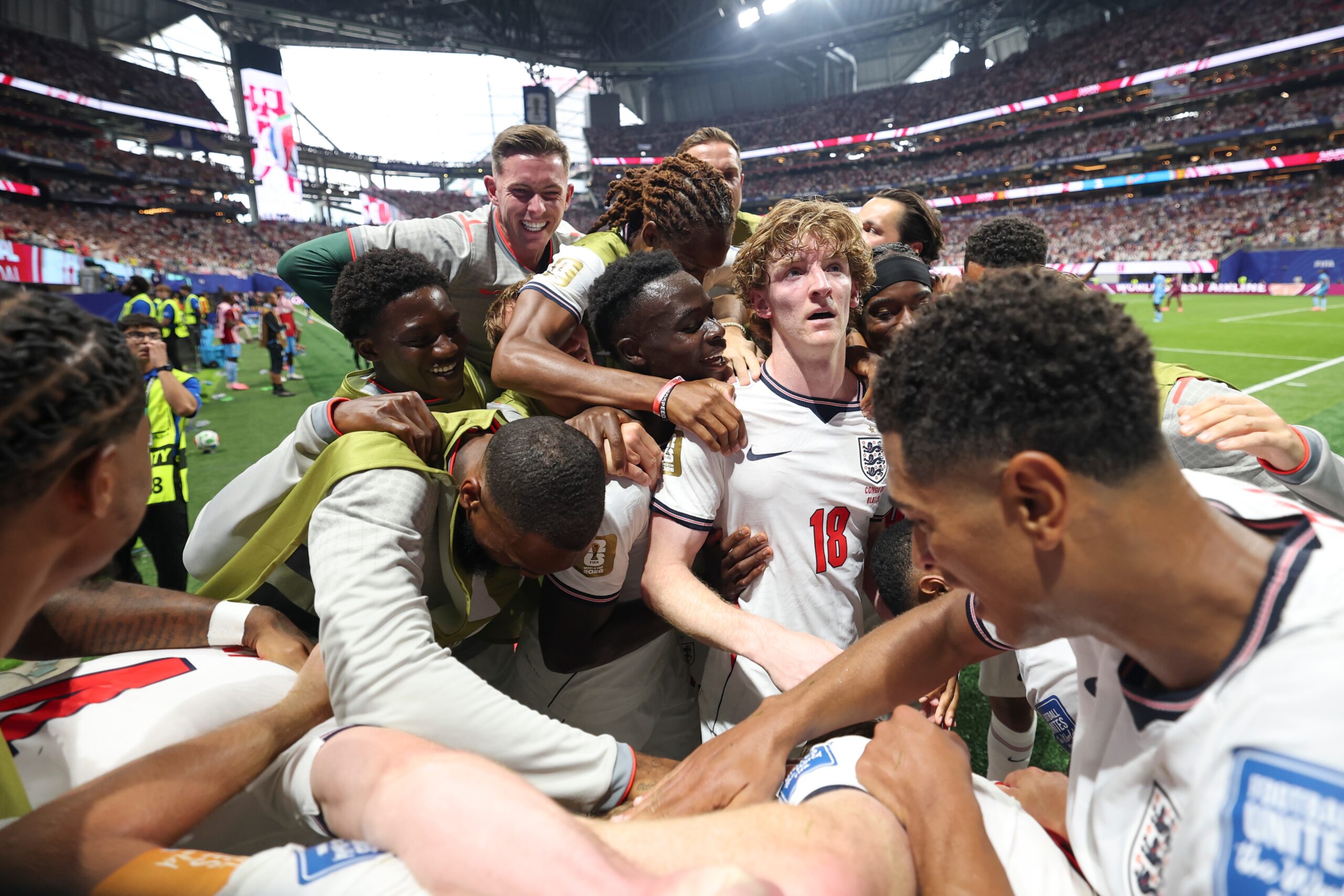
England's Biggest Hurdle May Be Themselves, Not Opponents, in World Cup
Security
2026年7月2日
5
INN News

England's Biggest Hurdle May Be Themselves, Not Opponents, in World Cup

AI サマリー

England has reached the Round of 16 in the 2026 World Cup, but their performance reveals a recurring struggle with controlling their mentality and emotions, rather than the quality of their opponents. Often finding themselves chasing the game from behind, their ability to handle mental pressure will be crucial moving forward.

England has successfully advanced to the Round of 16 in the 2026 World Cup. However, a deeper look into their performances reveals that the team's primary challenge is not the quality of their opponents, but rather their own "mentality and ability to control emotions" during matches. The match against DR Congo clearly illustrated this issue. England conceded a goal in the 7th minute due to a defensive error and spent most of the game chasing the scoreline. Despite having superior ball possession and creating more chances, they only managed to equalize in the 75th minute through Harry Kane and secured a late winner for a 2-1 victory. While the result was a crucial win, the game itself was another instance where England allowed themselves to "chase the situation" rather than dictating it from the outset. This pattern is not new. In their goalless draw against Ghana in the group stage, England possessed the ball and had opportunities but lacked the sharpness to finish the game. During periods when they should have pressed their opponents to seal the win, the team gradually fell into a frustrating rhythm, unable to accelerate the game's pace as needed. Taken together, these two matches highlight a clear pattern: England often experiences "stumbles" in the first half or early stages of games, requiring significant energy to regain momentum. This is where "pressure" plays a significant role. As a team expected to perform highly in every tournament, England's players take the field carrying an invisible burden. Every mistake is amplified, and an early conceded goal becomes cumulative pressure. The expectation to win often leads the team to play too cautiously at the start, rather than attacking from the whistle. Thomas Tuchel himself admitted after the DR Congo match that the team did not press their opponents effectively in the first 15-20 minutes, indicating that the problem lies not just in tactics but also in their "mentality at the start of the game." Psychologically, high-level football pressure can work in two ways: it can elevate a team's performance to sharpness, or it can lead to hesitant play. For England in recent games, the latter has been more evident. The attempt to "avoid mistakes early" seems to prevent the team from taking risks, increasing the tempo, and losing their natural attacking fluidity. This becomes even more apparent when games don't go according to plan. Conceding an early goal doesn't cause England to panic, but rather to enter a "too-slow problem-solving mode." By the time they manage to pick up the pace, the opponent has often retreated into a deep defensive block, making it difficult to break down. Although Tuchel insists "they are not playing with fear, but with determination," from another perspective, that determination is overshadowed by pressure, causing the team to take too long to reach their optimal rhythm. Therefore, the Round of 16 match against Mexico at the Estadio Azteca is not just a test of skill but a true test of mentality. In knockout football, what separates teams that go far from those that stop short is not just player quality, but the ability to handle pressure from the very first second of the game. If England continues to need half a game to "unlock themselves" as they have done so far, pressure may no longer be just something surrounding the team, but the decisive factor in the outcome of their entire tournament.

多角的分析

経済的影響

このニュースは直接的な経済的影響を論じていないが、サッカー代表チームのパフォーマンスは、関連するスポンサーシップ、放映権料、グッズ販売、さらには国内のスポーツ産業全体への波及効果に間接的に影響を与える可能性がある。特に、主要大会での成績は、サッカー関連ビジネスの収益性に直結するため、長期的な経済的安定性にも寄与しうる。

投資家心理

投資家にとって、イングランド代表のような人気チームの成績は、スポーツ関連企業への投資判断に影響を与える可能性がある。例えば、キットサプライヤー、スポーツ飲料メーカー、放映権を持つメディア企業などは、チームの成績によって収益が変動するリスクを抱えている。メンタリティの問題が継続すれば、これらの企業の株価に短期的な変動をもたらすことも考えられる。

社会的影響

イングランド代表の試合は、国民的な関心事であり、そのパフォーマンスは社会的な一体感や国民の士気に影響を与える。試合序盤の遅れや、プレッシャーによるプレーの硬直は、観戦する国民にフラストレーションや不安をもたらす可能性がある。逆に、困難を乗り越えて勝利した場合、国民的な高揚感につながることもある。今回の報道は、国民が「期待」と「現実」のギャップに直面する様相を示唆している。

市民の声

イングランド国民にとって、代表チームの成績は大きな関心事であり、試合結果は日々の気分や会話のトピックに影響を与える。特に、試合序盤の失点や、苦しみながらの勝利は、応援する側にも精神的な負担をもたらす。国民は、チームが本来の力を発揮できない状況にフラストレーションを感じつつも、逆転勝利に希望を見出そうとする。こうしたメンタリティの課題は、国民の期待と現実の乖離として、生活実感に影響を与える。

背景・歴史的文脈

イングランド代表は、サッカー発祥の国として常にワールドカップ優勝候補に挙げられ、国民からの期待は極めて高い。しかし、1966年を最後にワールドカップ優勝からは遠ざかっている。過去の大会でも、有力視されながらも精神的なプレッシャーや戦術的な課題から早期敗退を喫した例は少なくない。特に、トーナメントが進むにつれて、相手の戦術が洗練され、試合展開が拮抗する中で、メンタリティの強さが勝敗を分けるケースが多々見られる。今回の報道は、この長年の課題が再び浮上したことを示唆している。

原文ソース

INN News

原文を読む