General articles are free for 24 hours after publish.
Five Baby Orangutans Found in India, Cross-Border Trade Route Linked to Indonesia?
Five baby orangutans were discovered in India's Odisha state, raising suspicions of an international illegal wildlife trade route as orangutans are not native to India. Experts suggest this finding points to potential smuggling originating from Indonesia.
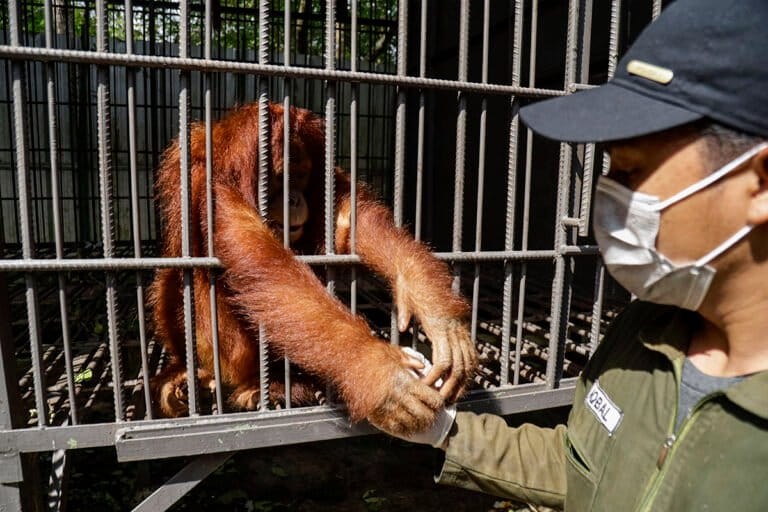
Five baby orangutans were discovered in a forest area in the Balasore district of Odisha, India, on Tuesday (9/8/26). India is a country that does not have a wild orangutan population. As reported by The Indian Express on Wednesday (9/9/26), residents initially mistook the animals for a rare type of monkey. After forestry officials arrived, they confirmed the five were orangutans. Prateek Indalkar, Balasore Divisional Forest Officer (DFO), said the five, consisting of two females and three males, are estimated to be less than one year old. After examination, the five orangutans were moved to the Nandankanan Zoological Park in Bhubaneswar. The Odisha government has asked the Wildlife Crime Control Bureau (WCCB) to investigate the origin of the orangutans. Prem Kumar Jha, Chief Conservator of Wildlife in Odisha, said orangutans are part of the trade in exotic animals that are illegally kept in a number of countries. Investigators will explore whether the animals were sold to buyers in India, or were just in transit before being sent to other countries. These baby Sumatran orangutans were cared for at the Sumatera Rescue Alliance Primate (SRA), Bukit Mas, Besitang District, Langkat Regency, North Sumatra. These babies are victims of illegal wildlife trafficking. Photo: Junaidi Hanafiah/Mongabay Indonesia. M. Indra Kurnia, Director of Conservation at the Sumatran Orangutan Conservation Foundation–Orangutan Information Centre (YOSL-OIC), said the appearance of orangutans in a country without a natural population must be seen as a cross-border wildlife trafficking issue. "We must not just see it as a local case in the country where the animals are found," he said on Wednesday (9/9/26). If the suspicion of illegal trade is proven, the Odisha case shows that orangutan trafficking is carried out through a long chain. "This starts from poaching in the wild, separation of babies from their mothers, transportation through several regions, to being sold or kept as exotic animals." Separation...
Original source
Mongabay Indonesia