General articles are free for 24 hours after publish.
Vietnam, India to Form Early Tech Linkage Strategy in AI, Semiconductors
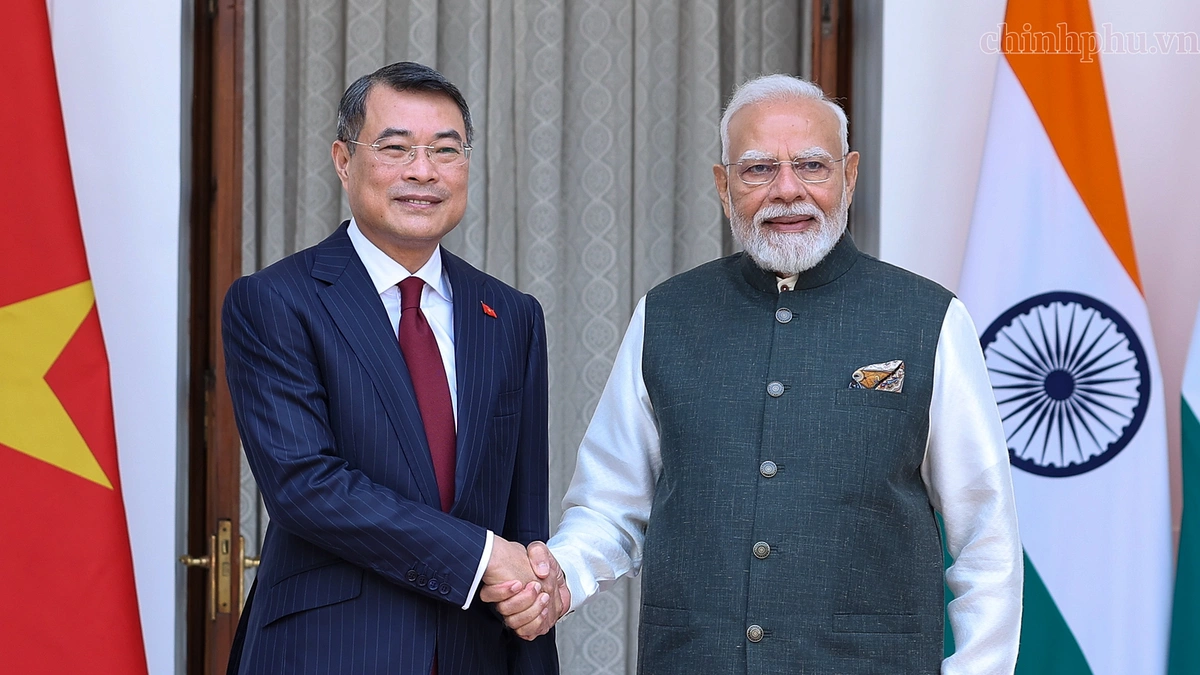
Vietnamese Prime Minister Le Minh Hung met with Indian Prime Minister Modi, proposing the early formation of a technological linkage strategy between the two nations in cutting-edge fields such as AI and 5G/6G. This move aims to leverage the countries' economic growth and high complementarity to achieve trade targets and promote investment.
Vietnamese Prime Minister Le Minh Hung met with Indian Prime Minister Narendra Modi in New Delhi, proposing the early formation of a technological linkage strategy between Vietnam and India, focusing on key sectors like Artificial Intelligence (AI). The meeting took place on September 12 within the framework of PM Hung's visit to India for the 18th BRICS Summit, according to the Ministry of Foreign Affairs. PM Hung assessed that amidst a volatile regional and global landscape, Vietnam and India have always been close, steadfast, and consistent friends. He emphasized that Vietnam and India share many similarities in their development viewpoints and goals, creating opportunities for the two countries to cooperate in various fields. PM Modi highly valued Vietnam's participation in BRICS, noting that Vietnam's presence at the 18th BRICS Summit helped elevate the conference. The two leaders agreed that Vietnam and India are among the world's fastest-growing economies, highly complementary, and possess vast potential for cooperation. They expressed their resolve to accelerate measures to achieve the bilateral trade target of $25 billion soon and agreed to facilitate market access for each other's products, especially pharmaceuticals, agricultural products, fisheries, and livestock. PM Le Minh Hung proposed establishing economic corridors and supply chains to enhance the connectivity of the two economies and welcomed major Indian corporations to invest in Vietnam in fields such as technology, infrastructure, energy, and pharmaceuticals. The two Prime Ministers also underscored the importance of connectivity via land, rail, air, and sea routes. They agreed to study and promote railway connectivity projects, form a South Asia-Southeast Asia connectivity corridor, and link seaports of both countries with the Asia-Europe maritime route. PM Le Minh Hung requested India to continue increasing the frequency of direct flights connecting major cities of the two countries. Both Prime Ministers assessed defense-security cooperation as a crucial pillar of bilateral relations, agreeing to boost cooperation in the defense industry, military trade, training, and provide preferential credit. They also agreed to soon hold the first meeting of the Defense-Diplomacy Dialogue mechanism. In the field of science and technology, PM Le Minh Hung proposed that the two sides soon form a Vietnam-India technology linkage strategy, focusing on key sectors such as AI and 5G/6G mobile network technology. He also suggested building cooperation programs for training AI and semiconductor engineers, digital technology training for the young generation, and connecting startups and innovative enterprises of both countries. PM Le Minh Hung also proposed promoting cultural, sports, yoga, and Buddhist exchange activities in 2027, marking the 55th anniversary of diplomatic relations between Vietnam and India. Vietnam and India established diplomatic relations in 1972. The two countries upgraded their relationship to an Enhanced Comprehensive Strategic Partnership during the state visit of General Secretary and President To Lam to India in May. Bilateral trade reached $16.4 billion in 2023. In the first seven months of 2024, bilateral trade reached $11.78 billion, an increase of 28.4% compared to the same period in 2023.
Original source
VnExpress