General articles are free for 24 hours after publish.
Drake Passage: World's Fiercest Waters Hold 140,000 Years of Climate Record
The Drake Passage, connecting the Pacific and Atlantic Oceans, is known as the world's fiercest body of water due to its rough seas. However, it is also the source of the Antarctic Circumpolar Current and holds 140,000 years of climate change records in its seabed sediments. Recent studies suggest its crucial role in global heat and carbon absorption.
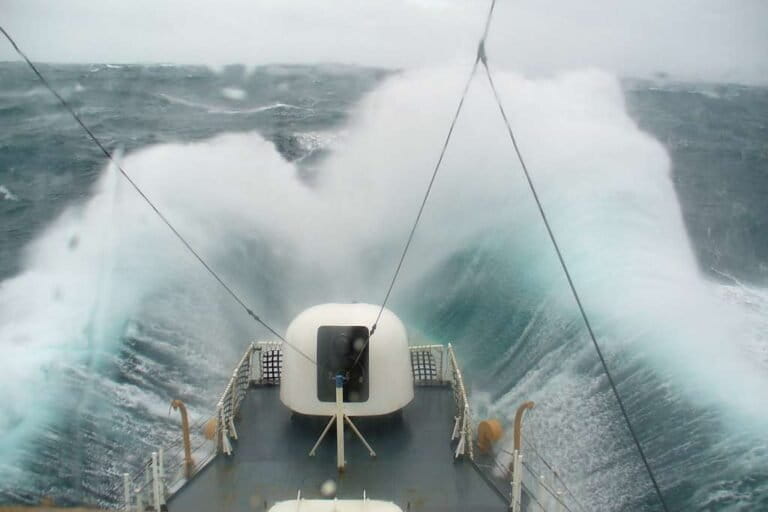
The Drake Passage, a roughly 800-kilometer-long body of water connecting the Pacific and Atlantic Oceans between Cape Horn, Chile, and the South Shetland Islands, is widely known as one of the fiercest sea lanes in the world, with large waves that sailors refer to as the "Drake Shake." This reputation has been built over centuries, dating back to when the first sailing ships attempted to cross the southern tip of South America to move between the Pacific and Atlantic Oceans, long before the Panama Canal was built as an alternative route. Its position at the confluence of two oceans and its direct border with Antarctic waters means the strait has never truly been out of the attention of marine experts or commercial sailors. Large waves hit the decks of ships crossing the Drake Passage, a result of "infinite fetch" where winds and currents accumulate energy without land obstruction in the "Furious Fifties" and "Screaming Sixties" zones. This type of turbulence is actually part of the mechanism that helps the Southern Ocean absorb carbon and heat from the atmosphere. (Photo: W. Bulach/Wikimedia Commons, CC BY-SA 4.0) Behind this fierce reputation, the strait is also the source of the Antarctic Circumpolar Current, the only ocean current that circles the globe without being blocked by continental landmasses. The seabed in the strait even holds sediment records dating back 140,000 years, helping scientists reconstruct how this current has changed over time and how those changes relate to carbon absorption by the Southern Ocean. A study published in the journal Nature Climate Change in November 2025 has just revealed how this current has remained stable amidst changing global wind patterns, a finding that strengthens the position of the Drake Passage as one of the guardians of Earth's climate system.
Original source
Mongabay Indonesia