Kyrgyzstan's Soviet-era Mining Town Navigates Post-Collapse Survival and Revival
Infrastructure
2026年7月14日
5
The Diplomat Indonesia

Kyrgyzstan's Soviet-era Mining Town Navigates Post-Collapse Survival and Revival

AI サマリー

Engilchek, a Soviet-era mining town in Kyrgyzstan's Tien Shan mountains, saw its population plummet after the USSR's collapse. Today, a small community of dozens perseveres, seeking revival through tourism and local resources, while facing challenges like decaying infrastructure and potential external development pressures.

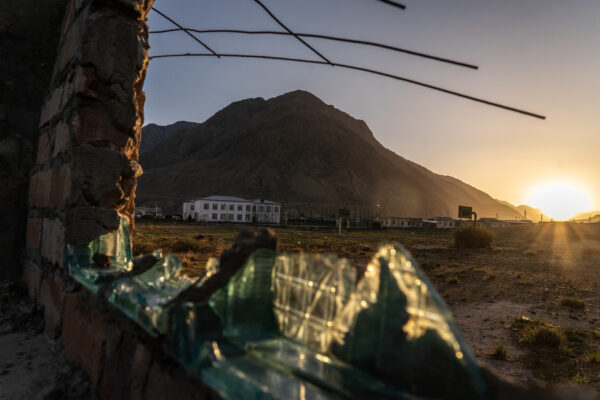
Read The Diplomat, Know The Asia-Pacific The ruins of Engilcheck, a Soviet-era mining boomtown in the Tien Shan mountains, are still home to a small but thriving community. The living village of Engilchek glimpsed at sunset through the ruins of one of the town’s Soviet-era buildings. Once home to 5,000 people, the mining town of Engilchek, in the southern Tien Shan mountains of Kyrgyzstan, emptied after the collapse of the Soviet Union, leaving behind abandoned buildings, shattered lives, and a handful of residents facing an uncertain future. Today, the ruins are home to a small but thriving community. Ashuu – given that name since he was born on the eponymous mountain pass 1.5 hours away, which is the only route into town – remembers when Engilchek was just a jailoo; the summer pasture of nomads. His parents came here on horses with their cattle, living in yurts, as the Kyrgyz had done for centuries. Ashuu, 65, was named after the pass 1.5 hours away from Engilchek and the only route into town. Photo by Thijs Broekkamp. Then, in the 1960s, Soviet geologists arrived. They discovered an abundance of natural resources: tin, tungsten, and molybdenum in the mountains, and alluvial gold in the rivers. Yet it was not until the early 1980s that full-scale development began. Mines and processing facilities were built, and the Soviet authorities invested heavily in infrastructure to support the remote, high-altitude settlement, including an airstrip. Multi-story apartment blocks, single-family houses, schools, and a hospital soon followed. Now, 65 years old, Ashuu is one of about five dozen people still residing in Engilchek. Officially, around 200 people are registered as residents, but locals say the true number is much closer to 60. Engilchek is surrounded by towering peaks rising above 7,000 meters. Photo by Thijs Broekkamp. Engilchek lies in a broad valley, a rare stretch of flat land in this rugged mountain region, surrounded by towering peaks rising above 7,000 meters. Karakol, a small city about four hours away by road, is the nearest major settlement. The road from Karakol winds through a lush green valley alongside a mountain stream, flanked by pine forests that gradually disappear as the road climbs toward Ashuu Pass at 3,800 meters. Ashuu Pass is almost permanently covered in snow. Beyond the pass, the gravel road cuts through wide valleys, occasionally passing shepherds tending herds of yaks, sheep, horses, or cattle. The road from Karakol winds through a lush green valley alongside a mountain stream, flanked by pine forests that gradually disappear as the road climbs toward Ashuu Pass at 3,800 meters. Photo by Thijs Broekkamp. Before reaching Engilchek, you pass a Kyrgyz border post, where you must present the specially obtained permit granting permission to travel in the area due to the close proximity to the border with China. If you drive farther, you’ll come across a Chinese border guard post too, though there is no actual border fence; the impenetrable mountains carry that function. Beyond Engilcheck there are no more villages, only the occasional shepherd. At the center of Engilcheck stand three abandoned Soviet-era apartment blocks. The town lives on around them. Photo by Thijs Broekkamp. Three abandoned Soviet-era apartment blocks dominate the center of town. Around them stand inhabited houses, connected by footpaths and dotted with small yards and a modest playground, interspersed with derelict homes whose roofs have collapsed, buildings with shattered windows, and piles of rubble. Children play with scraps of metal they find among the ruins. “After the [Soviet] collapse, everything stopped. Out of desperation, people began stripping the buildings of anything valuable and selling it. I did the same,” Ashuu says. They salvaged metal, electrical wiring, and anything else they could sell – the reason the buildings now stand completely empty. Others returned to the old way of life, keeping livestock to survive. A cow peeks through the window of an abandoned house in Engilcheck. Photo by Thijs Broekkamp. “Leaving was difficult,” Ashuu says of the time following the 1991 collapse of the Soviet Union. “If you didn’t have the money to buy or build a house somewhere else, there was little point in leaving. Besides, the road out of Engilchek often became impassable once the government stopped maintaining them. In winter it was buried under snow, and rockfalls regularly blocked them. There weren’t nearly as many cars as there are today. And where would you go? In nearby Karakol the situation was much the same: no work, no money, little food, which was the situation all over the disintegrated Soviet Union.’’ Ashuu is one of the few older residents still living in Engilchek; most people of his generation have left because of the harsh climate. Younger families have moved to Engilchek in recent years. A girl with balloons walks by some of Engilchek’s inhabited homes. Photo by Thijs Broekkamp. Nelli moved to Engilchek from Karakol a decade ago with her husband, who wanted to raise cattle in the surrounding mountains. Seeing the occasional traveler pass through, she sensed an opportunity. “They’ll probably need a meal or somewhere to stay,” she thought, and opened a guesthouse. Two of their children now live with their grandparents in Karakol so they can attend school, while the two youngest still live with them in Engilchek. For Nelli, the appeal of life here lies in the silence and the spectacular mountain scenery. Nelli is also the teacher at the local school, one of nine teachers educating around 30 children. Photo by Thijs Broekkamp. She hopes tourism will help sustain life in the town. Three more guesthouses have opened in recent years, catering to international visitors as well as Kyrgyz tourists from Bishkek and elsewhere, drawn by the nearby hot springs, hiking trails, and glacier treks. Nelli worries that one day the government will “discover” Engilchek too. Across Kyrgyzstan places that become popular with tourists often see cable cars, cafés, luxury hotels, and restaurants appear in quick succession. A-frame houses are already being built next to the hotsprings. Nelli fears that someday the government might bulldoze all the Soviet rubble, and thus remove the draw for tourists. Two kids ride a bike past the town’s small mosque. Photo by Thijs Broekkamp. Today, the town’s operating public institutions include a kindergarten, a school, and a small medical center. More recent additions include a tiny mosque and a library that also serves as a community center, rebuilt by the government after the original building had almost completely collapsed. Behind the kindergarten, a new football pitch has been laid out beside the overgrown remains of basketball hoops. The librarian, Eliza, is unfailingly optimistic. “We’ll restore the town to what it once was,” she says, her eyes lighting up as she talks about the recent construction proje

多角的分析

経済的影響

エングルチェクの経済は、ソ連時代の鉱業から、現在は観光業と畜産業に大きく依存している。しかし、観光業はインフラの未整備やアクセス困難性により、そのポテンシャルを十分に発揮できていない。地域経済の持続可能性を高めるためには、インフラ投資と、地域固有の魅力を活かした観光戦略の強化が不可欠である。また、廃墟となった鉱山施設の再利用や、地域資源を活用した加工業などの多角化も、経済的安定に寄与する可能性がある。

投資家心理

エングルチェクへの直接的な大規模投資は、現時点では限定的であると考えられる。その理由として、地理的な隔絶性、インフラの未整備、そして政治的・経済的な不確実性が挙げられる。しかし、ニッチな観光分野、特にアドベンチャーツーリズムやエコツアーに関心を持つ投資家にとっては、未開発の魅力を秘めた市場となり得る。ただし、投資判断には、現地の法規制、土地所有権、そして地域コミュニティとの関係性を慎重に評価する必要がある。

社会的影響

エングルチェクの社会構造は、ソ連崩壊という大きな断絶を経て再構築されている。かつての集団生活から、現在は少数の住民による緊密なコミュニティが形成されている。廃墟となった集合住宅の周辺に、個々の住居が点在し、子供たちは廃材で遊び、大人たちは地域資源を分かち合って生活している。このような状況は、中央集権的な社会から、より自律的で地域に根差した生活様式への移行を示唆している。一方で、若い世代の教育機会や、医療・福祉サービスの提供は、依然として大きな課題である。

市民の声

エングルチェクの住民にとって、生活は自然との共存であり、厳しい環境下での自給自足が基本となっている。アシュー氏のような高齢者は、ソ連時代の栄光と崩壊を経験し、現在の生活に複雑な思いを抱えている。ネリ氏のような移住者は、新たなビジネスチャンスを見出し、地域に活気をもたらそうとしている。子供たちは、廃墟を遊び場とし、自然の中でたくましく育っている。彼らにとって、エングルチェクは単なる居住地ではなく、歴史と自然が織りなす、特別な生活の場である。

背景・歴史的文脈

エングルチェクの物語は、1960年代にソ連の地質学者たちがこの地域で豊富な鉱物資源(錫、タングステン、モリブデン)と砂金を発見したことに始まる。1980年代初頭に本格的な開発が始まり、ソ連政府は高地の辺境にあるこの集落のために、空港を含むインフラに多額の投資を行った。最盛期には5,000人もの人口を擁したが、1991年のソ連崩壊により、経済活動は停止し、多くの住民が職と生活基盤を失い、町を離れた。残った住民は、廃墟となった建物を解体して生計を立てるか、伝統的な遊牧生活に戻ることで生き延びてきた。近年、観光業や畜産業による再生の兆しが見え始めている。

原文ソース

The Diplomat Indonesia

原文を読む