General articles are free for 24 hours after publish.
Thai Military's Preah Vihear Attack Suspected of Premeditated Destruction, CMAC Analysis Reveals
Analysis by the Cambodian Mine Action Centre (CMAC) suggests that the alleged 2025 Thai military incursion into Cambodian territory and shelling of Preah Vihear Temple may have been a premeditated act intended to destroy the heritage site. The extensive use of cluster munitions is also highlighted, raising concerns about long-term impacts.
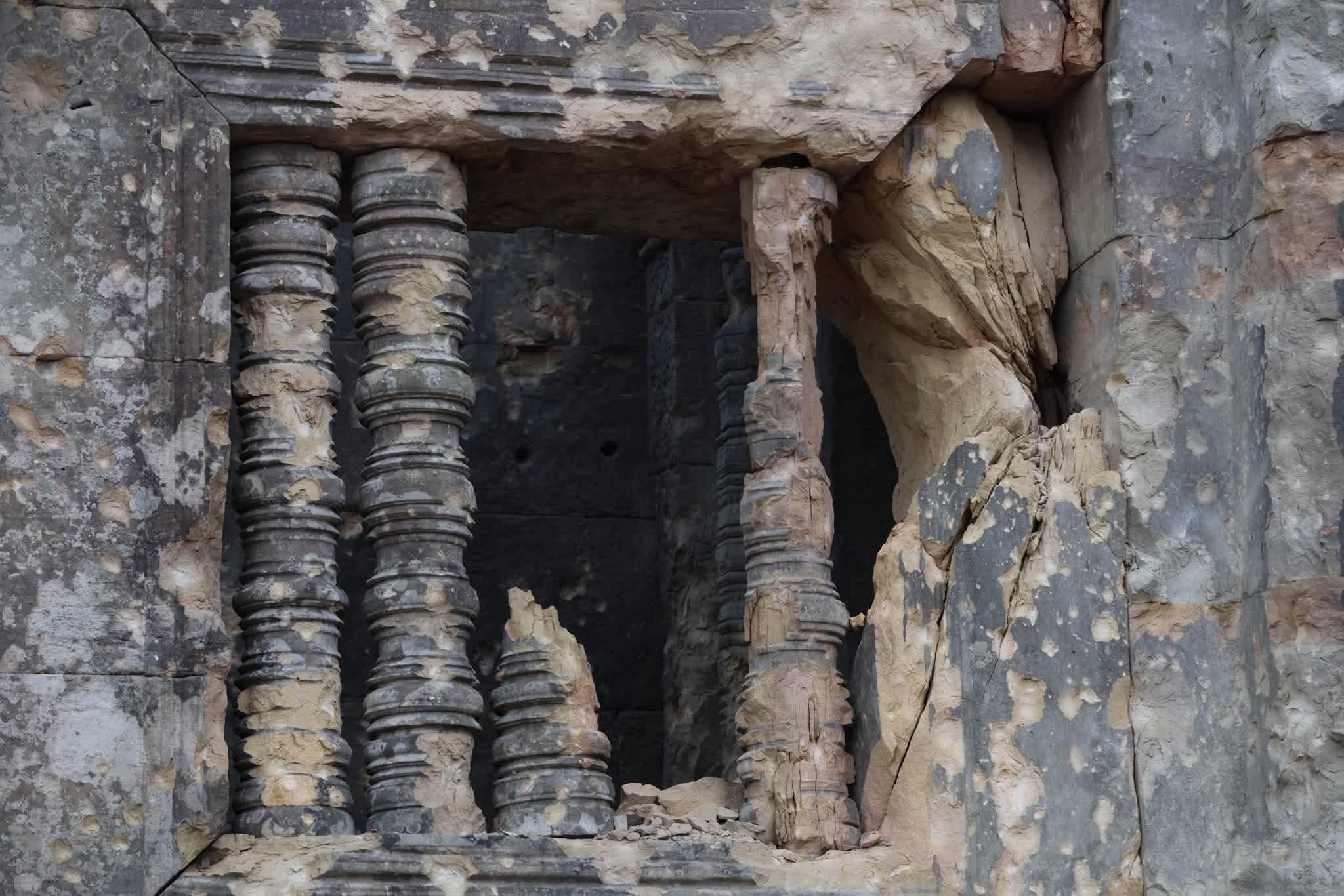
Analysis by the Cambodian Mine Action Centre (CMAC) suggests that the alleged 2025 Thai military incursion into Cambodian territory and shelling of Preah Vihear Temple were likely based on a deliberate plan aimed at destroying the heritage site. On September 11, 2026, Heng Ratana, Director-General of CMAC, stated that the Thai military fired a total of 1,599 artillery shells targeting Preah Vihear Temple, with 501 firing directives. Among these, 977 were unexploded ordnance, and four drones were also observed. Ratana indicated that analysis of the Thai military's firing patterns clearly showed premeditation in the attacks on Cambodian territory, with the intent to destroy Preah Vihear Temple. Following this incursion, CMAC experts discovered 16,000 bomb craters in the Cambodia-Thailand border region, affecting an area of 3,000 square kilometers. In the past six months alone, CMAC has cleared approximately 10,000 landmines and unexploded ordnance, securing over 100 square kilometers of land. The cluster munitions used by the Thai military were identified as Israeli-made M42, M46, and M85 types, which are prohibited under the Oslo International Convention on Cluster Munitions. During the 2025 conflict, the Thai military reportedly used approximately 12,000 to 13,000 cluster munitions for 155mm howitzers, containing an estimated 6 to 7 million submunitions. This attack impacted 335 villages in 60 communes along the Cambodia-Thailand border, affecting over 290,000 hectares. Notably, 14 villages and areas along the border line remain uninvestigated due to security concerns. Ratana emphasized that the Thai military's cluster munition firings followed clear military strategies and tactics, aiming to inflict long-term economic and social devastation on the Cambodian people and nation. Regarding the destruction of Preah Vihear Temple, Kong Puthikar, Director-General of the National Authority for Preah Vihear, stated that the heavy artillery shelling by the Thai military during the two incursions in 2025 caused catastrophic damage to Cambodia's precious world heritage site. The temple sustained damage to 562 locations, with approximately 70,000 stone fragments destroyed by heavy weapons and aerial bombs from the Thai military. This damage affected architectural structures, gopuras, carvings, stone pillars, walls, sanctuaries, and tourism infrastructure. Puthikar noted that some conservation work, which was nearing completion, was destroyed, not only reverting to its pre-restoration state but causing more severe damage in some parts than natural factors. He asserted that most of the shelling directly hit heritage elements, and some sections were repeatedly damaged during the July and December conflicts. Source: Koh Santepheap Khmer
Original source
Koh Santepheap Khmer