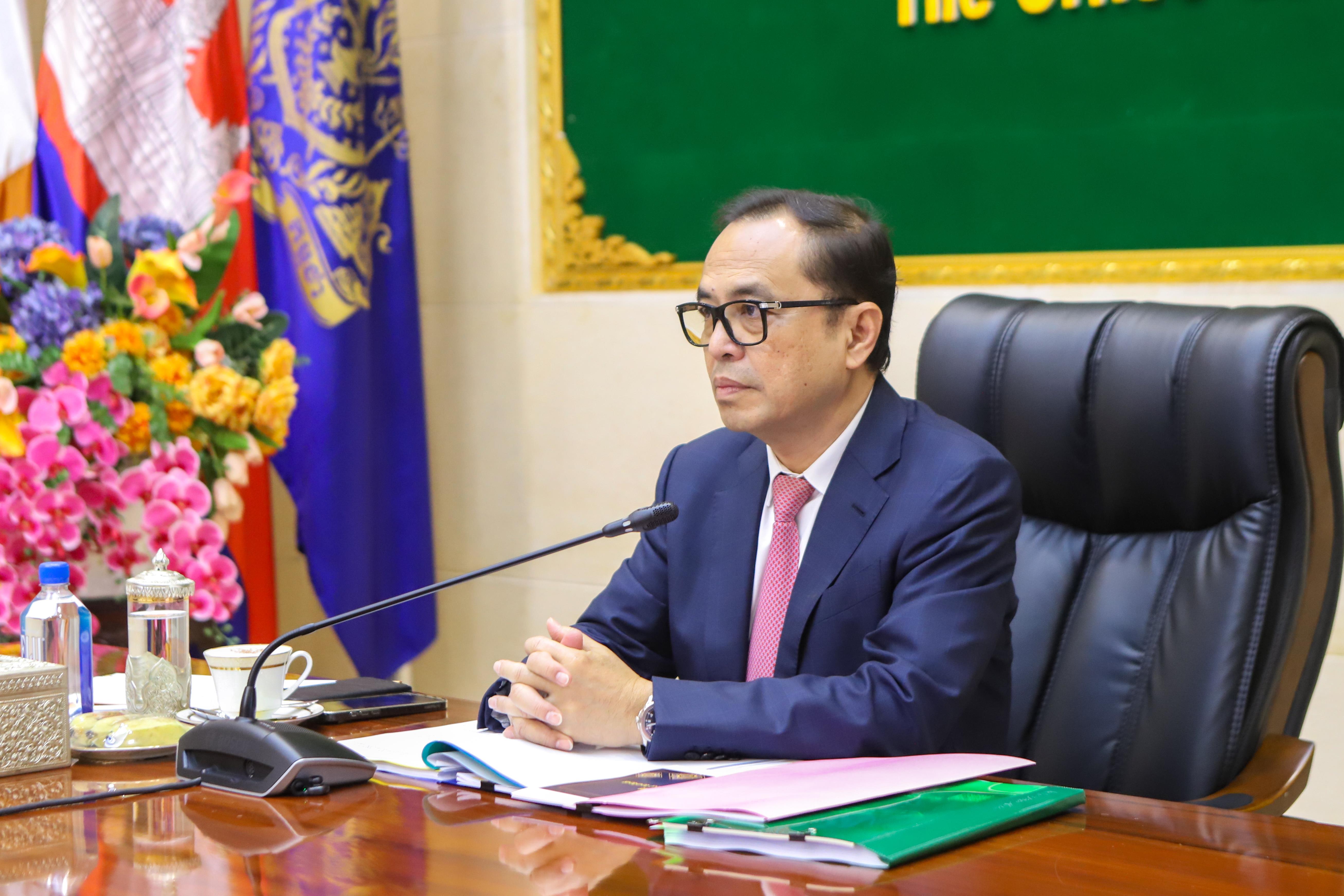
Cambodia's Council of Ministers Reviews Progress on Strategic Plan and Digital Transformation
Technology
2026年6月30日
5
CPP Cambodia
Relations
🇰🇭Cambodia🇨🇳China

Cambodia's Council of Ministers Reviews Progress on Strategic Plan and Digital Transformation

AI サマリー

Cambodia's Council of Ministers convened an internal meeting to review progress on its 2024-2028 Strategic Plan and Digital Transformation Roadmap. The Deputy Prime Minister lauded achievements while encouraging further improvements and AI integration.

The Council of Ministers of Cambodia convened an internal meeting to review the progress of its strategic plan for 2024-2028 and the implementation of its digital transformation roadmap. On June 29, 2026, the Deputy Prime Minister in charge of the Council of Ministers, Vongsey Vissoth, led the meeting, which was attended by Secretaries of State, Undersecretaries of State, Directors-General, and officials from subordinate units, both in person and via Zoom. The meeting focused on three main agenda items: 1. Progress on the implementation of the Council of Ministers' Strategic Plan 2024-2028. 2. Progress on the implementation of the Council of Ministers' Digital Transformation Roadmap 2024-2028. 3. Requests and challenges from leaders and civil servants. Deputy Prime Minister Vongsey Vissoth expressed gratitude to the leaders and officials at all levels of the Council of Ministers for their diligent work, noting the continuous improvement in the quality of work and the achievement of numerous positive results. However, he also pointed out remaining shortcomings that require further improvement and strengthening, urging all to work harder to enhance the quality and efficiency of their work in their roles as advisors to the Prime Minister and the Cabinet. Regarding the progress of the Strategic Plan, the Deputy Prime Minister highly commended the relevant units, leaders, and all officials for their efforts in implementing it. He emphasized the importance of clearly evaluating the progress of institutional reforms and strengthening through robust monitoring and evaluation mechanisms to measure achievements, identify challenges, and determine remedial measures for more effective implementation, ensuring that the framework, methodology, and content align with the strategic plan's objectives. Concerning the progress of the Digital Transformation Roadmap, the Deputy Prime Minister expressed satisfaction with the achievements, particularly the development of several software applications (Apps) developed "home-grown" by the Council of Ministers' digital transformation team, which are set to be deployed soon, despite the team's small size. He instructed the team to continue developing other crucial systems and applications, such as data management systems, document flow management systems, and meeting support systems, to enhance the quality and efficiency of the Council of Ministers' core functions, ensuring cybersecurity and ownership. Furthermore, the Deputy Prime Minister urged and encouraged all leaders and officials to actively participate in the digital transformation at the Council of Ministers, to continuously learn, adapt, and embrace digital technology, especially Artificial Intelligence (AI), as a tool to increase the quality, efficiency, productivity, and speed of work, in line with the government's vision of building a digital government. Additionally, Deputy Prime Minister Vongsey Vissoth provided further guidance on work procedures and the fulfillment of duties by leaders and officials of the Council of Ministers in carrying out their core, coordination, and support functions, with a focus on priorities such as: 1. Organizing meetings, plenary cabinet meetings, and related meetings, including pre- and post-meeting preparations, as well as preparing briefing materials and official announcements (S.Ch.N.) and government decisions. 2. Reviewing and providing opinions on various documents from ministries and institutions that pass through the Council of Ministers' mechanism before submission to the Prime Minister. 3. Strengthening work discipline. 4. Promoting a work environment to support productivity. 5. Managing security and order within the Council of Ministers' premises and improving the canteen, among other aspects. The Deputy Prime Minister encouraged all leaders and officials to strive to achieve their best work, adhering to the core values and work approaches of the Council of Ministers, and to prepare for the upcoming census of officials within the Council of Ministers' structures. Source: CPP Cambodia

多角的分析

経済的影響

内閣府の戦略計画とデジタル変革の推進は、カンボジア政府の効率化と行政サービスの質向上を目指す経済政策の一環と見られる。デジタル化は、官僚的な手続きの簡素化、透明性の向上、およびデータ駆動型の意思決定を促進し、結果として国内投資環境の改善に寄与する可能性がある。特に、AIの活用は、行政コストの削減や、より迅速な政策立案・実行を可能にすることが期待される。

投資家心理

この会議は、カンボジア政府が行政の効率化とデジタル化に注力していることを示唆しており、投資家にとってポジティブな兆候となり得る。透明性の向上と手続きの迅速化は、ビジネス環境の予測可能性を高め、外国直接投資(FDI)を誘致する上で重要な要素である。政府が開発した「ホームグロウン」のソフトウェアは、国内のIT産業の育成にも繋がる可能性があり、関連分野への投資機会も生まれるかもしれない。

社会的影響

内閣府のデジタル変革は、公務員の業務効率化を通じて、最終的には市民へのサービス提供の質向上に繋がることが期待される。AIの導入は、公務員のスキルアップを促し、より高度な業務へのシフトを可能にする可能性がある。一方で、デジタル化の進展に伴う、既存の業務プロセスやスキルの陳腐化に対する公務員の不安や、デジタルデバイド(情報格差)による職員間の不公平感が生じないような配慮が求められる。市民生活への直接的な影響は、行政手続きの迅速化や、よりパーソナライズされたサービス提供として現れる可能性がある。

市民の声

内閣府のデジタル化推進は、市民が政府サービスをより迅速かつ容易に利用できるようになる可能性を秘めている。例えば、申請手続きのオンライン化や、情報へのアクセス改善などが期待される。しかし、デジタル化の恩恵を全ての市民が享受できるとは限らず、特に高齢者や情報技術へのアクセスが限られている地域住民にとっては、新たな障壁となる可能性もある。政府は、デジタルデバイドを解消するための施策と並行して、デジタル化を進める必要がある。

背景・歴史的文脈

カンボジアでは、フン・セン元首相の長期政権下、特に2010年代以降、行政改革と近代化が重視されてきた。2018年には「デジタル・ガバメント・ビジョン2030」が発表され、国家レベルでのデジタル化推進が加速された。今回の会議で議論された戦略計画(2024-2028年)やデジタル変革ロードマップは、この流れを汲むものであり、内閣府という政府の中枢機関が、その実行を担っている。中国との緊密な関係を背景に、技術導入やインフラ整備が進められており、デジタル化もその一環として捉えられる。AIの活用は、近年世界的に注目されている技術であり、カンボジアもその波に乗ろうとしている。

原文ソース

CPP Cambodia

原文を読む