Aeta Communities in Pampanga Navigate Land Rights and Education Support Amidst Development
Clark Development Corp. (CDC) in Pampanga has expanded education and livelihood support for Aeta indigenous communities. However, unresolved issues surrounding their 10,323-hectare Ancestral Domain Title (CADT) hinder their self-sufficiency. Revenue-sharing agreements are also delayed due to inter-group disputes and procedural hurdles.
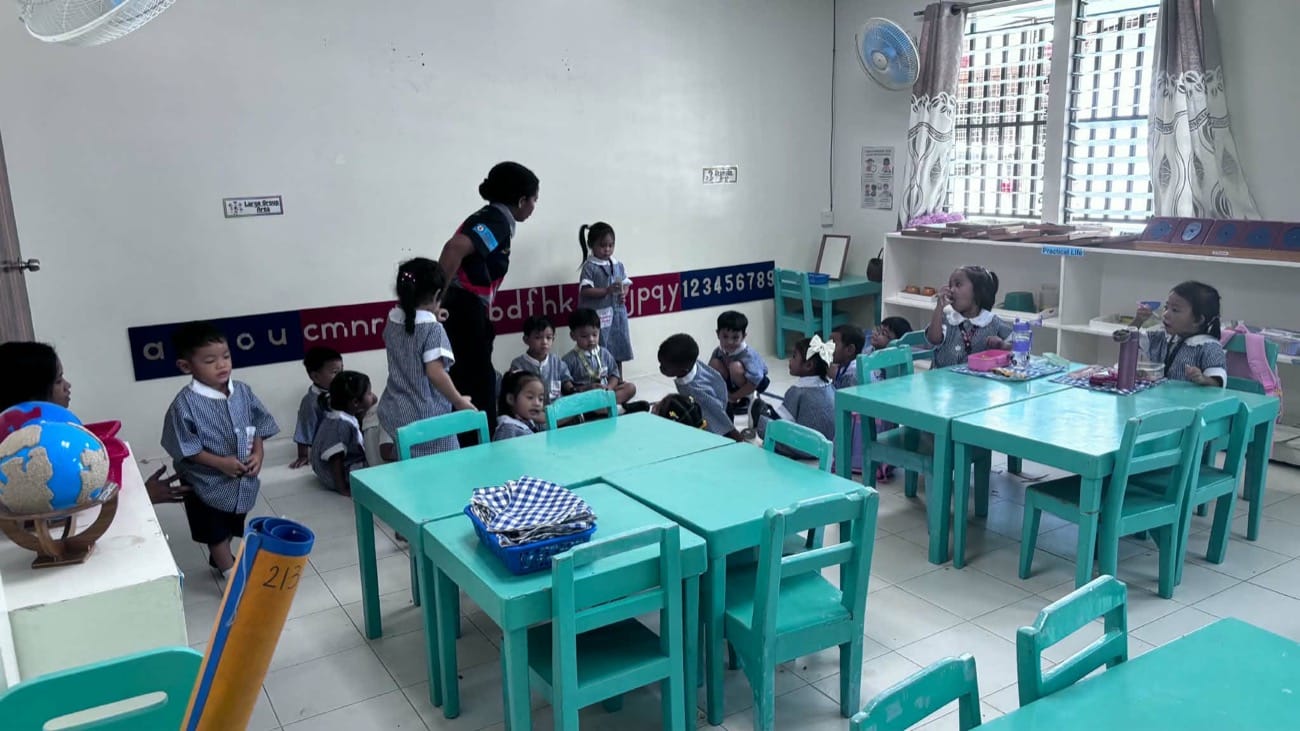
CLARK FREEPORT—Back when the United States Air Force (Usaf) operated Clark Air Base and its extensions in Pampanga and Tarlac, American officials granted members of the indigenous Aeta communities the exclusive privilege of scavenging Clark’s landfill for recyclable materials they could sell. The Aetas also received free medical checkups, medicines and hospitalization at the former Usaf Hospital Clark. The arrangement began under Kudiaro Laxamana, leader of the Negrito Scouts during World War II, and continued through succeeding generations of Aeta leaders. Thirty-five years after Mt. Pinatubo’s largest eruption hastened the withdrawal of American forces and the closure of US military facilities, the Aetas around Clark now receive a different kind of support. The state-run Clark Development Corp. (CDC), which oversees the freeport, has expanded its corporate social responsibility program in Aeta communities. But officials acknowledge that the villages remain unable to develop on their own, largely because of unresolved issues involving their 10,323-hectare Certificate of Ancestral Domain Title (CADT) No. 025-A. With its partners, CDC operates five daycare centers in Mabalacat City, Pampanga and Bamban, Tarlac. The program began as “Pagsasarili” (self-reliance), launched by then CDC chair Jose “Ping” de Jesus. Since 2019, the centers have graduated 419 children from Aeta and mixed Aeta families. About 25 percent dropped out, mostly because their families relocated, according to CDC capacity-building officer Armin Rivera. “I had hoped that the daycare centers would prepare Aeta children for formal schooling,” De Jesus, who visited the centers on June 23, told the Inquirer. “From their ranks, we would probably have leaders who are independent and concerned for their communities.” For the school year 2026-2027, 123 children have enrolled. The Operation Brotherhood Community Foundation of O.B. Montessori Center trained seven Aeta child development workers and developed the learning modules. The centers have also earned a five-year accreditation from the Early Childhood Care and Development Council, the highest rating so far. Rivera said Pagsasarili has since evolved into the Family Care Center (FCC), providing education, health, nutrition, livelihood and water services while helping organize seven farmers’ cooperatives. “FCC is now a comprehensive community development platform,” he said. CDC spends P1.3 million annually to augment the allowances of seven teachers. Its partners—including Bloomberry Cultural Foundation, Royce Foundation, Converge ICT Solutions, Pilipinas Shell Foundation, Manila Water Foundation, World Vision, National Commission on Indigenous Peoples (NCIP) and the local governments of Mabalacat and Bamban—support buildings, livelihood, solar power, water systems and internet connectivity. Separate projects of the Bases Conversion and Development Authority also provide agriculture, education and water services in nearby New Clark City. While tribal leaders Robert Serrano and Oscar Rivera disagree on many issues, both said the Aetas deserve a bigger share of the benefits from their ancestral domain. The NCIP awarded CADT-025 in 2004 and revised it in 2009 as CADT 025-A. In March 2024, CDC and Tribong Ayta signed a Joint Management Agreement retaining a provision granting the Aetas a 20-percent share of revenues generated from the land. But CDC president Agnes Devanadera confirmed that the agency has yet to remit the funds because the Tribong Ayta has not completed Commission on Audit requirements, including rules governing the Aeta Development Fund, creation of an Aeta Development Committee and opening an official bank account. As of June 2026, CDC also said the NCIP had yet to designate a single Indigenous Peoples Organization authorized to receive the funds. Two groups continue to claim that role. The Ayta Mag-Antsi ng CADT 025-A has NCIP recognition but lacks Commission on Audit (COA) compliance, while the CADT 025-A Ayta Mag-Antsi Pinalupuyan Sub-Council Aeta Development Committee has complied with COA rules but has no NCIP recognition. Outgoing NCIP Central Luzon Director Roman Antonio said the agency recognized 220 elders representing 44 clans as the governing body for CADT 025-A, although the decision has been challenged in court. Antonio also said the NCIP has no jurisdiction over nonindigenous encroachers on ancestral land. Three decades after Pinatubo, factionalism among Aeta communities, migration into their ancestral domain and land speculation fueled by the rapid development of nearby New Clark City continue to complicate the indigenous peoples’ claim to the benefits of their own land. INQ
多角的分析
CDCによるアエタコミュニティへの年間130万ペソの支援は、教育、健康、生計向上といった多岐にわたる分野に及んでおり、地域経済の活性化に貢献する可能性を秘めている。しかし、CADT 025-Aからの収益分配が滞っている現状は、アエタ族の経済的自立を遅らせる大きな要因となっている。過去の同様のケースでは、土地開発による収益の一部が先住民コミュニティに還元されるべきであるという原則がしばしば論争の的となり、透明性のある資金管理メカニズムの欠如が問題視されてきた。この遅延は、アエタ族が本来享受できるはずの経済的恩恵を奪い、貧困の連鎖を断ち切る機会を逸していることを示唆している。
クラーク地域、特にニュークラークシティ周辺の急速な開発は、不動産やインフラ関連への投資機会を示唆する。しかし、アエタ族の土地権問題が未解決であることは、開発プロジェクトにおける潜在的なリスク要因となる。土地所有権の紛争は、プロジェクトの遅延やコスト増加、さらには法的訴訟に発展する可能性があり、投資家にとっては不確実性を高める。過去のフィリピンにおける大規模開発プロジェクトでも、先住民の権利との衝突がしばしば問題となり、投資判断において慎重なデューデリジェンスが求められてきた。アエタ族への収益分配の遅延は、開発による利益が公平に分配されていない可能性を示唆しており、ESG投資の観点からも懸念材料となりうる。
アエタ族の子供たちへのデイケアセンターを通じた教育支援は、彼らの将来の機会を広げる上で重要な一歩である。しかし、家族の移住による退学率の高さは、単に教育機会の提供だけでなく、彼らが生活基盤を維持できるような経済的・社会的な安定が不可欠であることを示している。さらに、CADT 025-Aを巡るアエタ族内部の派閥争いや、土地投機、非先住民の侵入といった問題は、彼らのコミュニティの結束を弱め、土地権の主張を困難にしている。これは、フィリピンの多くの先住民コミュニティが直面する普遍的な課題であり、土地の喪失や文化の変容といった深刻な社会摩擦を引き起こしている。特に、土地開発が進むにつれて、伝統的な生活様式と現代社会との間で葛藤が生じやすい。
アエタ族の市民、特に土地の権利を持つ長老たちは、自分たちの土地から得られるはずの利益が、組織間の対立や官僚的な手続きの遅延によって手に入らない現状に、強い不満と無力感を抱いていると考えられます。彼らは、自分たちの生活基盤である土地が開発によって変貌していく一方で、その恩恵を十分に受けられない状況に直面しています。また、子供たちが教育を受ける機会を得ても、家族が貧困から抜け出せず移住を余儀なくされる現実は、教育だけでは根本的な問題が解決しないことを示しています。彼らにとっては、土地の権利の確立と、そこから得られる経済的利益の確実な分配が、日々の生活の安定と将来への希望に直結しています。
背景・歴史的文脈
フィリピンにおける先住民の土地権問題は、植民地時代に遡る土地収奪の歴史と深く結びついている。1997年に制定された先住民権利法(IPRA)は、先住民の祖先領域土地権(CADT)を法的に保障したが、その実施には多くの課題が残されている。特に、CADTの認定プロセス、境界線の確定、そして先住民コミュニティが土地から得られる利益の分配メカニズムは、しばしば紛争の火種となってきた。ピナツボ山の噴火(1991年)後、クラーク地域は開発特区となり、大規模なインフラ整備や都市開発が進められている。この開発の波は、アエタ族の祖先領域に及び、土地利用を巡る新たな緊張を生んでいる。CDCによるCSR活動は支援策として評価される一方、根本的な土地所有権と収益分配の問題が未解決である限り、アエタ族の自立と尊厳の回復は困難である。
原文ソース
Inquirer NewsInfo