General articles are free for 24 hours after publish.
Vietnam, Germany Boost Digital Workforce Training
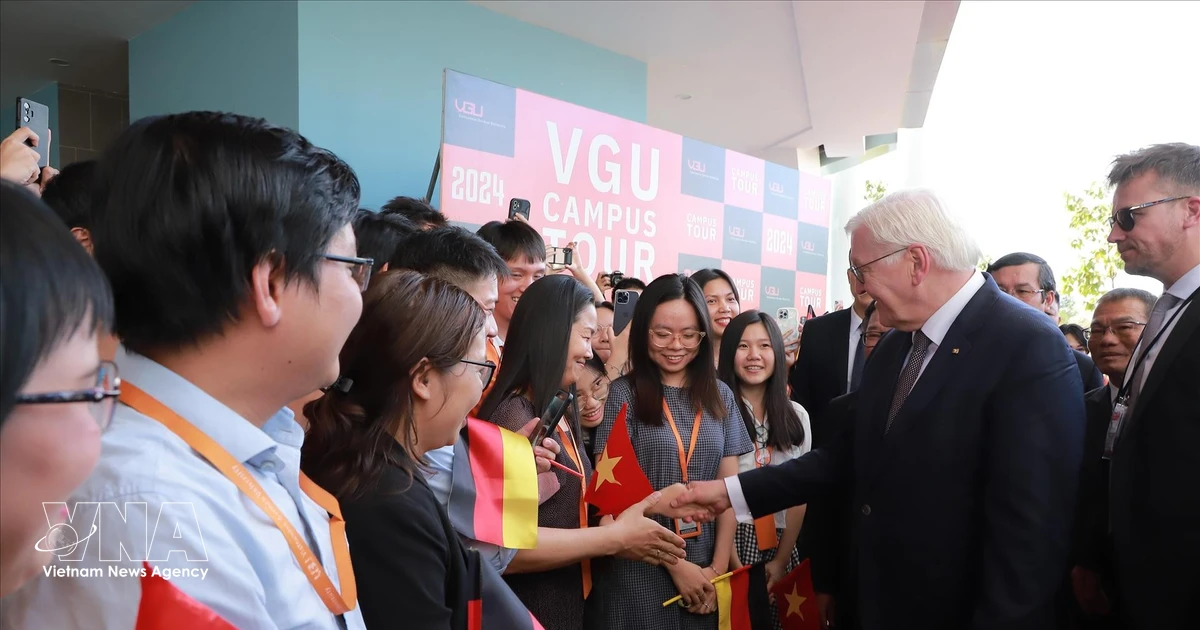
Vietnam and Germany are set to strengthen cooperation in digital workforce training to meet the demands of the digital era. The focus is on developing solutions tailored to Vietnam's context, benefiting agriculture, the economy, and the environment, rather than merely importing German technology. This initiative aims to deepen political trust and substantive ties between the two nations.
Vietnam and Germany are poised to deepen their collaboration in digital workforce training as part of efforts to strengthen bilateral ties in the era of digital transformation. Experts emphasize that the success of this cooperation should not be measured by the amount of German technology brought into Vietnam, but by the ability of both sides to develop solutions that are suitable for Vietnam's realities and deliver lasting benefits for its agriculture, economy, and environment. The delivery of PAUL systems to Vietnam for disaster relief in recent years serves as a prime example, demonstrating that cooperation can extend beyond experience exchanges to yield direct benefits for local communities. This indicates the potential for substantive partnerships that go beyond mere technology transfer. Prime Minister Le Minh Hung and German Chancellor Friedrich Merz have discussed major directions to further strengthen political trust, maintain the positive momentum in bilateral relations, tap the full potential of bilateral cooperation, and generate fresh momentum for deeper, more substantive, and effective ties between the two countries. While the platform economy offers flexible working hours and income opportunities, drivers also face considerable risks and uncertainty, participants said at a workshop on social protection for app-based drivers held in the city on September 15. The challenge is to develop specific and effective solutions to ensure that all citizens have the capacity to use and benefit from the digital transformation process. Ca Mau province is stepping up a 100-day campaign to remove bottlenecks in digital transformation and improve public services, with local authorities focusing on online administrative procedures, digital data and digital infrastructure. The Ministry of Public Security will fast-track a project to build a repository capable of storing about 2 million biological samples from relatives for at least 50 years. Eligible children will be entitled to tuition exemptions, reductions or support, assistance with learning costs and other benefits in accordance with laws on education, children, people with disabilities, ethnic affairs and social assistance. Resolution No. 23 reflects a shift in Vietnam’s approach to overseas Vietnamese, increasingly recognising them as an important resource for national development. It also demonstrates Vietnam’s continued commitment to openness and deeper international engagement. The workshop “Ecological agriculture for a sustainable future”, organised by ActionAid International in Vietnam, emphasised that women and young people must be the subjects and leaders of change, rather than merely participants or beneficiaries. The Nguyen Du Lao–Vietnamese Bilingual School in Vientiane plays a special role as not only a place of learning but also a space where Lao and Vietnamese cultures meet and where the two languages are part of students’ daily lives. For the 2026–2031 term, the Vietnam Union of Friendship Organisations (VUFO) will follow the motto “Proactive adaptation, creative breakthroughs, practical effectiveness”. Over the past five years, Vietnam has stepped up mine action, clearing an average of 40,000 hectares a year, supporting victims and expanding risk education programmes in affected communities. Deputy Prime Minister Pham Thi Thanh Tra inspected the practical implementation of DNA identification technology at the Centre for DNA Identification under the Institute of Biology of the Vietnam Academy of Science and Technology, and the Military Institute of Forensic Medicine under the Military Medical Department of the Ministry of National Defence on September 14. Le Thi Viet Lam, Deputy Director of the Department of International Cooperation under the Ministry of Science and Technology, said Vietnam wishes to continue building an ecosystem that connects the State, research institutes, universities and businesses, enabling them to share resources and create value. This is also an area in which Vietnam is interested in learning from Korean experience. Information source: VietnamPlus English
Original source
VietnamPlus English