General articles are free for 24 hours after publish.
Tajikistan Eyes ICC Exit Amid Putin Warrant, Domestic Prosecution Fears
Tajikistan's lower house of parliament considered a draft resolution to withdraw from the International Criminal Court (ICC). This move is reportedly influenced by the country's refusal to arrest Russian President Putin and potential domestic prosecutions.
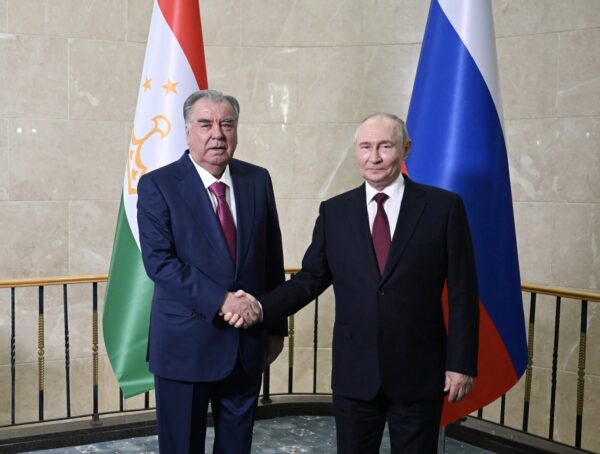
Tajikistan's lower house of parliament considered a draft resolution on withdrawing from the International Criminal Court (ICC) at an extraordinary session on September 16. The parliamentary press service reported that "corresponding decisions were taken," but did not name the sponsor or the rationale, nor mention a plenary vote. Domestically, the steps required for withdrawal under Tajik law have not been made public. Internationally, Article 127 of the Rome Statute requires written notification to the U.N. secretary general, with withdrawal taking effect one year later. The U.N. treaty database still lists Tajikistan as a state party. Tajikistan's ICC membership has always been a regional outlier. Dushanbe signed the Rome Statute in 1998 and ratified it in 2000, making it the only Central Asian country to do so. The statute entered into force for Tajikistan in 2002, five years after a civil war that killed tens of thousands. The presumed primary catalyst for Tajikistan's apparent plan to withdraw from the ICC is Russian President Vladimir Putin. In October 2025, Dushanbe hosted Putin for a Russia-Central Asia summit and a Commonwealth of Independent States (CIS) gathering, despite an arrest warrant the ICC issued in March 2023 for the Russian president over the deportation of Ukrainian children. Weeks before the visit, Tajik officials told the court they would not execute the warrant, citing head-of-state immunity, Russia’s non-membership in the ICC, and CIS commitments to guarantee the "security and unhindered movement" of visiting leaders. The ICC’s Pre-Trial Chamber II rejected those arguments on March 19, 2026, and the court’s presidency referred the non-compliance finding to the Assembly of States Parties in May. However, Russia is too important a partner for Tajikistan. Russia's 201st Guards Military Base sits in Tajikistan under an agreement that runs to at least 2042. Remittances, overwhelmingly from workers in Russia, were worth the equivalent of about 49 percent of GDP in 2024, and the International Organization for Migration counted some 1.2 million Tajiks in Russia in mid-2024. That said, a non-compliance finding does not mean a country must leave the ICC. Mongolia was found in breach in October 2024 over the same arrest warrant and remains a state party. It's possible that Tajikistan's reconsideration of ICC membership has to do with something else entirely. On April 10, 2025, Freedom for Eurasia, the Ukrainian Fund of International Volunteers, and the banned Islamic Renaissance Party (IRPT) filed an Article 15 communication with the ICC. The filing organizations claim it documents killings, torture, sexual violence, enforced disappearances, and forced exile between 2002 and 2024, and asks prosecutors to examine the responsibility of senior officials, including President Emomali Rahmon. Their chosen start date for the communication is the day the ICC statute took effect in Tajikistan. A communication does not mean a case has been opened; the Office of the Prosecutor has not announced an investigation. Even if it did, exiting the ICC wouldn’t be a clean escape for Tajikistan. Withdrawal does not cancel obligations incurred while a party, and it does not automatically strip the court of jurisdiction over alleged crimes committed before the exit date. An exit would mainly limit exposure for conduct after that – which matters to the Tajik leadership given that succession from father to son is widely expected, and rumored to require Putin’s approval.
Original source
The Diplomat Indonesia