General articles are free for 24 hours after publish.
Cambodia's Ministry of Information Explains Roles and Duties at Military Command and Staff College
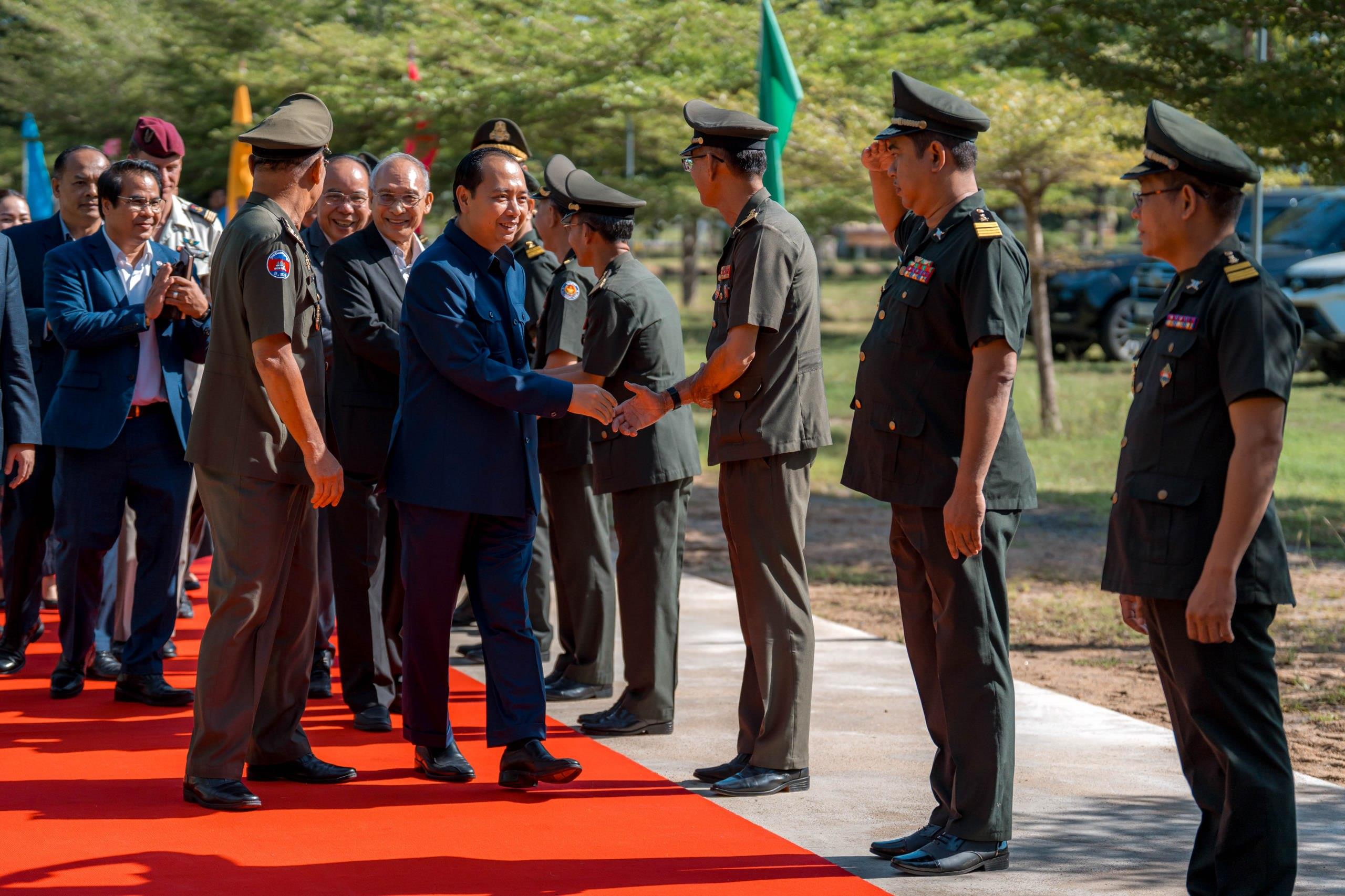
Cambodia's Minister of Information, Net Pheaktra, lectured at the Military Command and Staff College on the ministry's organizational structure, roles, and duties. The importance of information management and public engagement in the digital era was highlighted. The college's history and educational mission were also detailed.
His Excellency Net Pheaktra, Minister of Information, on the morning of September 18, 2026, delivered a lecture and presentation on "Organizational Structure, Roles, and Duties of the Ministry of Information" to approximately 400 leaders and trainees at the Military Command and Staff College in Kampong Speu Province. During the event, His Excellency the Minister emphasized the core functions of the Ministry of Information, which are to lead and manage the information and audiovisual sectors, as well as to coordinate public relations activities with relevant ministries and institutions. The ministry is tasked with ensuring order in journalism, freedom of the press, and freedom of publication, encompassing both traditional and new media. Concurrently, the ministry provides and disseminates information across all sectors to citizens both domestically and internationally, while also managing information content and advertising in accordance with the law. His Excellency Minister Net Pheaktra added that the Ministry of Information serves as a staff arm for the Royal Government in public relations, information management, and information space management. The ministry collaborates with competent institutions to contribute to maintaining information security, digital security, and national security. Key tasks include promoting the modernization of information management mechanisms and public opinion, as well as developing strategic plans for information dissemination. This lecture and presentation are of great importance in the context of the rapidly evolving information sector, alongside the increasing significance of digital technology and modern media. Through the sharing of knowledge and experience, the trainees gained a clearer understanding of the Ministry of Information's work and the vital contribution of the information sector to serving society and state institutions. On this occasion, Lieutenant General Buth Sopheap, Director of the Military Command and Staff College, stated that the college was established on February 9, 2001, initially named the "Command and Staff Center" and affiliated with the Military Academy of the Ministry of National Defense, located at the current National Defense University in Russey Keo District, Phnom Penh. On November 28, 2006, the Military Academy was transformed into the National Defense University, and the Command and Staff Center became the "Command and Staff College." Subsequently, in June 2024, the Command and Staff College was reorganized under the General Staff Command and renamed the "Military Command and Staff College," as it is known today. Currently, the college has a total of 296 military officers, military instructors, staff, and trainees, of whom 36 are women. The college also has 51 kindergarten students, including 27 girls. The college's mission is to train and develop officers of the Royal Cambodian Armed Forces, specifically staff officers, battalion commanders, brigade commanders, division commanders, and those of equivalent rank, as well as to organize other training courses as ordered by the General Staff Command and the Ministry of National Defense. From 2001 to the present, the college has opened 23 Command and Staff Officer training courses, graduating a total of 2,226 trainees, including 23 women. In addition, the college has conducted two training courses for park rangers of the Ministry of Environment, attended by 50 participants. For future directions, the college envisions strengthening discipline, expanding the capacity and quality of its personnel, especially military instructors, and modernizing training, curricula, and lessons to respond to new developments and the advancement of modern technology. Source: CPP Cambodia
Original source
CPP Cambodia