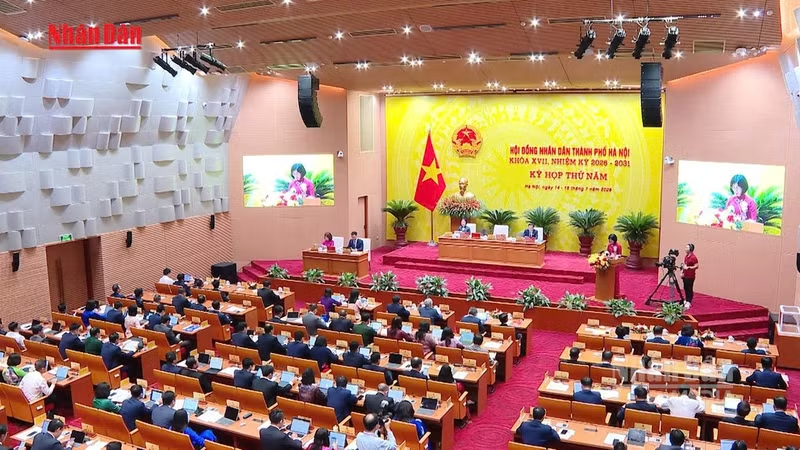
Hanoi City Council Convenes 5th Session, Reviews 32 Key Issues
The Hanoi City People's Council opened its 5th session to review and decide on 32 important issues, including urban development, social welfare, and administrative reforms. Discussions focused on policies aimed at economic growth and improving citizens' lives.
The Hanoi City People's Council convened its fifth session on the morning of July 14, as part of its 17th term from 2026 to 2031. This session is set to review and decide on 32 important issues concerning urban development, social welfare, and administrative reforms. This meeting is a crucial platform for making policy decisions aimed at Hanoi's sustainable growth and improving the quality of life for its citizens. Specific topics on the agenda include urban infrastructure development, expansion of education and healthcare services, environmental protection measures, and streamlining administrative procedures. Vietnam, under the one-party rule of the Communist Party, has achieved remarkable economic growth since transitioning from a centrally planned economy to a market economy through the Doi Moi policy. Major cities like Hanoi are leading this economic drive, attracting domestic and foreign investment and focusing on infrastructure development and industrial promotion. However, rapid urbanization has also brought challenges such as environmental issues and widening income disparities. The discussions at this city council session are expected to result in concrete policies to address these challenges and ensure that the benefits of economic growth are more widely distributed among citizens. The emphasis on creative approaches to development is highlighted by General Secretary and President Tô Lâm's statement about shifting thinking from cultural management to creating development. Furthermore, the directive to strongly promote the shift towards product innovation and direct contribution to growth, in line with Resolution 57 NQ-TW, signals the direction of economic policy. The Prime Minister's order to urgently investigate the cause of the boat capsizing incident in Phu Quoc underscores the importance of thorough safety management and administrative accountability for protecting citizens' lives and property. Vietnam's relationship with China, historically and geopolitically complex, is managed by Vietnam to ensure economic growth through stable relations and the promotion of trade and investment with various countries, including China. The decisions made at this Hanoi City Council session will contribute to strengthening Vietnam's domestic economic foundation and enhancing its international standing within this global context. Source: Nhan Dan
多角的分析
ハノイ市議会での32件の案件審議は、ベトナム経済の成長戦略における地方政府の役割の重要性を示唆しています。特に、インフラ整備や産業振興は、外国直接投資(FDI)を誘致し、製造業やサービス業の発展を促進する上で不可欠です。ベトナム経済は、中国とのサプライチェーンの連携を維持しつつ、多角化を進める中で、国内の政策決定が国際的な競争力に直結しています。決議57 NQ-TWにおける「製品の創造への転換」は、単なる生産能力の拡大から、高付加価値製品へのシフトを目指す国家的な産業政策の表れであり、ハノイのような大都市がその中心的な役割を担うことが期待されます。
ハノイ市議会での審議内容は、投資家にとって、都市開発計画、インフラ投資機会、および規制緩和の動向を把握する上で重要です。特に、環境保護や社会福祉への配慮は、ESG投資(環境・社会・ガバナンス)を重視する投資家にとって、事業リスク評価の重要な要素となります。ベトナムは、ASEAN地域における製造拠点としての魅力を高めており、ハノイの政策決定は、サプライチェーンの再編や新たなビジネスチャンスの創出に影響を与える可能性があります。トー・ラム国家主席の「発展の創造」への言及は、イノベーションやテクノロジー分野への投資を促進するシグナルとも解釈できます。
ハノイ市議会で審議される案件には、市民生活に直結する社会福祉、教育、医療、環境問題が含まれます。急速な都市化の進展は、住宅不足、交通渋滞、大気汚染などの問題を引き起こしており、これらの課題への対応策が議論されることは、市民の生活の質向上に不可欠です。また、経済成長の恩恵が社会全体に行き渡るような政策、例えば所得格差の是正や、地方と都市部の格差縮小に向けた取り組みも、社会的な安定を維持するために重要視されるでしょう。プーコック島での事故対応は、行政の迅速な対応能力と安全確保への意識を示しています。
ハノイ市民にとって、市議会での審議は、自分たちの生活環境や将来に直接影響を与える政策決定の場です。都市開発計画は、住居の確保や交通の利便性に、社会福祉の拡充は、教育や医療へのアクセスに、環境保護策は、大気や水質の改善に繋がります。一方で、経済成長の影で生じる物価上昇や、雇用機会の偏りといった懸念も抱えています。市議会がこれらの市民の声をどれだけ反映できるかが、信頼を得る上で重要となります。プーコック島での事故は、安全への不安を増幅させる可能性があります。
背景・歴史的文脈
ベトナムは1986年のドイモイ(刷新)政策以降、社会主義市場経済への移行を進め、目覚ましい経済成長を遂げてきました。共産党による一党体制の下、国家主導の経済開発が中心であり、特にハノイのような大都市は、経済成長の牽引役として、インフラ整備や外国投資誘致に重点を置いてきました。しかし、急速な都市化は、交通渋滞、環境汚染、所得格差の拡大といった社会問題も引き起こしています。今回のハノイ市議会での審議は、これらの成長と課題のバランスを取りながら、持続可能な発展を目指すベトナムの国家戦略の一環として位置づけられます。総書記・国家主席トー・ラム氏の発言は、伝統的な管理手法から、より創造的で発展志向のアプローチへの転換を促すものと考えられます。
原文ソース
Nhan Dan