General articles are free for 24 hours after publish.
Cambodia Charts Post-LDC Strategy for High-Value Industries
As Cambodia eyes graduation from Least Developed Country (LDC) status in 2029, it is developing a post-LDC economic strategy focused on new trade deals, reduced logistics costs, workforce upskilling, and higher-value industries to boost competitiveness beyond preferential benefits.
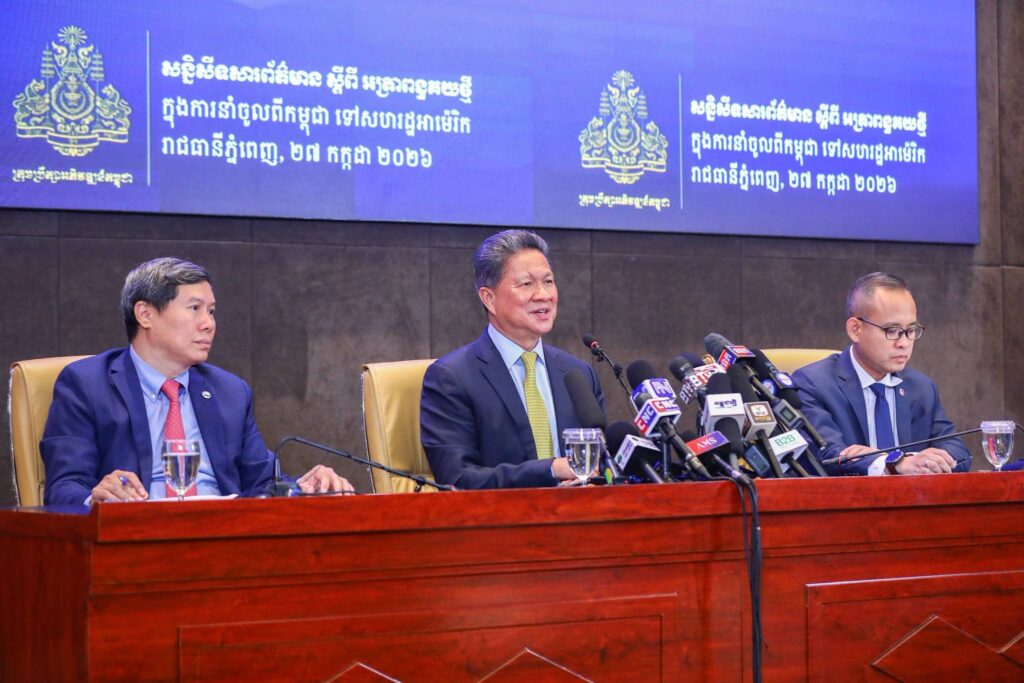
PHNOM PENH, Aug 6, 2026 (KPT) — Cambodia is charting a post-Least Developed Country (LDC) economic strategy centered on new trade deals, reduced logistics costs, workforce upskilling, and a pivot towards higher-value industries, as it gears up for graduation from LDC status in 2029, officials said. Deputy Prime Minister Sun Chanthol emphasized that Cambodia cannot indefinitely rely on preferential tariffs and must accelerate reforms to maintain competitiveness as LDC-linked benefits are phased out. "Graduating from LDC status in 2029 will be a source of national pride," Chanthol told reporters last month, referencing new U.S. tariff arrangements following a Section 301 compliance probe. "We have to rely on ourselves. We need to reduce production costs and undertake reforms across the board to make Cambodia competitive." Key priorities include streamlining procedures, cutting logistics costs, improving production quality, and investing in workforce skills. Chanthol highlighted the need for Cambodia to diversify beyond garments, pointing to electronics as a sector with higher value-added potential. This transition is part of Cambodia's longer-term ambition to reach high-income status by 2050, with LDC graduation viewed as a milestone rather than an endpoint. Alongside domestic reforms, Cambodia is actively seeking to expand its free trade agreements (FTAs) to secure market access post-graduation. The nation already has bilateral FTAs with China, South Korea, and the United Arab Emirates. Commerce Ministry Secretary of State Sim Sokkheng stated that Prime Minister Hun Manet has instructed officials to explore new agreements. Cambodia is seeking Russian support to initiate talks with the Eurasian Economic Union and is also eyeing a deal with the European Free Trade Association (EFTA), which comprises Iceland, Liechtenstein, Norway, and Switzerland. The government is also bolstering Cambodia's investment appeal through infrastructure, clean energy, and incentives. Chanthol noted that renewables constitute 63 percent of Cambodia's power mix, with a target of 70 percent by 2030. Projects like the nearly $1 billion Upper Tatay Pumped Storage Hydropower scheme are underway. Officials cite political stability, a young workforce, and an open investment regime—allowing 100 percent foreign ownership and profit repatriation—as key advantages. Reforms at the Council for the Development of Cambodia (CDC) aim to simplify investment procedures, while efforts to cut logistics costs are designed to enhance competitiveness in regional supply chains. Incentives under Qualified Investment Projects (QIPs) include tax exemptions on inputs and materials, particularly for export-oriented manufacturing. Investment approvals have remained robust, with the CDC clearing 276 projects worth $4.7 billion in the first half of 2026, following 630 projects worth $10 billion in 2025. Cambodia's post-LDC strategy signals a shift from reliance on preferential market access toward competing through lower costs, stronger skills, diversified industries, broader trade partnerships, and a more efficient investment environment. For the government, these reforms are central not only to navigating the 2029 graduation but also to advancing Cambodia's longer-term goal of becoming a high-income country by 2050.
Original source
Kampuchea Thmey English