General articles are free for 24 hours after publish.
Pork Shortage Drives Up Meat Prices, Pressuring Vientiane Businesses
Despite no official confirmation of African Swine Fever (ASF) in Vientiane, restrictions on pig and pork movement have led to shortages in the capital, causing beef prices to surge to 175,000-180,000 kip per kilogram and impacting small businesses.
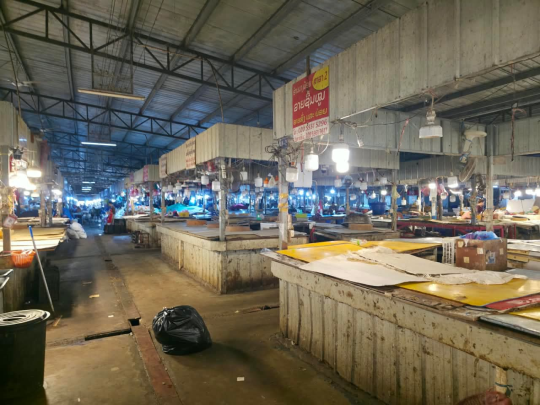
Although no African Swine Fever (ASF) outbreak has been officially confirmed in Vientiane Capital, restrictions on the movement of pigs and pork have disrupted supplies entering the capital, leaving some markets with little or no pork available. At Beung That Luang Market, a vendor told KPL that the shortage had pushed up the price of beef as consumers turned to alternative sources of meat. She said she previously bought beef for around 160,000 kip per kilogram, but the price had risen to 170,000 kip, while she now sells it for between 175,000 and 180,000 kip per kilogram. Mr. Somyot Khampaseuth, manager of Oodsy Market, said beef prices had risen rapidly because of difficulties in sourcing pork. “Vendors are only intermediaries. The price at the slaughterhouse is now nearly 200,000 kip per kilogram,” he said, adding that the increase began after pork supplies started declining. Oodsy Market is also considering temporarily allowing other types of meat to be sold in the area normally designated for pork in order to help vendors maintain their businesses during the shortage. The supply disruption is also affecting small restaurants that rely heavily on pork-based dishes. The owner of a grilled pig-ear restaurant in Ban Hong Kay Keo, Chanthabouly District, said the business previously used around 70–80 kilograms of pork per day, but now uses only about 30 kilograms. At times, even that amount is not fully sold. To cope with the shortage, the restaurant has reduced its pork dishes and introduced grilled duck and grilled chicken served with jaew padaek, a fermented fish dipping sauce. The owner said the changes were necessary to keep the business operating and protect employees’ livelihoods while pork supplies remain uncertain. The latest ASF outbreak began in early August and has spread to several provinces, prompting authorities to introduce measures to contain the disease and restrict the movement of pigs and pork. The government has instructed the Ministry of Agriculture and Environment to deploy technical teams to affected provinces, districts and villages to coordinate disease-control measures in line with veterinary requirements. The ministry has also been tasked with working with affected farmers to assess losses and prepare compensation measures under Decree No. 174/PM on Animal Slaughter, Carcass Destruction and Compensation, as well as developing a recovery plan to help affected farmers resume production. Authorities have temporarily suspended imports of pigs and pork from foreign countries and restricted the movement of pigs and pork between provinces and districts to limit the spread of the disease. The government has also requested support from the World Organisation for Animal Health (WOAH), including funding, equipment, disinfectants and veterinary medicines for disease-control efforts. While the measures are aimed at protecting the country’s pig industry and food supply, the shortage is already having wider economic effects, with consumers facing higher prices for alternative meats and small businesses adjusting their operations to cope with disrupted pork supplies.
Original source
KPL Laos News