General articles are free for 24 hours after publish.
Vietnam Red Cross Congress: National Leadership Emphasizes Strengthening Humanitarian Work and Integration into Development Strategy
At the 12th National Congress of the Vietnam Red Cross Society, President and Party General Secretary Tô Lâm directed the integration of humanitarian activities into the national development strategy, shifting focus from passive relief to proactive prevention and community resilience. This underscores Vietnam's emphasis on human-centric development as it aims for a more prosperous and modern society.
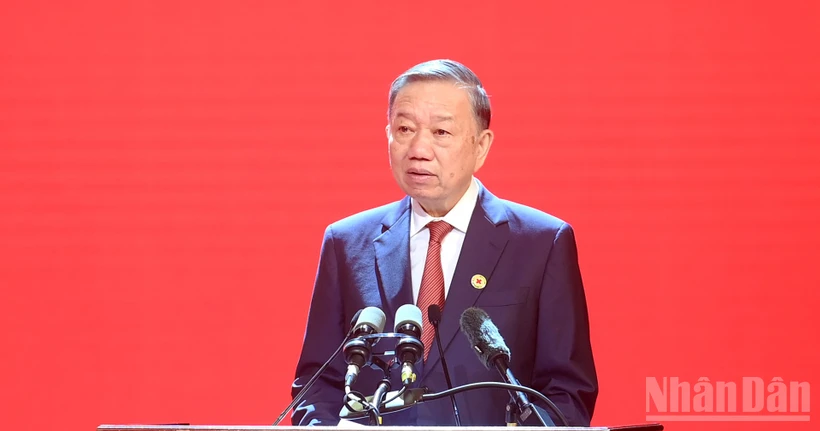
On the morning of July 28, General Secretary and President Tô Lâm attended and delivered a directive speech at the 12th National Congress of the Vietnam Red Cross Society for the 2026-2031 term. This congress also marks the 80th anniversary of the founding of the Vietnam Red Cross Society, a journey celebrated for its humanitarian contributions. On behalf of the Party and State leadership, General Secretary and President Lâm extended warm greetings and best wishes to the leaders, distinguished guests, international friends, and all cadres, members, volunteers, and youth members of the Red Cross across the country. He expressed his honor and sense of responsibility in accepting the position of Honorary President of the Vietnam Red Cross Society, pledging that the Party and State would provide leadership and create favorable conditions for the organization to innovate and enhance its operational effectiveness. General Secretary and President Lâm noted that the past term unfolded amidst complex global and domestic fluctuations, with conflicts, natural disasters, pandemics, climate change, and migration exacerbating new vulnerabilities while humanitarian resources remain limited. He acknowledged the Vietnam Red Cross Society's efforts to innovate its content and methods, playing a core role as a bridge and coordinator in humanitarian work. Activities such as health care, first aid, blood donation, organ donation promotion, disaster prevention and response, livelihood support, and care for the poor and vulnerable groups have become more practical and in-depth. He highlighted that during the previous term, over 1,646 billion VND (approximately $65 million USD) was mobilized for disaster and climate change response and adaptation activities, benefiting over 2.6 million people. He further stated that Vietnam is entering a new development era, aiming to become a high-income country by 2045. While promoting rapid and sustainable growth, technological innovation, and digital transformation, the ultimate measure of development remains the people: whether the vulnerable are protected, those facing risks are supported, and every citizen has the opportunity to rise. He emphasized that a strong Vietnam must also be a compassionate one, a modern society must share, and a developed nation must respect and protect the dignity and safety of every person. Therefore, humanitarian work should not be confined to disaster and epidemic relief but must become an integral part of human development strategy, social security, risk management, and enhancing community resilience. He called for a shift from passive response to proactive prevention, from post-disaster relief to early warning and early action, and from simple aid to livelihood support, capacity building, and creating development opportunities. This involves moving from fragmented programs to an integrated humanitarian ecosystem connecting the state, society, businesses, and citizens. General Secretary and President Lâm expressed his basic agreement with the direction, goals, key targets, and six action programs presented in the political report to the Congress. He urged the Central Executive Committee and all levels of the Red Cross to focus on five key tasks to successfully implement the resolutions of the 12th Congress. These include perfecting institutions and laws, enhancing the effectiveness of law enforcement concerning the vulnerable, promoting education, training, livelihood development, sustainable employment, and community integration for certain vulnerable groups. The focus should shift from situational relief to proactive prevention, preparedness, and enhancing community resilience, with deeper participation in community-based risk management and building early warning systems and local response teams. This address underscores the Vietnamese Communist Party's commitment to human-centric development and the integration of humanitarian efforts into its broader national development agenda, particularly in the context of its one-party system and its pursuit of economic growth alongside social stability and improved citizen well-being.
Original source
Nhan Dan