General articles are free for 24 hours after publish.
Vietnam: Rights Group Calls for Release of Author and Publishers Over Ho Chi Minh Book
Vietnam has detained five individuals, including the author and publishers, in connection with a book about Ho Chi Minh, accusing them of undermining the state. Human Rights Watch has called for their immediate release, highlighting continued suppression of views diverging from official narratives.
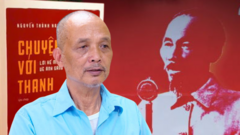
Vietnamese authorities have arrested Nguyen Thanh Nam, author of a book on the late President Ho Chi Minh, along with four others involved in its publication and promotion, on charges of "undermining national security." Human Rights Watch (HRW) on July 22 called for the immediate and unconditional release of all five individuals. "The overreaction to this book sends a chilling message to the entire community of writers, journalists, and publishers that the declaration of a new era of 'striving' merely means increased repression," said Elaine Pearson, HRW's Asia director, in a statement. She added that the wave of arrests over a book about Ho Chi Minh "demonstrates that even prominent figures in business, publishing, and journalism are not safe from the Communist Party's conservatives." Nam, described as a university lecturer who taught Ho Chi Minh's ideology and a long-time admirer of the late leader, authored the book "Chuyện với Thanh – Lời kể mới về ánh sáng" (roughly translated as "Stories with Thanh – A New Account of Light"). The book aimed to portray Ho Chi Minh's life and revolutionary career through dialogues between a teacher and a student, using "everyday language" intended to make the leader and his ideology more accessible to young Vietnamese. However, the book faced severe criticism for relying on foreign sources, primarily William J. Duiker's "Ho Chi Minh: A Life," and for its use of colloquialisms and youth slang. While Vietnam has undergone decades of economic and social reforms, becoming more open, the Communist Party of Vietnam maintains tight control over the media and rarely tolerates dissenting views or interpretations that deviate from the official party discourse. This case highlights the limitations on freedom of expression in the country. Authorities claim the book "has the nature of distorting the history of revolutions, the Party's and State's policies, and insulting President Ho Chi Minh, General Vo Nguyen Giap, and many other Party and State leaders." Nam and Tran Viet Anh, founder of Spiderum, a knowledge-sharing platform, were the first to be arrested, followed by three key leaders from the Writers' Association Publishing House on similar charges. The incident has caused a significant stir within Vietnam. The book was recalled in June, the publishing house was fined, and its operations were suspended for two months. Additionally, over 20 newspapers and their staff were penalized for publishing articles promoting the book. Investigations are ongoing under Article 117 of the Penal Code, which can carry a penalty of up to 20 years in prison. Nam, who taught Ho Chi Minh's ideology at VinUni, a university within billionaire Pham Nhat Vuong's ecosystem, compiled his lectures and talks into the book. His approach of using novel, youthful, and somewhat informal language to discuss Ho Chi Minh, a figure the Communist Party has built into a near-divine icon, drew criticism. Social media users shared excerpts, such as the use of terms like "phượt" (trekking) and "điếu đóm" (a slang term for drinking and socializing), to describe Ho Chi Minh, concluding it was blasphemous. The wave of criticism escalated into calls for authorities to intervene. Author Nguyen Dinh Long pointed out the escalating effect: "One author leads to a publisher; a publisher leads to a university; then to those who introduced, praised, or appeared with the author." Initially, the conflict was often between supporters and opponents of the Communist Party's policies. However, this case saw individuals claiming to "love the country, the Party, and Uncle Ho" attacking others who also claim such devotion, including the author, publishing staff, and leaders of the Writers' Association. Even Le Quoc Minh, a Central Committee member and deputy head of the Propaganda and Training Department, was targeted. Minh, in his capacity, is responsible for propaganda and public mobilization, including countering "wrong and reactionary views" online. Yet, in this instance, a segment of the "pro-Uncle Ho, pro-Party" public turned against him and other state officials. Amidst the escalating online criticism, officials like Luu Dinh Phuc, Director of the Press Department, criticized the online "witch hunt." State media outlets also published articles opposing this trend. The recent surge in "red netizens" activity coincides with the Communist Party's increased efforts to mobilize "digital netizens" through forces like Force 47 and Steering Committee 3, which are tasked with shaping public opinion online.
Original source
BBC Vietnamese