Vietnam Directs Emulation and Commendation to Align with Concrete Goals
Vietnamese Prime Minister Phạm Minh Chính has directed that emulation and commendation efforts be tied to concrete targets and tasks, aiming to better achieve national socio-economic development goals.
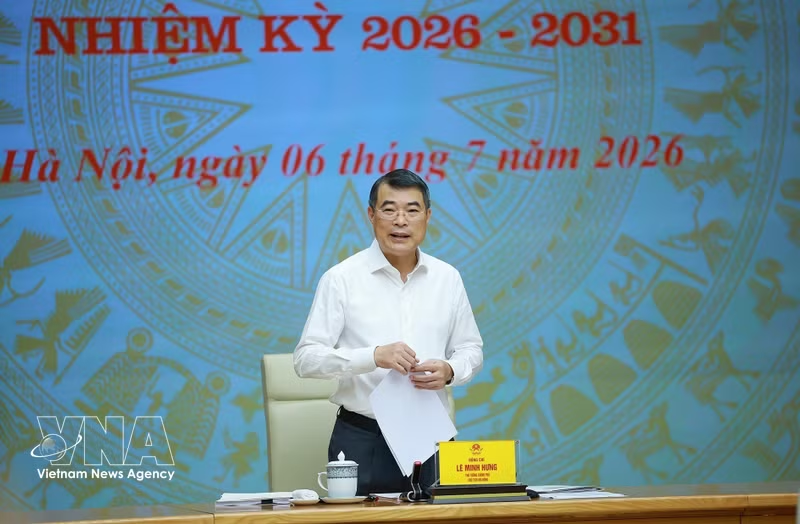
Vietnamese Prime Minister Phạm Minh Chính has directed that emulation and commendation efforts must be tied to concrete targets and tasks to better achieve national socio-economic development goals. The directive came during a meeting where the council reviewed its performance and the implementation of emulation and commendation work during the first half of the year. Key tasks for the remainder of 2026 were agreed upon, and nominations for the conferment of “Hero of the People's Armed Forces” and “Hero of Labour” titles on collectives and individuals with outstanding achievements were considered. The Prime Minister emphasized that emulation activities should directly contribute to the nation's growth strategies, particularly the socio-economic development goals for the 2026-2030 period. This aligns with the Communist Party of Vietnam's policy of pursuing sustained economic growth and social stability under its one-party system. Specifically, the PM urged the alignment of emulation with a "double-digit growth target," reflecting Vietnam's ambition for higher economic growth rates amidst global economic uncertainties. The instruction highlights the necessity of an effective commendation system to boost the motivation of every citizen and link it to tangible achievements. While "emulation and commendation movements" have traditionally been utilized in Vietnam to promote patriotism and diligence based on socialist values, their practical effectiveness has sometimes been questioned. The PM's recent directive appears to aim at transforming these movements into more practical initiatives that yield concrete economic development results. This also ties into Vietnam's external economic policies, which actively seek foreign investment and aim to expand the export-oriented economy, particularly in manufacturing.
多角的分析
首相による表彰制度の具体目標化指示は、ベトナム経済の成長加速と質的向上を目指す政府の強い意志の表れである。特に「二桁成長目標」との連携は、グローバル経済の不確実性下で、国内の生産性向上とイノベーションを最大限に引き出し、経済成長の勢いを維持しようとする戦略的意図を示唆している。過去、ベトナム経済は外資導入と輸出拡大で目覚ましい成長を遂げたが、今後は国内の人的資本の活用と、より高度な生産性向上が課題となる。表彰制度を具体的な成果指標と結びつけることで、国民のモチベーションを高め、経済全体の効率化を図る狙いがあると考えられる。
この指示は、ベトナムにおける投資環境の安定性と成長ポテンシャルに対する投資家の信頼をさらに高める可能性がある。具体目標と連動した表彰制度は、政府が経済発展に対して明確なロードマップを持ち、それを実行に移している証拠と見なされるだろう。特に、製造業やハイテク産業への投資を検討している投資家にとって、生産性向上や技術革新を奨励する国内政策は、事業リスクの低減とリターンの向上に寄与すると期待できる。ただし、目標達成の具体的なメカニズムや、表彰基準の透明性などが今後の注目点となる。
表彰制度の具体目標化は、国民の勤労意欲向上に繋がる可能性がある一方で、目標達成へのプレッシャーや、評価基準の公平性に対する懸念も生じうる。特に、地方や特定の産業に従事する人々にとって、全国的な「二桁成長目標」との連携が、自身の労働や成果の正当な評価にどう繋がるかが重要となる。例えば、都市部と地方の所得格差、あるいは労働集約型産業と知識集約型産業の間での評価の不均衡が生じないか、という点が公共の課題として問われる可能性がある。また、SNSなどを通じた情報共有が進む中で、表彰基準の透明性と公平性が、国民の社会的な信頼を得る上で鍵となるだろう。
首相の指示は、国民一人ひとりの仕事ぶりや貢献が、より明確な形で評価され、報われる機会が増えることを期待させる。しかし、具体目標がどのように設定され、それが個々の国民の日常業務や労働条件にどう影響するかが重要だ。例えば、目標達成のために過度な労働を強いられるのではないか、あるいは、評価基準が一部の人々に有利に働くのではないか、といった不安も生じうる。地方の農村部で働く人々や、サービス業に従事する人々が、これらの全国的な経済目標と自身の生活実感との間に乖離を感じないかが問われる。SNS上では、こうした評価制度の公平性や実効性に関する議論が活発になることも予想される。
背景・歴史的文脈
ベトナムにおける「模範・表彰運動」は、社会主義建設期から国民の勤労意欲を高め、愛国心を醸成する手段として用いられてきた。特に、ホー・チ・ミン主席の提唱した「愛国的模範運動」は、国民統合の重要な柱であった。経済改革(ドイモイ)以降、経済成長が最優先課題となる中で、表彰制度も経済目標達成に結びつけられるようになった。しかし、その運用が形式的になったり、一部の特権階級に偏ったりするとの批判もあり、実効性の向上が常に課題とされてきた。今回の首相の指示は、こうした歴史的背景を踏まえ、表彰制度を現代の経済成長戦略に効果的に統合しようとする試みである。
原文ソース
VietnamPlus English