General articles are free for 24 hours after publish.
Nestlé Vietnam Supports Local Firm's 10x Growth Through Partnership
Nestlé Vietnam's CEO highlighted the 10x growth of Tuấn Mạnh Logistics, a local partner, attributing it to their collaboration. He emphasized how high-quality FDI creates ripple effects throughout Vietnam's supply chain.
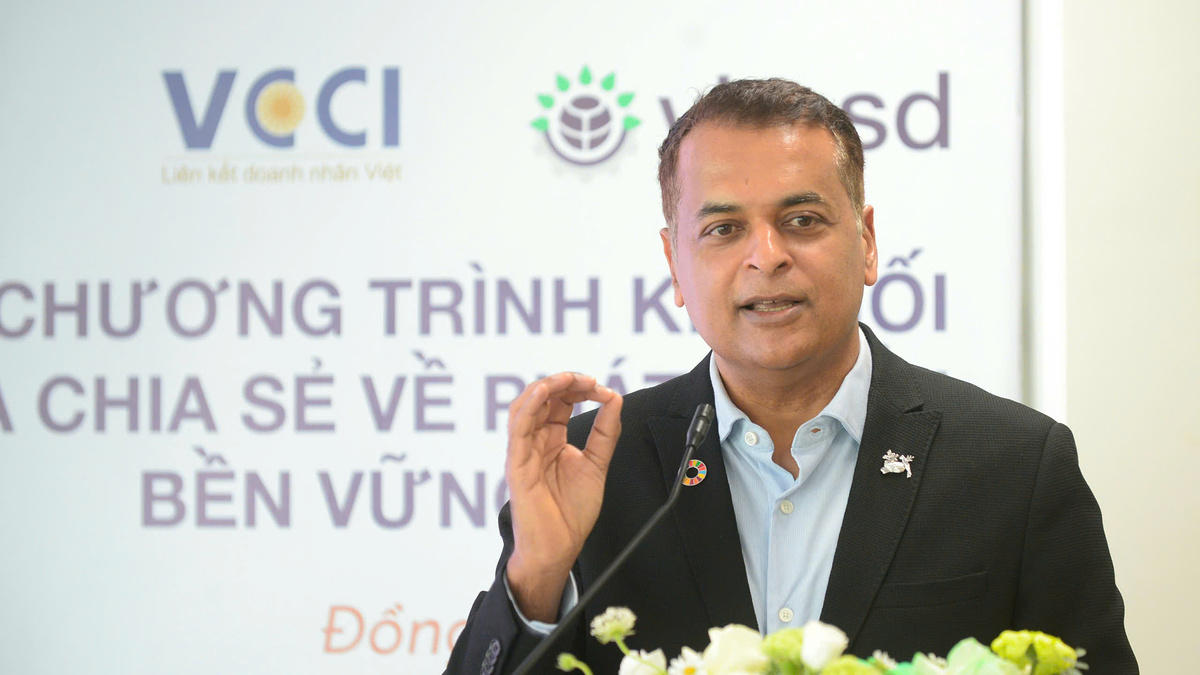
Nestlé Vietnam's CEO, Binu Jacob, has highlighted how the company supports the growth of local businesses through partnerships, citing the case of Tuấn Mạnh Logistics. This logistics firm, after over a decade of cooperation with Nestlé, has expanded its fleet to 50 vehicles and broadened its international client base, demonstrating the ripple effect of high-quality FDI, according to Jacob. Speaking at the "Accompanying to Create Sustainable Growth" seminar on August 6, Jacob stated that the era of FDI being solely for pure profit has passed. High-quality FDI now comes with long-term commitments, benefiting the entire ecosystem, from government and communities to domestic enterprises within the value chain. The event was organized by the Business Council for Sustainable Development under the Vietnam Chamber of Commerce and Industry (VBCSD-VCCI) to update policies and share best practices in sustainable business. Jacob shared Nestlé's experience in sharing value with domestic partners. When establishing its plant in Hưng Yên, Nestlé worked with numerous suppliers in packaging, distribution, and logistics. Tuấn Mạnh Logistics, founded in 2005 by a group of former university students, was one such partner. Collaboration with a foreign enterprise adhering to high standards helped this young domestic company expand its customer base and increase its truck fleet tenfold between 2013 and 2025. "They learned safety rules from us, which are paramount for FDI enterprises," Jacob said. Safety regulations in delivery and receiving are key criteria for foreign companies when selecting logistics partners, alongside legal compliance. Tuấn Mạnh Logistics reported that learning from Nestlé helped them build a culture of safe driving, enabling them to attract FDI clients like Miwon, Uniben, Pepsico, and Mega Market. Beyond enhancing safety and compliance standards, the company also adopted technologies like automated pallet loading. These changes transformed them from a long-haul transport provider to a specialized logistics service unit for goods distribution. They are now Nestlé Vietnam's key transport provider, serving approximately 60% of the company's northern clients. Jacob views FDI companies helping domestic firms grow as a "win-win" scenario, reflecting their long-term commitment to Hưng Yên and Vietnam. Đỗ Đình Quang, Deputy Director of the Hưng Yên Department of Science and Technology, sees Nestlé's story as proof of the province's success in attracting FDI, aiming to become a destination for high-quality projects linked to science, technology, green development, and social responsibility. The province plans to establish a high-tech park of nearly 500 hectares, envisioned as an innovation hub focusing on pre-commercialization, testing, solution integration, and high-tech logistics. FDI is a pillar of growth for Vietnam's goal of becoming a high-income country by 2045. Resolution No. 10 on foreign-invested economic development emphasizes shifting focus from capital volume to developing strategic national investment platforms, prioritizing quality, efficiency, technology transfer, supply chain integration, and added value. Nguyễn Hoa Cương, Deputy Director of the Institute for Policy and Strategy Studies, noted that responsible investment trends are shaping global competition. For domestic and foreign enterprises to develop in parallel, he stressed the need for central and local governments, and businesses to understand their roles and coordinate effectively. Localities, for instance, should actively involve businesses in policy formulation, not just be passive recipients. Jacob advised that for Vietnam to attract long-term, sustainable FDI, foreign investors view local authorities as partners, not just regulators. Provincial and city governments need to foster a supportive environment that promotes long-term sustainable value through consistent policies. Source: VnExpress
Original source
VnExpress