Indonesia's Largest Islamic Organization Unveils Long-Term Strategic Plan
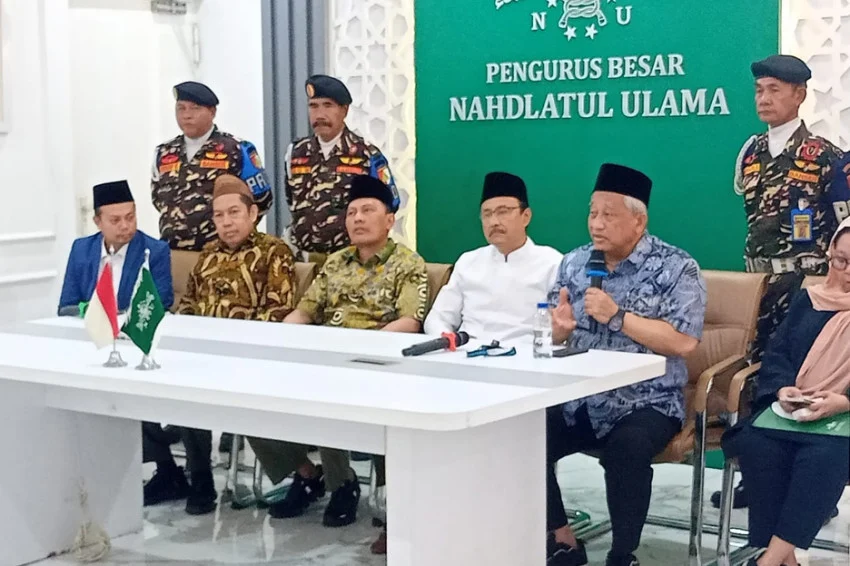
Nahdlatul Ulama (NU), Indonesia's largest Islamic organization, has announced its long-term strategic plan, "Peta Jalan NU 2026-2050," and the strategic program direction for its initial phase from 2026 to 2031. This plan aims for the organization's future development and societal contribution.
This article requires PRO
This article is outside the free access window or is a special report. PRO unlocks it and the full archive.
Related articles
- Indonesia's Long-Tailed Macaques: Why Simple Deterrence Fails Farmers
In Tonjong Village, Brebes Regency, Central Java, Indonesia, crop damage caused by long-tailed macaques is escalating. Temporary deterrents like stone-throwing and firecrackers have proven ineffective, with macaques repeatedly returning. A significant majority of residents, 76.6%, consider the primates a nuisance, and 56.6% express concern, highlighting the urgent need for sustainable coexistence strategies.
- Indonesia Streamlines Emergency Response for Recurrent Disaster Zones
Indonesia's Interior Minister announced that areas hit by subsequent disasters can re-establish emergency response status to expedite recovery. This aims to bypass lengthy administrative processes and speed up infrastructure repair and community life restoration.
- Indonesian Deputy Home Affairs Minister Promotes 'Multi-faceted Approach' for Papua Development
Indonesia's Deputy Home Affairs Minister emphasized the importance of a 'geocultural, multi-actor, and co-determinative' approach for Papua's development, considering socio-cultural and geographical conditions. Tailored policies and collaboration among government, local communities, and businesses are seen as key to peaceful and sustainable progress.
- Sumatran Elephants Vanish from South Sumatra Lake, Ancient Paths Lost to Development
For two decades, Sumatran elephants have not been seen at Lake Deduhuk in Muara Enim, South Sumatra, a place they once frequented. Locals attribute their disappearance to habitat fragmentation and lost migratory routes due to development, raising concerns about the erosion of a long-standing human-elephant coexistence.