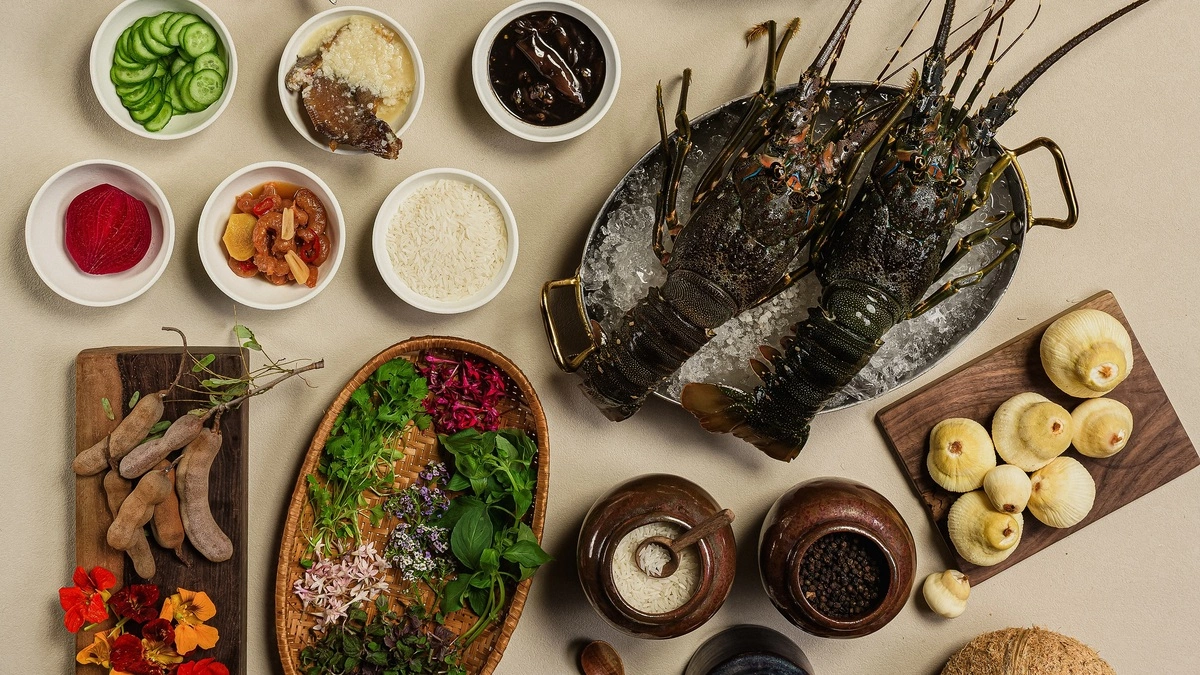
Michelin-Starred CoCo Dining Launches Menu Celebrating Vietnam's Culinary Heritage
Michelin-starred CoCo Dining has unveiled its new menu, "Lưu Tích - The Living Archive," which explores the value of Vietnamese culinary culture passed down through generations. Rather than strictly replicating traditional dishes, the restaurant interprets Vietnam's culinary identity through contemporary techniques and understanding.
CoCo Dining, a one-Michelin-starred restaurant in Vietnam, has launched its new menu titled "Lưu Tích - The Living Archive," which aims to celebrate and reinterpret Vietnam's rich culinary heritage. This initiative moves beyond mere replication of traditional dishes, focusing instead on interpreting the essence of Vietnamese cuisine through contemporary techniques and a deep understanding of its cultural context. Chef Võ Thành Vương of CoCo Dining explained that the value of culinary heritage lies not in its static preservation, but in its capacity to be sustained, interpreted, and developed over time. The "Living Archive" menu is designed to explore community memories, indigenous knowledge, and values passed down through generations, re-imagining them into a contemporary dining experience. The development process involved meticulous research into cooking techniques, ingredient properties, and the historical and cultural narratives behind each dish. These elements are then translated using modern culinary artistry, rather than simply recreating historical recipes. The restaurant acknowledges that Vietnamese cuisine has always evolved with geographical conditions, trade, migration, and generational shifts, thus emphasizing the preservation of core values that define its identity over fixed forms. Indigenous knowledge plays a significant role, drawing inspiration from the experiences of farmers, fishermen, artisans, and homemakers who have preserved knowledge about ingredients and preparation methods for generations. Through research and local community engagement, CoCo Dining integrates these values into its dishes, aiming to tell a story about Vietnamese cuisine that encompasses its people, land, and the processes of ingredient creation, rather than just the final product on the plate. Daniel Dang, Executive Director of CoCo Dining, noted that the growing international interest in Vietnamese cuisine demands higher standards of thought and creativity in preparation and ingredient selection. "The more people are interested in Vietnam, the more aware we become of our responsibility. We are not just telling stories about dishes on a plate, but introducing the people, the land, the craftspeople, and the cultural values that have nurtured Vietnamese cuisine," he stated. Furthermore, Dang believes this is a prime time for Vietnamese cuisine to showcase its unique values on international platforms. Chef Võ Thành Vương is scheduled to represent Vietnam at the World Gourmet Festival 2026 in Bangkok, where he will have the opportunity to present the contemporary Vietnamese culinary approach to a global audience. He intends to highlight how memory, nature, craftsmanship, and cultural exchange contribute to the formation of Vietnam's culinary identity, moving beyond commonly known dishes. CoCo Dining views the launch of "Lưu Tích" and participation in the World Gourmet Festival as two key milestones in its long-standing pursuit: researching, preserving, and interpreting Vietnamese culinary values in a contemporary language. Chef Vương concluded, "For the CoCo Dining team, cultural preservation does not mean keeping the values of the past exactly as they are. Through research, practice, and creativity, culinary knowledge and memories continue to be passed down, adapt to the times, and remain present in today's life."
多角的分析
ベトナムの高級レストランが伝統文化を現代的に解釈したメニューを開発することは、国内の食文化の高度化と国際的なブランド価値向上への意欲を示す経済的動きと捉えられる。ミシュランの格付けは、こうした高級レストランが国際的な基準を満たし、高価格帯のサービスを提供できる能力を証明するものであり、ベトナムの食産業が単なる低コスト生産から、付加価値の高い文化体験を提供する産業へと移行しつつあることを示唆している。これは、観光産業の振興や、食を切り口としたソフトパワーの強化にも繋がる可能性がある。
CoCo Diningのような高級レストランの取り組みは、ベトナムの飲食業界における「質」への投資の可能性を示唆している。投資家は、単に店舗数や売上だけでなく、ブランドの独自性、文化的な深み、そして国際的な評価(ミシュランなど)を重視するようになるだろう。このようなレストランは、富裕層や文化に関心のある観光客をターゲットとし、高い収益性を見込める可能性がある。また、ベトナムの食文化の国際的な認知度向上は、関連産業(食材、観光、メディア)への間接的な投資機会も創出する可能性がある。
CoCo Diningの新メニューは、ベトナム社会における食文化の再評価と、それを現代にどう繋げていくかという問いを投げかけている。特に、地域固有の知識や、農民、漁師、職人といった「食の担い手」の経験に光を当てることは、都市部と地方、あるいは伝統的な生産者と現代の消費者との間の繋がりを再構築する試みと言える。これは、単に食事を楽しむだけでなく、食の背景にある物語や人々の生活に思いを馳せる文化的な意識の醸成を促す可能性がある。一方で、このような高級レストランの取り組みが、一般市民の食生活に直接的な影響を与えるには限界があることも事実である。
CoCo Diningの新しいメニューは、ベトナム国民、特に食文化に関心のある層にとって、自国の食遺産に対する新たな視点を提供するものです。シェフが強調するように、伝統は単に保存されるだけでなく、現代の生活様式や技術に合わせて解釈され、次世代に伝えられるべきものです。これは、多くのベトナム人が日々の食事で親しんできた料理のルーツや、それを支えてきた人々の営みについて、より深く理解する機会となります。また、国際的な舞台でベトナム料理がどのように紹介されるかを見ることは、国民の誇りを高める一因となるでしょう。
背景・歴史的文脈
ベトナムの一党体制下では、文化遺産の保護と発展は、国家のアイデンティティ形成とソフトパワー強化の重要な要素として位置づけられている。特に、経済成長に伴い、国民の生活水準が向上し、食文化への関心が高まる中で、政府は伝統文化の保護と現代化を奨励してきた。CoCo Diningのようなミシュラン星付きレストランの台頭は、こうした政策の成果の一部と見ることができる。また、ベトナムは中国との歴史的・地政学的な関係から、独自の文化を強調することで、国際社会における存在感を高めようとする傾向がある。食文化は、そのための有力なツールの一つと認識されている。
原文ソース
VnExpress