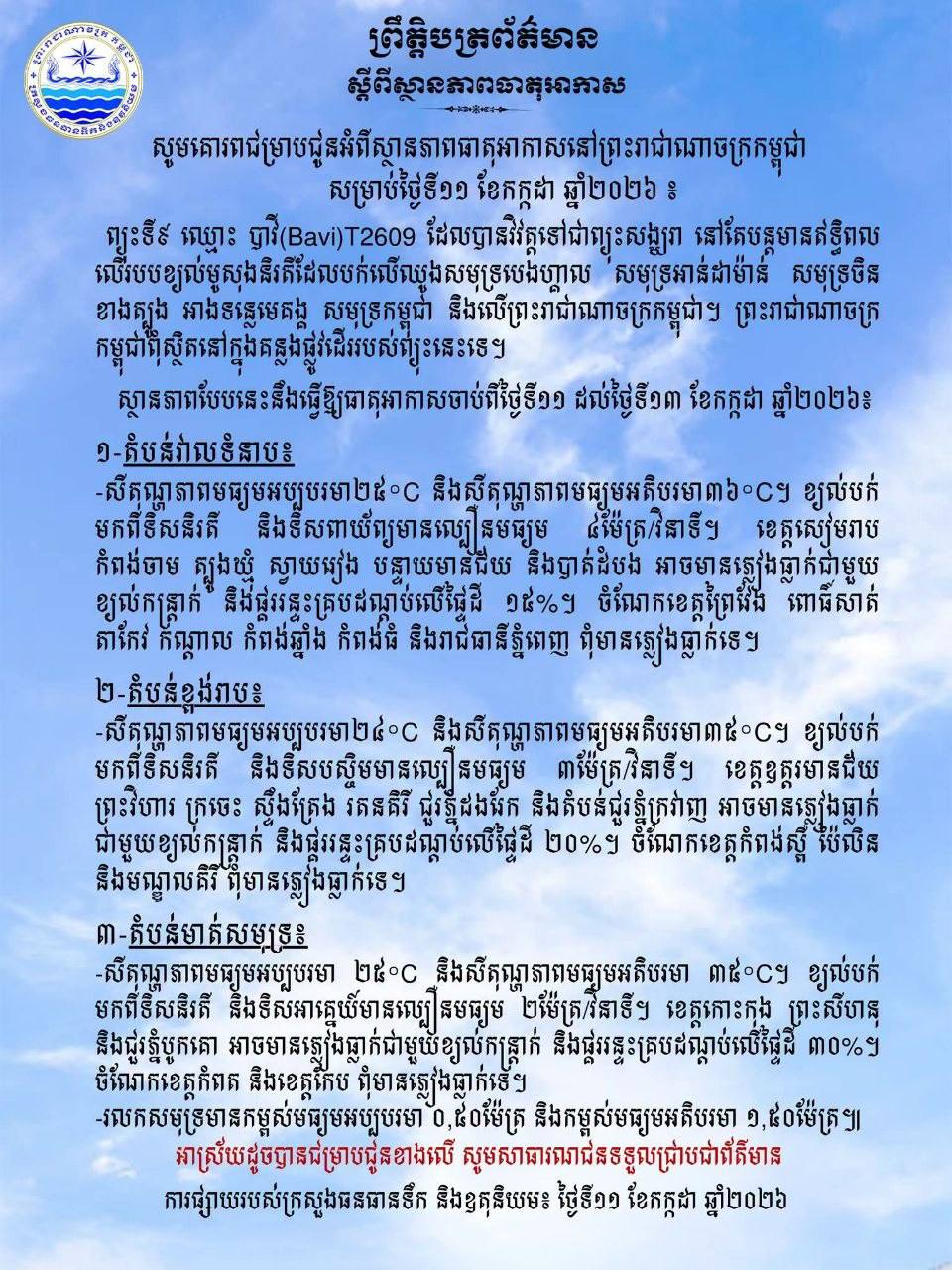
Cambodia Braces for Scattered Showers Amidst Tropical Depression Influence
Cambodia anticipates scattered showers, strong winds, and thunderstorms from July 11-13 due to Tropical Depression Bavi. Coastal areas face higher chances of rain, while the capital and inland regions are expected to remain mostly dry.
This article requires PRO
This article is outside the free access window or is a special report. PRO unlocks it and the full archive.
Related articles
- Cambodia Launches Infrastructure Development for Fishing Communities in Preah Vihear Province Under LASED III Project
Cambodia has officially launched infrastructure development for fishing communities in Prey Nob district, Preah Sihanouk province, under the LASED III project. The initiative aims to improve livelihoods for fisherfolk, boost the local economy, and promote eco-tourism.
- Cambodia's Mondulkiri Patrols Remove 533 Traps, Rescue 8 Wildlife Animals
In Cambodia's Mondulkiri province, rangers and community volunteers removed 533 snares and rescued 8 wild animals during patrols conducted from September 28 to October 1, 2026. Poaching remains a significant threat to the region's protected areas.
- Cambodia Urges Long-Term, Affordable Financing for LDC Graduation
Cambodia has appealed at the UN General Assembly for long-term, affordable financing to accelerate sustainable development as it aims to graduate from Least Developed Country (LDC) status in 2029, requesting targeted international support.
- Cambodia Strengthens Forest Management with Community Collaboration, FAO Conducts Field Visit
The Food and Agriculture Organization of the United Nations (FAO), alongside Cambodian ministries, visited community forests in Kratie province to assess progress and challenges. This initiative is part of the CASFor project, aimed at improving community livelihoods and sustainable forest management.