General articles are free for 24 hours after publish.
Forest Fire Haze Triggers Respiratory Illness Surge in Indonesia
Widespread forest and land fires in Indonesia, particularly in Kalimantan, are causing a surge in respiratory illnesses (ISPA) among local communities due to severe haze. Government responses face criticism, and international impacts are also a concern.
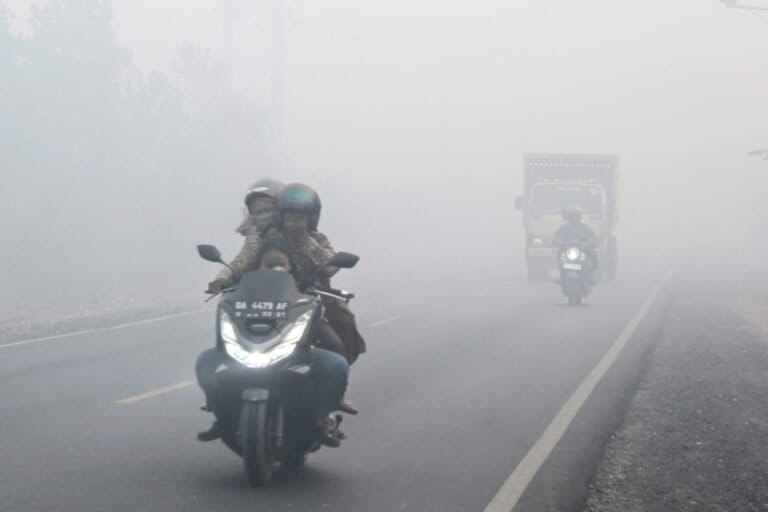
Forest and land fires in Kalimantan, Indonesia, are not only devastating the natural landscape but have also escalated into a public health crisis, marked by a surge in acute respiratory infections (ISPA). The Indonesian province of Central Kalimantan has recorded 72,431 ISPA cases, with Palangka Raya, the provincial capital, reporting the highest at 16,166. Other severely affected areas include West Kotawaringin (12,467 cases), East Kotawaringin (7,982 cases), and Kapuas (7,910 cases), all regions with extensive peatlands experiencing massive fires. While the government has distributed aid such as masks, oxygen, and safe houses, the supply has been insufficient to meet the needs of the affected population. Criticism has also been leveled against the government's response, as conditions reportedly worsened after Central Kalimantan declared a state of emergency for fire and haze management on August 31, 2026. The danger of haze from these fires stems from ultra-fine particulate matter that can penetrate deep into the respiratory system. Fachrial Kautsar from the Center for Indonesia’s Strategic Development Initiative highlighted that fire-related particulate matter is ten times more harmful to children's lungs than ordinary pollution. Pregnant women, children, and the elderly are particularly vulnerable to asthma, chronic lung diseases, and developmental disorders in fetuses. Data from the Ministry of Health indicates over 50,891 ISPA cases across seven provinces between June and August 2026. Meanwhile, the Auriga Nusantara Foundation reported that the total area burned from January to June reached 190,546 hectares, equivalent to about 2.6 times the size of Singapore. The impact of the haze has also crossed national borders. Greenpeace monitoring from August 4 to September 6 showed smoke reaching Malaysia, Singapore, Brunei Darussalam, and the Philippines. Sarawak was affected for 34 days, with its air pollution index exceeding 500 on September 5, leading to school closures and restrictions on outdoor activities.
Original source
Mongabay Indonesia