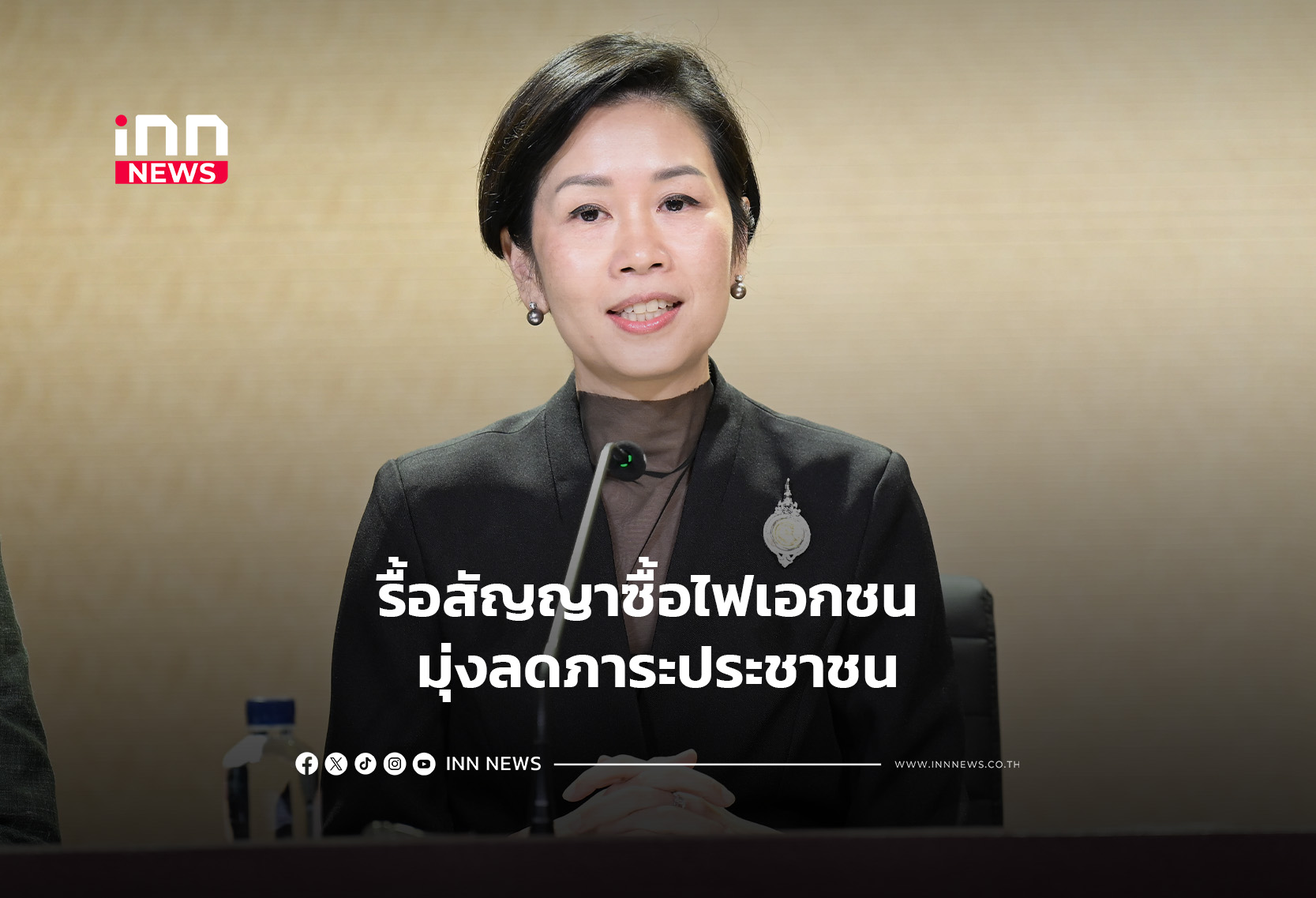
Thai Government Reviews Private Power Purchase Agreements to Ease Public Burden
Politics
2026年7月12日
5
INN News

Thai Government Reviews Private Power Purchase Agreements to Ease Public Burden

AI サマリー

The Thai government is proceeding with a review of electricity purchase agreements with private power producers to alleviate the burden of electricity costs for citizens. A special committee chaired by the Deputy Prime Minister is considering revisions to solar and wind power contracts, aiming to balance public benefit with investor confidence.

The Thai government has initiated a review of electricity purchase agreements with private power producers, aiming to reduce the financial burden of electricity costs for its citizens. A special committee, chaired by the Deputy Prime Minister, is examining ways to revise contracts for solar and wind power, with the primary goal of easing the public's electricity expenses in the long term. According to the government spokesperson, Prime Minister Prayut Chan-o-cha has listened to concerns from all sectors, including the public seeking lower electricity rates and the private sector emphasizing confidence in government policy. Consequently, he has instructed that all steps be taken with careful consideration, grounded in law, and mindful of impacts across all dimensions. The chairman of the special committee stated that the committee's deliberations align with the Attorney General's opinion, which posits that electricity purchase agreements between the state and private entities are administrative contracts, granting the state the authority to act in the public interest. However, the committee believes that negotiating with private companies to amend contract terms is a more appropriate approach, as it can foster fairness for the public while preserving investor confidence and the rule of law. Furthermore, the committee feels that certain contract clauses warrant reconsideration, particularly those that allow contracts to continue without the opportunity for renegotiation, despite significant changes in costs, technology, and the energy market. Proposals have also been made to review the components of electricity purchase prices for solar and wind energy to align with actual costs. Following these deliberations, the committee will present its findings to the National Energy Policy Committee (NEPC) for policy formulation. Subsequently, the Electricity Generating Authority of Thailand (EGAT), the Metropolitan Electricity Authority (MEA), and the Provincial Electricity Authority (PEA) will be tasked with engaging in discussions with contracting parties to find mutually acceptable solutions. The government emphasizes that this initiative is not about short-term measures or negatively impacting the investment climate. Instead, it is a structural adjustment of costs to reflect current conditions, ensuring citizens benefit from fair electricity prices. Thailand remains committed to respecting laws, contracts, and fostering confidence among both domestic and international investors. "The government believes that reducing electricity costs and maintaining investor confidence can go hand in hand if all parties work together to find fair, transparent approaches that prioritize public benefit. Therefore, resolving electricity cost issues must be addressed at the structural level of costs for sustainable results, not just as a temporary fix. Moreover, this contract revision is not a retrospective change of rules, but rather an opening for negotiation based on law and mutual consent, to ensure contracts are aligned with changing costs and economic conditions." Source: INN News

多角的分析

経済的影響

タイ政府による民間電力購入契約の見直しは、長期的な国民の電気料金負担軽減を目的としている。これは、再生可能エネルギーの導入拡大に伴う固定価格買取制度(FIT)などの影響で、電力調達コストが増加し、それが国民負担に転嫁されている現状への対応である。過去にも電力料金の高騰は国民生活を圧迫し、政府が介入する事例があった。今回の見直しは、単なる料金引き下げではなく、契約構造そのものを適正化し、将来的なコスト上昇を抑制する狙いがある。しかし、契約の見直しは、既存の契約条件を一方的に変更するのではなく、交渉を通じて合意形成を図る方針であり、そのプロセスと結果が電力市場全体の安定性とコスト構造に影響を与える可能性がある。

投資家心理

タイ政府が民間電力購入契約の見直しを進めるにあたり、投資家の信頼維持は極めて重要な課題である。政府は、契約の変更は法に基づき、当事者間の合意形成を通じて行われることを強調し、過去に遡ってルールを変更するものではないと説明している。これは、外資を含む民間発電事業者との契約関係における予測可能性と安定性を損なわないための配慮である。過去のタイにおける投資環境を巡る議論では、法規制の変更や予期せぬ政策転換が投資家の懸念材料となるケースが指摘されてきた。今回の見直しが、長期的な投資家心理にどのような影響を与えるかは、交渉の進展と結果、そして政府の透明性ある説明にかかっている。

社会的影響

タイ国民にとって、電気料金は生活費に占める割合が大きく、その変動は家計に直接的な影響を与える。特に低所得者層にとっては、電気料金の高騰は生活の維持を困難にする可能性がある。今回の政府による契約見直しは、国民の切実な要望に応える動きとして受け止められている。しかし、交渉が難航したり、国民が期待するほどの料金引き下げが実現しなかった場合、政府への不満が高まるリスクも否定できない。また、電力供給の安定性や、再生可能エネルギーの利用拡大といった、より広範な社会的な目標とのバランスも問われることになる。バンコク都心部では、エアコンの使用頻度が高いことから、電気料金の変動が家計に与える影響はより顕著であり、地方部においても、経済活動の基盤となる電力コストの適正化は喫緊の課題である。

市民の声

タイ国民は、電気料金の負担軽減を強く求めている。特に、近年の世界的なエネルギー価格の高騰や、タイ国内の経済状況を鑑みれば、家計を圧迫する電気料金の引き下げは、多くの国民にとって切実な願いである。政府が、民間との契約見直しという、より構造的な問題に取り組む姿勢を示したことは、国民の期待を高めている。しかし、過去の経験から、政府の政策決定プロセスや、民間企業との交渉結果が、必ずしも国民の期待通りになるとは限らないという見方も存在する。今回の見直しが、国民生活に実質的な恩恵をもたらすのか、その行方が注目されている。

背景・歴史的文脈

タイの電力料金は、発電コスト、送電コスト、配電コスト、そして民間発電事業者からの電力購入費など、複数の要因で構成されている。特に、過去に締結された民間発電事業者との長期電力購入契約は、固定価格買取制度(FIT)などの影響もあり、国民の電気料金負担を増加させる一因と指摘されてきた。タイ政府は、過去にも電力料金の適正化や、エネルギー政策の見直しに取り組んできたが、民間事業者との契約関係はデリケートな問題であり、慎重な対応が求められてきた。近年、再生可能エネルギーの導入拡大とそれに伴うコスト構造の変化、そして国民からの料金引き下げ要求の高まりを受け、政府は改めて契約の見直しに着手した。

原文ソース

INN News

原文を読む