General articles are free for 24 hours after publish.
World's Rarest Snake, Only 20 Left, Finds Last Refuge on Maria Major Island
Approximately 20 Saint Lucia Racers, the world's only remaining population of Erythrolamprus ornatus, are now found solely on Maria Major Island off the southern coast of Saint Lucia. This critically endangered snake has a history of being declared extinct and rediscovered.
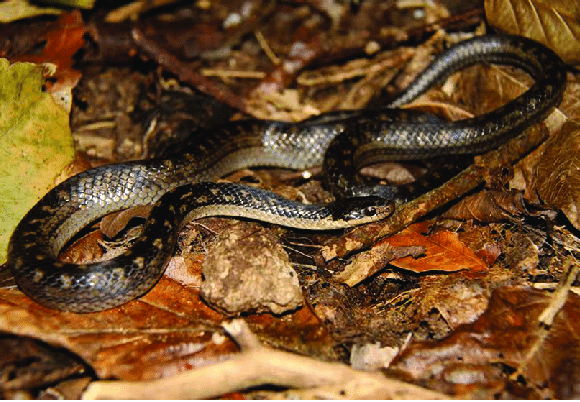
Maria Major Island, a small islet off the southern coast of Saint Lucia, has become the last refuge for the world's only remaining population of the rare Erythrolamprus ornatus, also known as the Saint Lucia Racer. This species was once declared extinct, then rediscovered, and its existence was doubted a second time before it was finally confirmed to still be alive. Its population is now estimated to be only around 20 individuals, all living on the 12-hectare island, making it a strong candidate for the rarest snake on Earth. The story of the Saint Lucia Racer is compelling not only due to its small numbers but also because of its fluctuating journey over nearly two centuries. It was once thought to have vanished from the face of the earth, made a surprising reappearance, and was nearly forgotten again before its continued existence was confirmed. Erythrolamprus ornatus was first scientifically described in 1851 by the British zoologist Albert Günther, a curator of reptiles at the British Museum. Günther noted the snake as an inhabitant of the dry lowland forests of Saint Lucia, one of the main islands in the Lesser Antilles, Caribbean. At that time, the snake was not an unfamiliar creature to the local population. It was known to be docile and harmless, often seen basking in the sun during the day among the shrubs and rocks of the lowlands, its grayish-brown coloration with faint stripes along its body allowing it to blend easily with its surroundings. By the end of the 19th century, Saint Lucia's ecological landscape changed rapidly. The expansion of sugarcane plantations led to the introduction of the small Indian mongoose (Herpestes javanicus) to control field rats. While the initial intention was good, the mongoose turned out to prefer hunting during the day, when the snakes were most active. This preference meant the mongoose became a significant predator of the Saint Lucia Racer. The introduction of the mongoose is believed to have accelerated the decline of the Saint Lucia Racer's population. Furthermore, a combination of factors, including habitat destruction and the proliferation of invasive species, pushed this rare snake to the brink of extinction. Currently, Maria Major Island serves as the sole sanctuary for this snake. Access to the island is restricted, and stringent conservation efforts are in place to support its survival. However, the population of just 20 individuals indicates an extremely precarious situation.
Original source
Mongabay Indonesia