General articles are free for 24 hours after publish.
Vietnam's NAP 2.0: Expert Highlights Industry 4.0 and Digital Transformation for Growth
A Malaysian expert suggests that Vietnam's National Industrial Master Plan 2.0 (NAP 2.0) hinges on adopting Industry 4.0 technologies like IoT and AI, alongside digital transformation, to accelerate economic growth and sustainable development. The expert highlights enhancing FDI quality in Ho Chi Minh City and Can Tho, and fostering local partnerships.
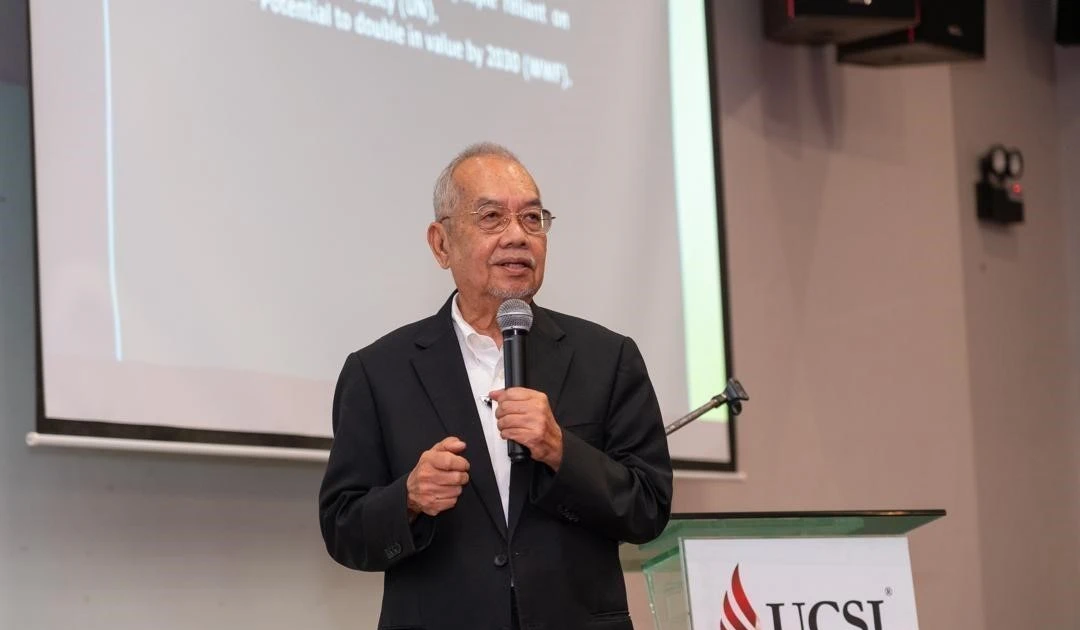
Vietnam's National Industrial Master Plan 2.0 (NAP 2.0) should focus on leveraging Industry 4.0 technologies and accelerating digital transformation to drive economic growth and sustainable development, according to an expert from Malaysia. Prof. Tan Jian Ping, Director of the Centre of Excellence for Sustainable Technologies for Agricultural Advancement and a Zero-Waste Economy (STARGAZE) at Xiamen University Malaysia (XMUM), highlighted that NAP 2.0 emphasizes the application of Industry 4.0 technologies, including the Internet of Things (IoT), unmanned aerial vehicles, artificial intelligence (AI), automation, and biotechnology. This focus is expected to enhance the sophistication of Vietnam's industries and strengthen their international competitiveness. To support Vietnamese businesses in exploring Halal partnerships and supplying products to the Malaysian market, Matrade (Malaysia External Trade Development Corporation) has established a representative office in Ho Chi Minh City. This initiative is part of broader efforts to deepen economic ties between the two nations. A key proposal discussed was fostering links between Penang and Gia Lai province. Gia Lai, Vietnam's second-largest province by area, is home to over 3.5 million people, and the potential for a formal local partnership, eventually leading to a sister-province relationship, was explored. Can Tho City is currently facing a "window of opportunity" to upgrade the quality of its Foreign Direct Investment (FDI). The city needs to shift its mindset from merely attracting capital to strategically selecting, absorbing, and spreading investment value. This reflects a broader challenge for Vietnam's economic development. Investors are increasingly differentiating between economies driven by cyclical growth and those capable of converting growth momentum into sustainable, risk-adjusted returns. For Vietnam to position itself in the latter category, a transition towards technological innovation and higher value-added industries is crucial. Vietnam is projected to maintain its position as a growth leader in Southeast Asia. Reports, including one by US-based Bain & Company and Singapore's DBS Bank, suggest Vietnam could continue to lead regional growth in the 2026-2035 period. Ho Chi Minh City is implementing a range of tasks and solutions to enhance business competitiveness, promote sustainable exports, expand markets, and enable local businesses to engage more deeply in global value and supply chains. This move is also aimed at developing the city into a regional hub for trade, logistics, and international economic integration. The Vietnamese automobile industry is entering a new stage of development with a growing number of exporters. However, it also faces significant challenges in international markets related to localization, supporting industries, technological capabilities, human resources, and country-specific technical standards. Trade and investment cooperation between Vietnam and China has provided strong momentum and played a key role in connecting markets and production chains within the broader ASEAN-China relationship, with substantive cooperation advancing across multiple areas. Various other economic activities were also noted, including investment approvals for five projects in Khanh Hoa province worth nearly 10.82 trillion VND (415.96 million USD). Financial leasing was highlighted as a mechanism for medium- and long-term financing. The Northern Industry and Trade Fair - Bac Ninh 2026 showcased over 222 booths featuring industrial products, OCOP items, and craft village products. Livestream sales events also promoted products from various northern provinces. The mooncake season saw increased sales, indicating robust consumer spending. State budget revenue for the first eight months of 2026 was estimated at 2.02 quadrillion VND, showing a 16% year-on-year increase. The State Bank of Vietnam set the daily reference exchange rate at 25,632 VND/USD on September 17. An Austrian official proposed stepping up exchanges with Vietnam through the International Organisation of Securities Commissions (IOSCO). Vietnamese participants at an international event are showcasing a range of products, seeking distribution partners and market expansion. VietnamPrintPack 2026 is positioned as a hub for supply chain solutions in automation, digital printing, and smart packaging. Copyright, VietnamPlus, Vietnam News Agency (VNA) Editor-in-chief, Mr. Tran Tien Duan.
Original source
VietnamPlus English